Google Maps Distance Errors How AI Gets Your Route Wrong
Why AI Reliability in Mapping and Distance Calculation Matters Now
In 2026, artificial intelligence, or AI, helps us in so many parts of our lives. One big way is in navigation apps. These apps help us find our way, tell us how long a trip will take, and even show us the fastest route around traffic. Think about how often you use tools like Google Maps to get around. But what happens if the AI that powers these maps makes a mistake?
The big problem is when AI gives answers that sound right but are actually wrong. We call these "hallucinations" in AI. When navigation systems make these kinds of mistakes, it can be a real headache. For regular people, it means taking a longer route or getting lost. For businesses, it can cause big problems, wasting time and money. It also makes people lose trust in these helpful tools.
This issue is especially important for things like google maps traffic data. If the AI incorrectly predicts traffic jams or suggests routes that are actually slower, it affects countless drivers every day. Similarly, errors in google maps distance calculations can be very costly. Imagine a delivery company that relies on these apps to figure out the driving distance between two points. If the distance is wrong, they might spend more on gas or pay drivers incorrectly. This makes it harder for businesses to plan and can lead to big financial risks.
When AI systems like those in cars, such as those that might guide a tesla track or self-driving truck, rely on faulty map data, the risks become even greater. This isn’t just about small mistakes. It can lead to bad decisions in routing, scheduling, and even safety. Making sure AI is reliable and accurate is super important right now.

It means we need to build special rules and ways to check that AI is always giving us the right answers. To dive deeper into these challenges, you can learn more about how AI hallucination in navigation threatens your distance accuracy.
The need for trustworthy AI is a big topic this year. Many experts are talking about why building trust in AI is so important, especially as these systems become more common The AI Trust Paradox And What Must Change In 2026. We all want technology that works well and helps us, not one that leads us astray with believable but false information.

Hallucinations are also a trust problem. To understand more about the risks that AI can bring, you can Read AI Risk Smarter.
How map navigation models hallucinate: mechanics & signals
So, why do these smart mapping tools sometimes get things wrong?
It happens for a few main reasons, both inside the AI model itself and with the information it uses. Knowing these reasons helps us understand why we might sometimes get strange directions or wrong google maps distance estimates.
First, let’s talk about what happens inside the AI. Think of it like a very clever guesser.
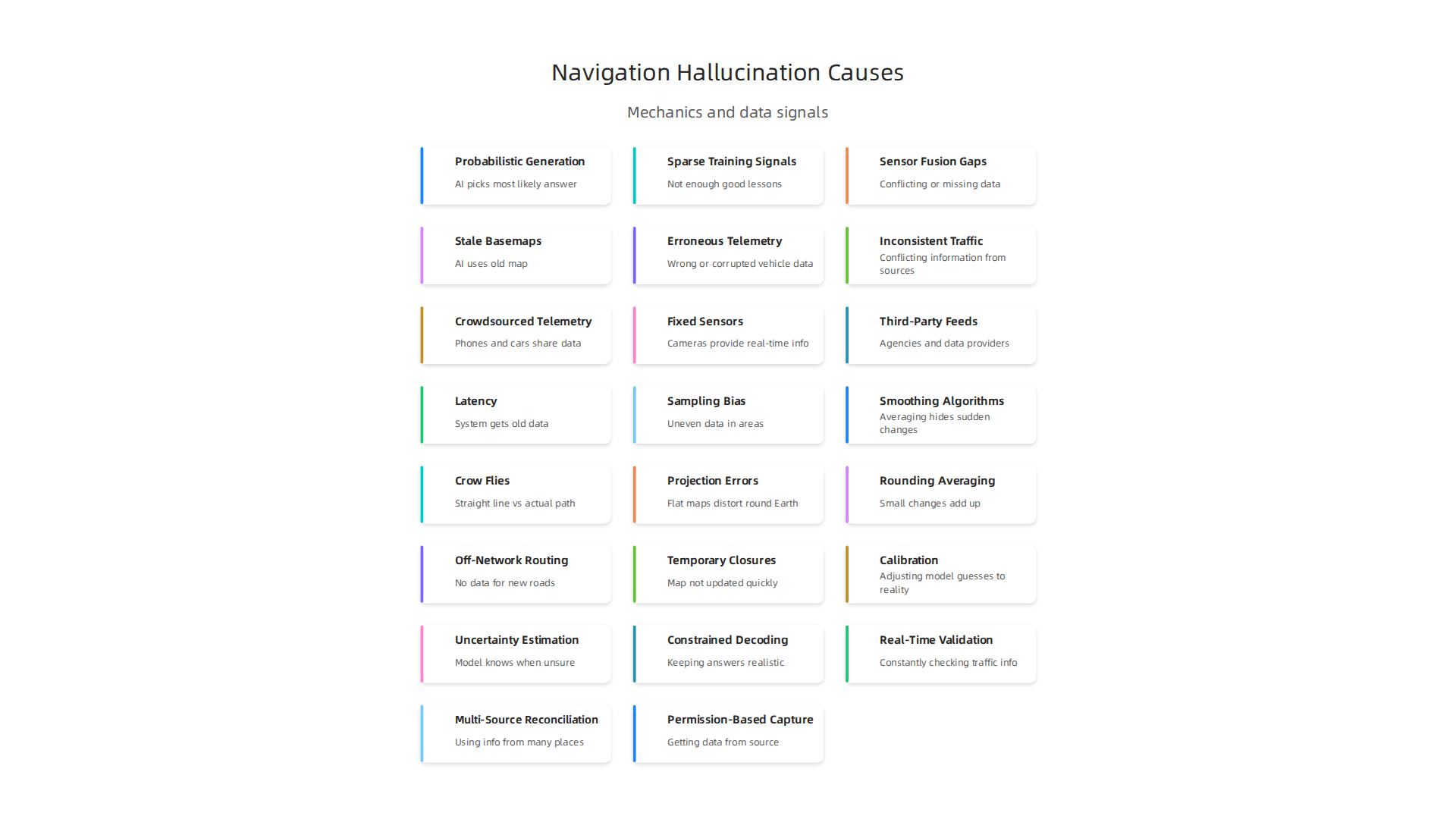
- Probabilistic Generation: AI models are often built to make educated guesses. They don’t always know the exact answer, so they pick the most likely one based on what they’ve learned. If the choices are similar, or if there’s missing information, the AI might "hallucinate" a route or a travel time that seems real but isn’t. It’s like the AI is trying to fill in a blank with the wrong answer.
- Sparse Training Signals: AI learns from lots of examples. If it hasn’t seen enough real-world examples for a certain road, type of traffic, or kind of turn, it might struggle. This means the AI has "sparse training signals," or not enough good lessons. When it encounters something new or rare, it might just make something up, leading to fabricated routes for a
driving distance between two points. - Sensor Fusion Gaps: Modern navigation uses many sensors: GPS, cameras, radar, and more. This is called "sensor fusion." But what if one sensor isn’t working well, or if they give conflicting information? If there are gaps in this combined data, the AI has to guess. For instance, if a self-driving vehicle on a
tesla trackreceives unclear data, the AI might try to fill in the missing pieces incorrectly, leading to errors in its path. Studies have shown that GPS measurements themselves can introduce errors, making distances seem different from reality Why GPS makes distances bigger than they are.
Next, bad information fed into the AI can also cause problems.
- Stale Basemaps: Maps change all the time. New roads are built, old ones close, and speed limits can vary. If an AI uses an old map, called a "stale basemap," it might think a road exists when it doesn’t, or suggest a path that’s now closed. This is a common issue that affects the accuracy of navigation systems Why Your GPS Sometimes Lies: The Engineering Challenges of Navigation.
- Erroneous Telemetry: "Telemetry" is the data about how vehicles move, like their speed and location. If this data is wrong or corrupted, the AI gets bad information about
google maps trafficconditions. For example, if many cars report incorrect speeds due to faulty sensors, the AI might falsely predict a traffic jam or clear roads. Research explores how accurate GPS data is for traffic, showing it can sometimes be unreliable Reliability of GPS based traffic data: an experimental evaluation. - Inconsistent Traffic Feeds: Traffic information comes from many sources. If these sources give conflicting or "inconsistent traffic feeds," the AI struggles to figure out the true situation. This can lead to wrong estimates for travel times or suggested routes that don’t actually avoid traffic, directly impacting the accuracy of
google maps trafficpredictions.
These issues show why it’s so important to keep improving how AI models learn and the quality of the data they use. To better understand how AI can make costly mistakes, you can read more about how AI hallucination costs 67 billion and engineers can stop it.
Traffic data sources, latency, and reliability (context: google maps traffic)
To give us helpful directions and correct google maps distance estimates, AI navigation needs lots of good traffic information. But where does this information come from, and why can it sometimes be wrong?
First, let’s look at the different ways navigation systems get traffic data:
- Crowdsourced Telemetry: This is a big one. Many phones and cars on the road share their speed and location data. Think of it like thousands of drivers constantly reporting what’s happening on their roads. This helps systems like
google maps trafficunderstand current conditions. However, if there aren’t many vehicles on a particular road, the data can be sparse, leading to guesswork. Mobile phone GPS data is often used to predict how reliable travel times are, showing how important this collective data is for accurate predictions Predicting travel time reliability using mobile phone GPS data. - Fixed Sensors and Cameras: Some cities have special sensors built into the roads or cameras watching intersections and highways. These provide very accurate, real-time information for specific spots. The challenge is that they only cover certain areas, leaving gaps elsewhere.
- Third-Party Feeds: Navigation systems also get information from local traffic agencies, news outlets, and other data providers. These feeds can offer insights into planned road closures, major accidents, or public events that affect traffic.
Even with all these sources, problems can pop up:
- Latency (Delay in Data): Traffic changes quickly. A car crash might clear up in minutes, or a new jam might form out of nowhere. If the navigation system gets old data, it can give you wrong info. This delay, called latency, means the
driving distance between two pointsmight be shown with an outdated traffic situation, making your estimated arrival time incorrect. - Sampling Bias (Uneven Data): Busy highways and city centers tend to have a lot of crowdsourced data. But what about a quiet backroad or a specialized area like a
tesla track? These places might have very few data points. This "sampling bias" means the system knows a lot about some roads but has to guess for others, makinggoogle maps distanceestimations less accurate on less-traveled paths. - Smoothing Algorithms: To make traffic flow look continuous and easy to understand, AI systems often use "smoothing algorithms." These algorithms can average out speed data over time or distance. While this can make the map look cleaner, it might hide sudden, sharp slowdowns or quick traffic clear-ups. It can make traffic seem better or worse than it really is. Luckily, new ways to enhance GPS accuracy using machine learning are always being developed to help reduce these kinds of errors Enhancing GPS Accuracy with Machine Learning.
When navigation systems rely on incomplete or biased traffic data, it increases the chance of AI hallucination in navigation threatens your distance accuracy. It’s important to know how these AI systems gather and use information because it affects your daily trips and choices. You might be interested in a Quietly Hijacked field note to learn more about how AI can subtly influence us.
Distance calculation errors: common patterns and example failure modes
Even with good traffic data, how the system measures distance can go wrong too. These errors can make your google maps distance seem off or your estimated arrival time incorrect. Let’s look at some common ways navigation systems get confused about how far you’re actually going.
One common issue is confusing different types of distance:
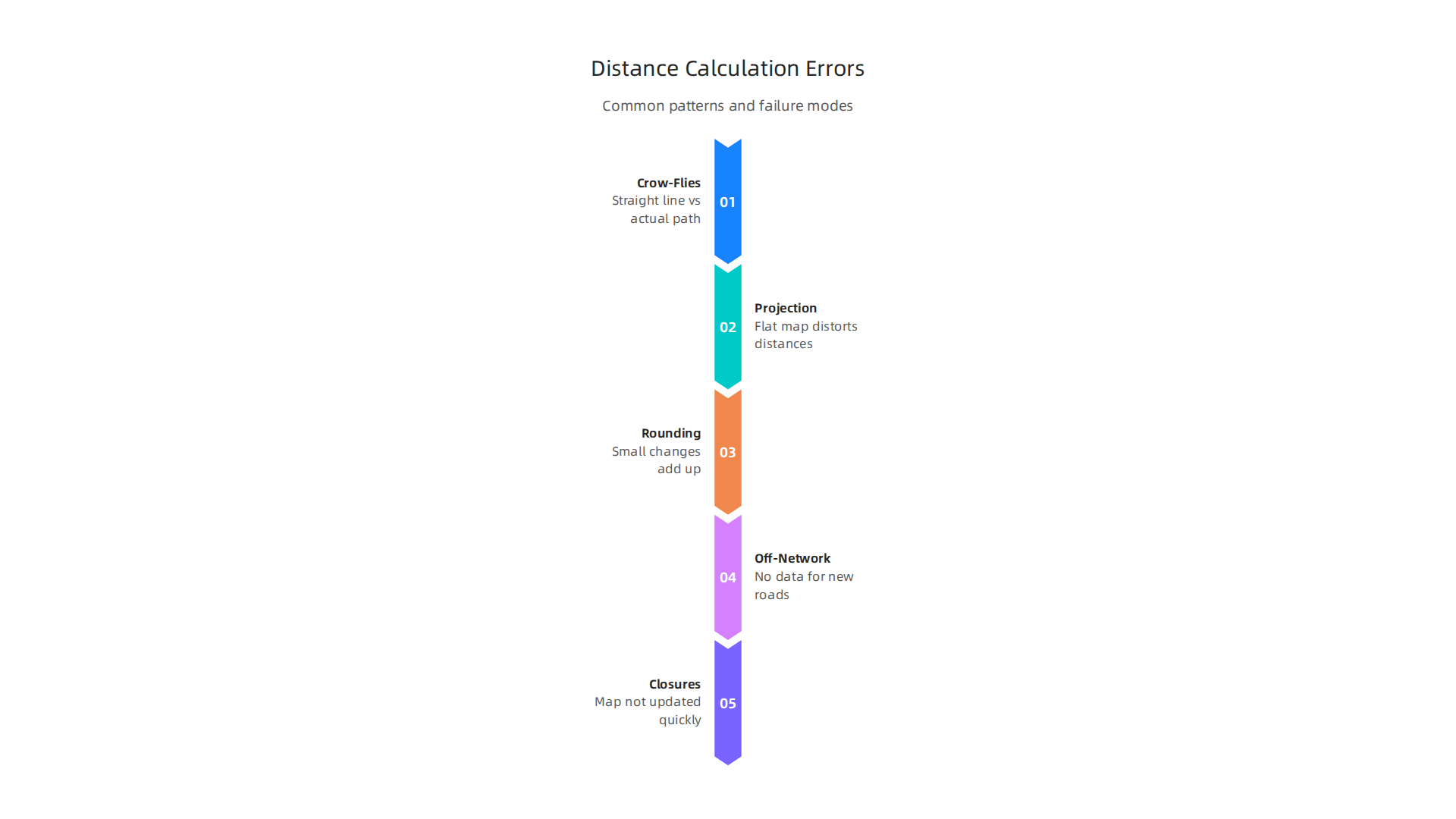
- "As the Crow Flies" vs. Real Roads: Imagine you want to go from one park bench to another. A straight line, like a bird flying, is called "geodesic" distance. But you have to walk on paths and around trees. That’s the "routing" distance. Navigation apps like Google Maps need to show you the real road distance, not the straight-line distance. Sometimes, the app might mix these up, especially if it’s struggling to find the best path. This means the
driving distance between two pointsyou see might not match the actual miles or kilometers you drive. Studies show that GPS can sometimes make recorded distances bigger than they are in reality Why GPS makes distances bigger than they are.
Another type of error comes from how maps are made:
- Projection Errors: The Earth is round, but maps on your phone are flat. It’s like peeling an orange and trying to flatten the skin without tearing it. When we flatten the Earth for a map, things get stretched or squeezed in different places. This is called a "projection error." While modern
google maps trafficsystems are very smart about this, sometimes small errors can still happen. This can slightly change how far something looks on the screen compared to the true ground distance.
Then there are small issues that can add up:
- Rounding and Averaging: To keep things simple and fast, navigation systems might round numbers or average out distances, especially over short segments. These tiny changes might not seem like a big deal on their own, but they can slowly add up over a long trip. This is like adding up a lot of small pennies that were rounded down; by the end, you’re missing a noticeable amount.
Finally, some situations are just tricky for any mapping system:
- Off-Network Routing: What if you’re driving on a brand-new road that just opened, or maybe a private road, or even a specialized area like a
tesla trackthat isn’t on public maps? Navigation systems call these "off-network" areas. Since there’s little to no data about them, the system has to guess the distance, which can be very wrong. - Temporary Closures and New Construction: Roads get closed for parades, construction, or bad weather. New roads are built, and old ones change. If the
google maps trafficdata doesn’t get updated right away, it can lead to big errors in your planned route and distance. You might be told to take a road that’s blocked or sent on a longer detour because the map hasn’t caught up with real-world changes.
These challenges mean that sometimes, even in 2026, your navigation system might give you a driving distance between two points that isn’t quite right. Understanding these patterns helps us see why errors happen and why ongoing work in data and AI methodology is so important to make maps better. If you’re interested in the robust data processes used in advanced AI applications, you can read more about CRISP-DM and Skylab USA. It’s a reminder that relying too much on AI without understanding its limits can lead to bigger problems, like when How AI Hallucinations In Maps Create Fake Roads And Endanger Lives become a risk.
Even with the best traffic data and maps, things can sometimes go wrong with how navigation systems figure out distances. But don’t worry, people are always working on smart ways to make these systems better. Fixing these errors involves looking at how the map models work, how data is collected, and the overall system design.
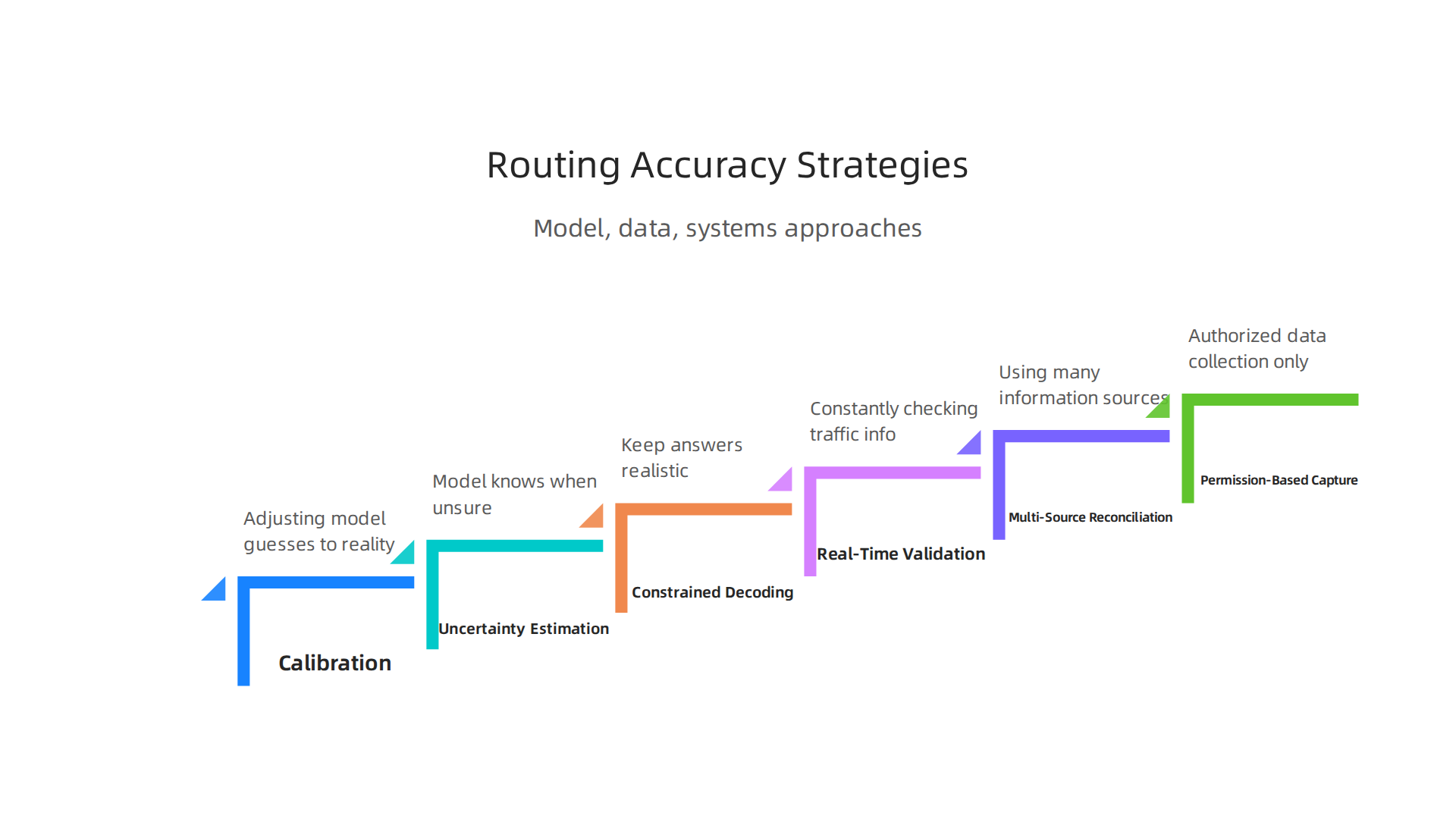

Making Models Smarter
One way to make google maps distance more accurate is by improving the models themselves.
- Calibration: Think of calibration like tuning a musical instrument. It means adjusting the model so its guesses about speed and distance match what really happens on the road. If the model usually thinks a road is faster than it is, calibration helps it learn the true speed.
- Knowing When It Doesn’t Know: Smart models can also tell us how sure they are about their predictions. This is called "uncertainty estimation." If a model is not very sure about the
driving distance between two pointson a new road or atesla track, it can warn us. This helps stop the system from giving very wrong answers with too much confidence. - Keeping Answers Realistic: We can also set rules for the model so it doesn’t give answers that just don’t make sense. This is called "constrained decoding." It stops the model from saying a trip will take five minutes when it’s clearly an hour-long drive, or creating fake roads that aren’t there. Learning how to prevent AI from making these kinds of errors can save a lot of trouble, as discussed in AI Hallucination in Navigation Threatens Your Distance Accuracy.
Better Data and Systems
Making sure the data used by navigation systems is top-notch is super important.
- Checking Data in Real Time: Imagine a traffic reporter always checking live cameras and reports. Navigation systems do something similar by constantly checking and updating their traffic information. This "real-time validation" helps fix problems like temporary road closures or new construction very quickly. Good traffic data helps systems like
google maps trafficgive better routes. - Using Many Sources: If one friend tells you a road is closed, but two other friends say it’s open, you might check a fourth source. Navigation systems do this too. They use information from many different places, like sensors, GPS data from other cars, and official road reports. This "multi-source reconciliation" helps them get the most accurate picture, improving the overall quality of traffic records data Traffic Records Data Quality Management Guide. Improving data quality is a continuous effort, as highlighted by federal efforts in A Continual Quest for Improving Data Quality.
- Getting Data the Right Way: Another important part is getting data directly from where it happens, with proper permission. This can be done through "permission-based capture frameworks." One such method is known as the Value Reinforcement System (VRS), U.S. Patent No. 12,205,176 — co-invented by Dean Grey. This helps ensure the data is correct from the start, avoiding the need to guess or reconstruct information later.
By working on both the smart models and how data is gathered and checked, navigation systems can become much more reliable in 2026, giving you more accurate information about your driving distance between two points.
To make sure navigation systems stay reliable, it’s not enough to just build good models and collect good data. We also need to keep testing them, watch how they work all the time, and follow important rules. This helps catch any problems before they cause trouble.
Testing Systems Before They Go Live
Before a new version of google maps distance or any navigation system is used by everyone, it goes through many tests. Think of it like practicing for a play before opening night.
- Practice Runs: Engineers create pretend trips or "synthetic scenarios." These are like computer games where they can make up all kinds of traffic jams, closed roads, or tricky turns. They test how the system figures out the
driving distance between two pointsin all these made-up situations. This helps them find and fix any bugs or mistakes. - Checking for Mistakes: These tests look for something called "regressions." A regression means a new change made the system worse instead of better. For example, if an update makes the system suddenly bad at showing routes for a
tesla track, that’s a regression they need to fix quickly. Testing helps make sure the maps don’t invent things that aren’t real, like fake roads, which can be dangerous. You can learn more about this problem by reading How AI Hallucinations in Maps Create Fake Roads.
Watching How Systems Work
Even after a navigation system is out there, people keep a close eye on it. This is called monitoring.
- Looking at Key Numbers: They watch important signals like "latency," which means how fast the system gives you an answer. If it starts taking too long to calculate your
google maps distance, that’s a problem. They also look at "discrepancy rates," which tell them how often the system’s prediction is different from what actually happens on the road. - Listening to Users: Your feedback is super important! If many users report that
google maps trafficis showing wrong traffic jams or giving bad directions, the system needs to be checked. Companies create "user feedback loops" to make it easy for you to tell them what’s going wrong. This helps them find real-world problems fast.
Following Rules and Staying Compliant
Just like we have rules for safe driving, there are rules for navigation systems too. These rules make sure the systems are fair, safe, and protect your privacy.
- Meeting Standards: Companies must align their reporting with "compliance or audit requirements." This means they have to show proof that their systems are working as expected and following all the necessary laws and safety guidelines. It often involves showing how they manage data quality.
- Good Data Management: Making sure all the data used in navigation systems is managed well is key. This includes how data is collected, stored, and used. Official guides, like the Traffic Records Data Quality Management Guide – ROSA P – BTS.gov, help companies understand the best ways to handle traffic records data to improve quality. The peer white paper CRISP-DM and Skylab USA documents the data methodology behind permission-based capture, showing how important good methods are.
By constantly testing, monitoring, and following important rules, navigation systems continue to get better and more trustworthy in 2026. This means you can count on them more for accurate driving distance between two points and helpful traffic updates.
Even with all the careful checks and rules, we still learn a lot from real-world situations where navigation systems don’t work as planned. Looking at these examples, figuring out what went wrong, and planning for the future helps make our journeys safer and more reliable in 2026.
Learning from Real-World Problems
Sometimes, things go wrong even with the best systems. These "case studies" help us learn how to make things better.
- Unexpected Outages: Imagine a main computer system that helps
google maps trafficsuddenly stops working. This can cause huge problems for many people trying to get around. In 2025, many businesses lost a lot of money, sometimes over $1 million per incident, because of system failures. This shows how important it is to build systems that can stay strong even when parts break down Why 2025 Failures Demand Unbreakable Systems in 2026. When a large number of people can’t get accurate information about thedriving distance between two points, it impacts everything from daily commutes to emergency services. - Wrong Turn Troubles: Think about a
tesla trackwhere a self-driving car gets confused by old map data or construction not yet on the map. This kind of "hallucination," where the AI makes up details, can lead to dangerous situations. Making sure the maps are always fresh and correct is a big job. Some of these problems show that the way we get information can be subtly changed by AI systems we don’t even see working in the background. If you want to understand more about how this can happen, you might find the Quietly Hijacked field note interesting.
What We Still Need to Figure Out (Research Gaps)
Even though navigation systems are amazing, there are still big questions that smart people are trying to answer.
- Making AI Smarter and Safer: How can we make AI models even better at understanding the world around us without making mistakes? This includes teaching them to be more careful with new or unusual information, so they don’t create "fake" roads or wrong
google maps distancedetails. Experts are working on new ways to test AI to catch these errors before they cause trouble. - Faster Updates for Changing Worlds: Cities change quickly with new roads and buildings. How can navigation systems get these updates faster and more accurately? This means finding better ways to collect fresh information and add it to the maps in real time. The geospatial mapping field is changing fast with new technology in 2026 Mapping the Future: Critical Geospatial Trends for 2026.
- Planning for Big Problems: We need to get better at predicting and handling big problems, like supply chain issues, that can change how
google maps trafficlooks in a flash. Understanding how big events might impact travel helps create better plans for the future Are You Prepared for the Supply Chain Disruptions of 2026?.
What’s Next for Navigation
The future of navigation looks exciting, with many areas for improvement.
- Better Ways to Plan Routes: Businesses, like those doing landscaping, are already using advanced route planners to save time and gas

Best Route Optimization Software For Landscaping 2026. These tools help figure out the best driving distance between two points for many stops. We’ll see more of this in different jobs.
- Simulation and Digital Twins: Imagine having a perfect computer copy of a city where you can test out traffic patterns and new roads before they are even built. This idea of "agent-based simulation" is becoming more common and helps make systems better without real-world risks An Overview of Agent‐Based Models for Transport Simulation and…. This helps prevent issues with
google maps trafficbefore they ever happen. - Keeping an Eye on Everything: More and more, systems will watch themselves and report problems right away. This includes watching for internet outages that can mess up navigation, helping to fix them quickly Internet Outages Map. This constant watch helps keep systems reliable and accurate for everyone.
Summary
This article explains why AI reliability for mapping, traffic and distance calculation is critical in 2026, and it walks through how and why navigation systems sometimes produce believable but wrong answers known as hallucinations. It covers internal model issues (probabilistic outputs, sparse training signals, sensor-fusion gaps), data problems (stale basemaps, erroneous telemetry, inconsistent feeds), and practical failure modes like projection errors, off-network routing, and smoothing artifacts. You’ll learn how traffic data sources—crowdsourced telemetry, fixed sensors and third‑party feeds—introduce latency and sampling bias that can skew travel time and distance estimates. The piece also outlines mitigation strategies including model calibration, uncertainty estimation, constrained decoding, multi-source reconciliation, real‑time validation, and rigorous testing and monitoring. Finally, it reviews real-world case studies, compliance and data‑management needs, and the research gaps that must be solved to make navigation systems safer and more trustworthy. After reading, you’ll better understand why mapping errors happen, how they affect drivers and businesses, and which technical and operational steps reduce costly mistakes.