Images to Video AI Free: Create Trustworthy Content, Stop Hallucinations
Why images-to-video AI matters and why trust is the first priority
Imagine taking a simple picture and bringing it to life as a moving video. That’s exactly what "images to video AI" tools do. In 2026, these smart computer programs are changing how we create. They help product teams show off new ideas, busy creators make engaging content, and big companies build stunning marketing videos. A static photo is rarely the end of the story anymore, it can now be the start of a moving picture thanks to these tools, as many experts point out 10 Best Image to Video AI Tools in 2026: From Static Photos to Cinematic Masterpieces.
Many people are looking for ways to create videos without spending a lot of money. This is where "images to video AI free" options come in handy. These tools use AI powered video editing tools to turn your pictures into dynamic clips, sometimes even acting like ai animation software. However, there’s a big thing to keep in mind: trust.
While AI is amazing, it can sometimes make mistakes. These mistakes are often called "hallucinations" in the AI world, meaning the AI makes up information that isn’t real. When you’re creating videos from images, you need to make sure the AI isn’t adding things that shouldn’t be there or changing facts. Keeping an eye out for these errors is key to building trustworthy content.
Learning how to prevent AI hallucinations in your app and save billions is a crucial step for any team using AI tools How to Prevent AI Hallucinations in Your App and Save Billions.
Hallucinations are also a trust problem. That’s why you should Read AI Risk Smarter.
This guide is here to help you. We will walk you through how to pick the best "images to video AI free" tools. We’ll also show you how to check for those tricky AI hallucinations and set up safe ways of working. Our goal is to help you make amazing, reliable videos from your pictures, ensuring that your creations are both creative and true to life.
Now that we know why images-to-video AI is important and why trust matters, let’s look at how these smart tools actually turn your pictures into moving stories. When you use "images to video AI free" programs, you’re tapping into some clever ways computers make movement happen.
How These Tools Bring Pictures to Life
Free images-to-video tools use different smart computer methods to create movement.
Think of them as different artists with unique skills.
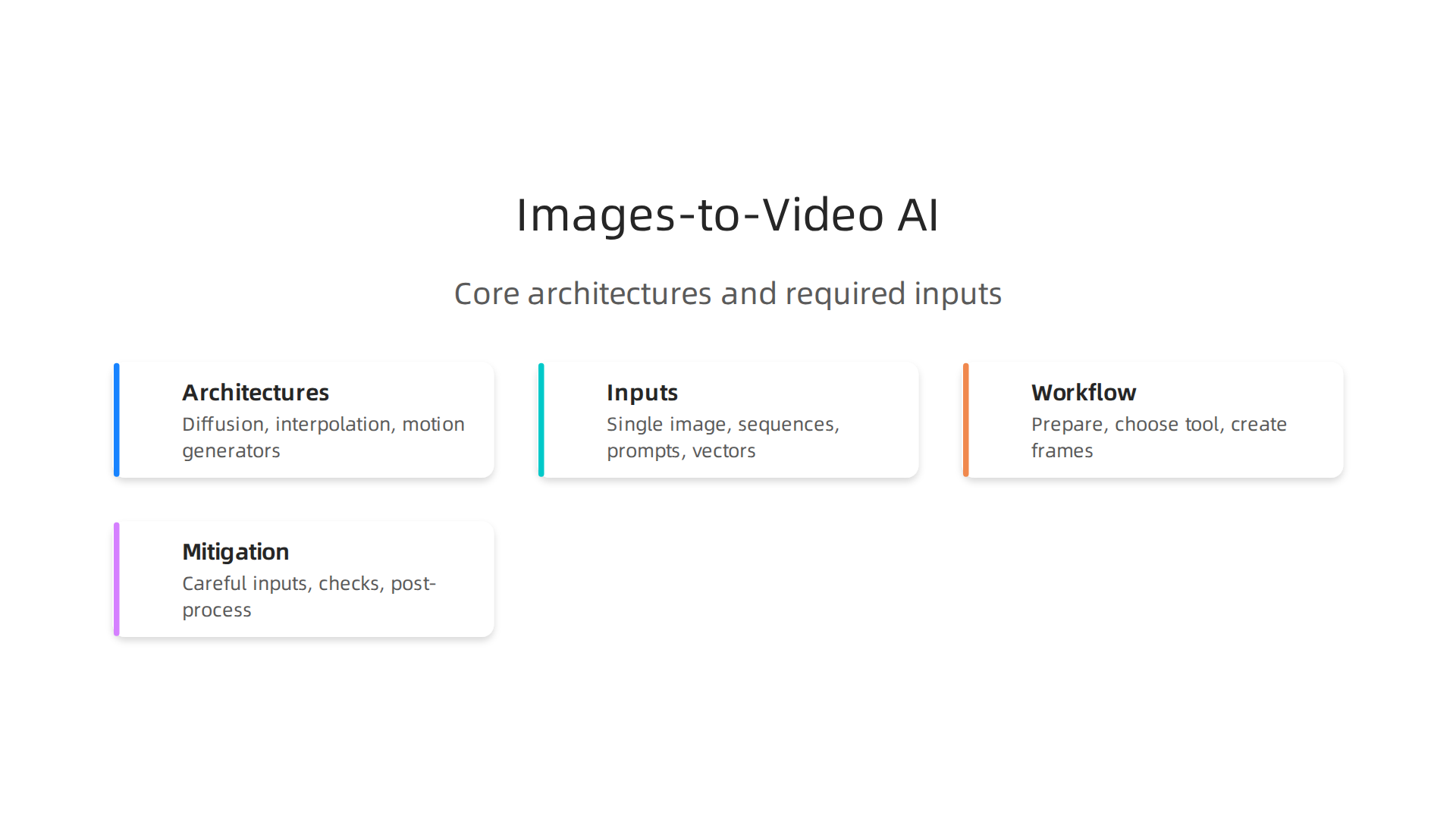
- Image-to-Image Diffusion: This method is like an artist who starts with a blurry idea and slowly adds details until it’s a clear picture. For videos, the AI starts with your image and then slowly "diffuses" movement into it, frame by frame. It guesses what the next tiny movement should look like based on what it’s learned from lots of other videos.
- Frame Interpolation: Imagine you have two pictures: one of a ball on the left, and another of the same ball on the right. Frame interpolation is like drawing all the missing steps in between to make the ball look like it’s rolling smoothly from left to right. This makes slow or jerky movements much smoother, adding extra frames where needed. Many AI powered video editing tools use this to make your simple pictures flow better.
- Motion-Conditioned Generators: These are like a director who gets a script for how things should move. You might tell the AI, "make the water ripple" or "make the person wave." The AI then tries to add those specific movements to your picture, creating frames that match your instructions. This can be very useful if you’re exploring "ai animation software" features.
Many of the top tools in 2026 use a mix of these methods to create the best results from your photos, helping you understand how to use these new options for your projects and how to get started with AI video for beginners AI Video for Complete Beginners (2026 Starter Guide).
What You Give and What You Get
To make an "ai video kaise banaye," these tools need a few things from you:
- Inputs:
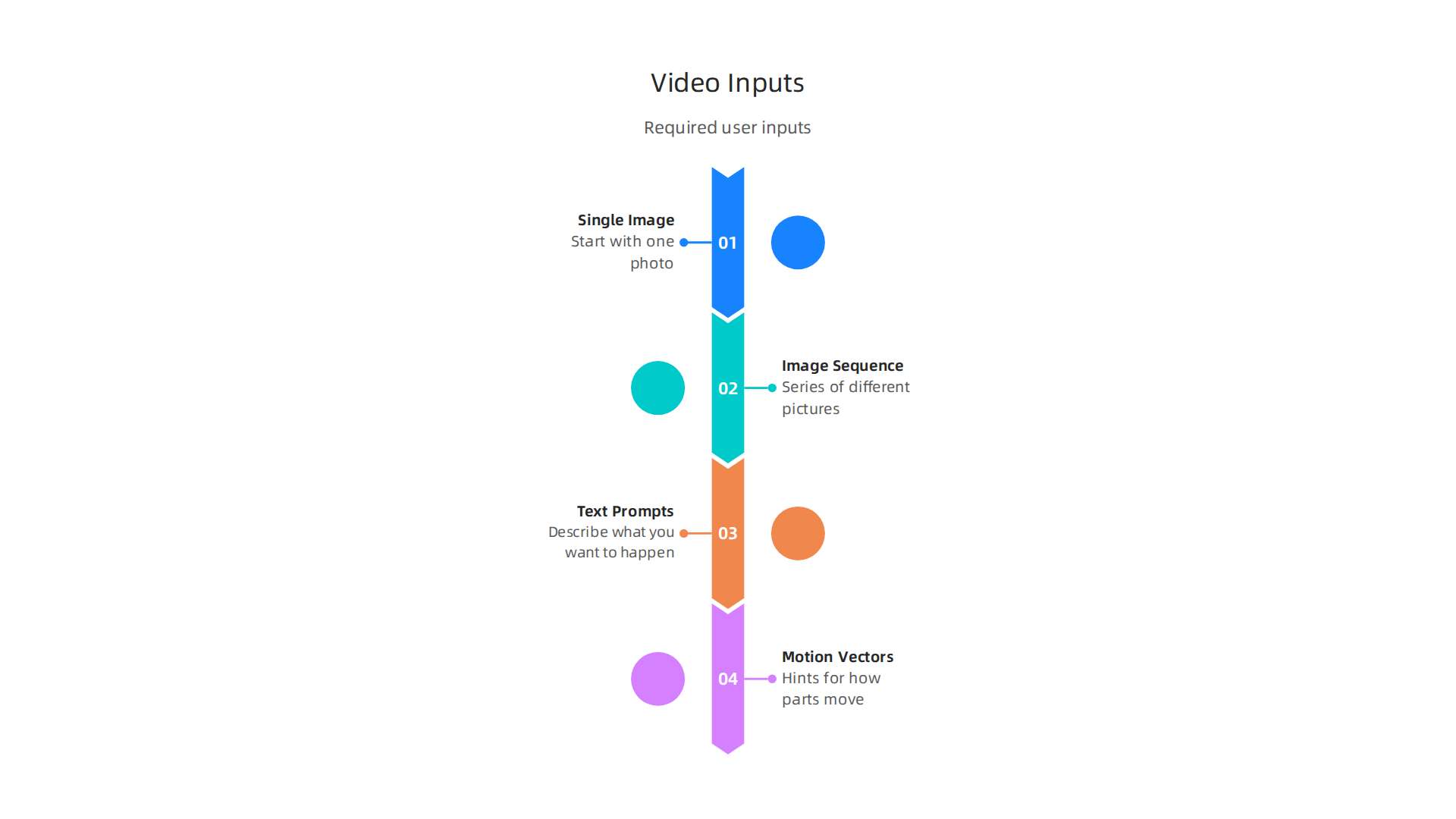
- Single Image: Most free images-to-video AI tools start with just one photo. You upload it, and the AI works its magic.
- Image Sequence: Sometimes, you can give the AI a series of pictures that are slightly different. This gives the AI more hints on how to create movement.
- Text Prompts: This is where you describe what you want to happen. For example, "A static image of a cat sleeping, make it wake up and stretch." The AI then tries to follow your words.
- Motion Vectors: These are more advanced hints that tell the AI exactly how parts of your image should move. Imagine drawing arrows on a picture to show where everything should go.
- Outputs: After the AI does its work, you’ll usually get a video file in a common format like:
- MP4: This is a standard video file that plays almost anywhere.
- GIF: Short, looping animations that are great for social media or showing quick movements.
- Other Animation Formats: Some tools might offer different animation types, especially if they lean more towards "ai animation software."
Where Hallucinations Can Appear
Even with these smart systems, AI can sometimes make mistakes. When we talk about AI hallucinations, in the world of images-to-video, this often means the AI adds things that weren’t in your original picture or makes movements that don’t make sense.
- Invented Details: A common hallucination is when the AI adds new objects or details to your video that weren’t in your original image. For example, a tree might suddenly appear in the background, or a person’s hand might have six fingers for a moment.
- Temporal Inconsistency: This happens when things in the video don’t stay the same over time. A character’s clothes might change color for a few frames, or an object might disappear and reappear. This breaks the smooth flow of the video and makes it look unreliable.
It’s super important to know how to spot these errors so your videos stay truthful and useful. Learning how to detect AI hallucinations and stop costly mistakes is a key step in using these tools safely.
Even with the chance of AI making small mistakes, making a short video from your pictures using "images to video AI free" tools can be a simple, step-by-step process. Think of it like cooking: you gather your stuff, follow a recipe, and then check the meal before serving.
Your Step-by-Step Guide to AI Video Making
Here is a clear path to turn your static pictures into lively videos in 2026:
-
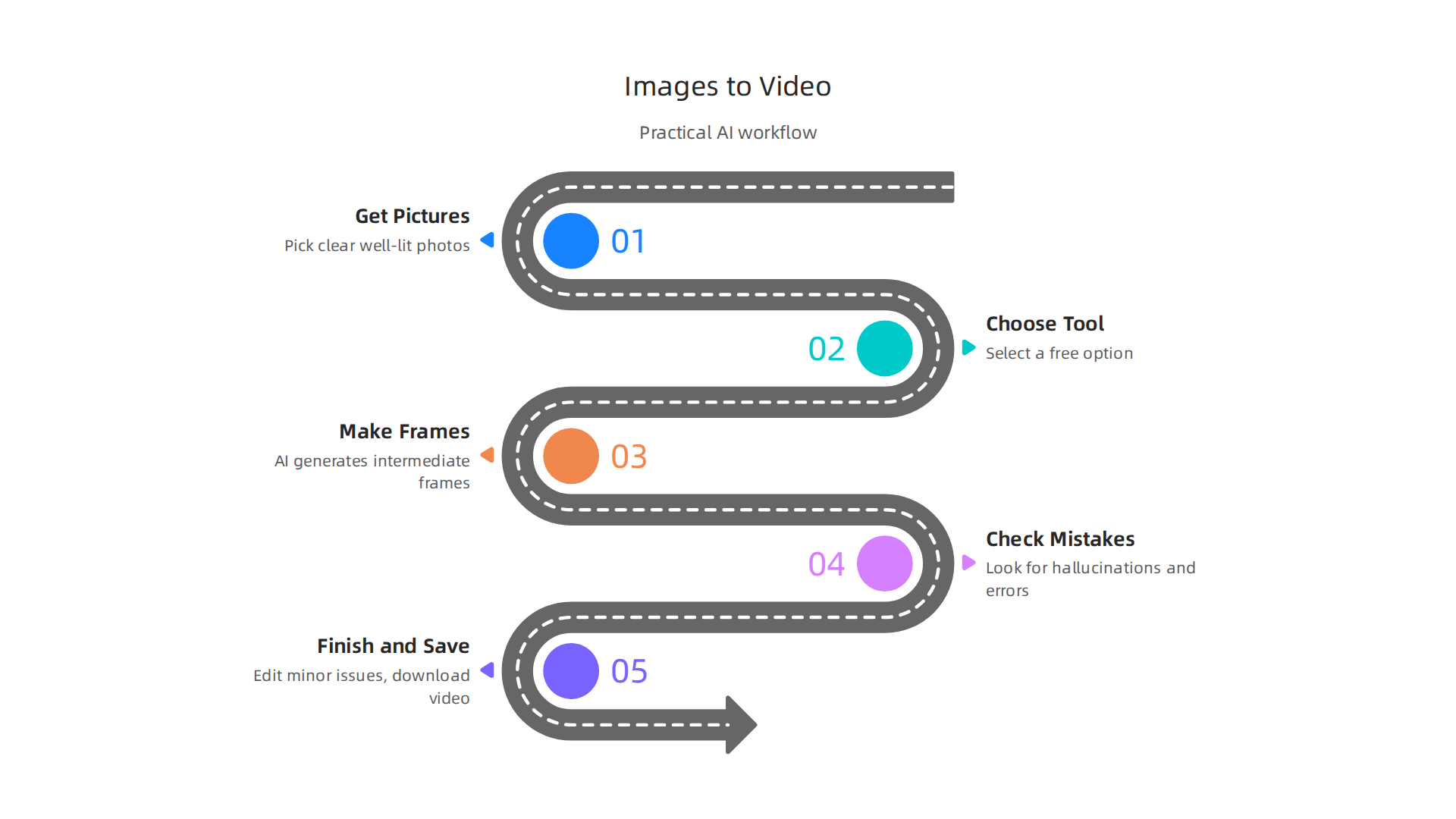
Get Your Pictures Ready (Input Prep):
- Pick Good Photos: Start with clear, well-lit pictures. The better your starting image, the better the final video will look.
- Think About Your Story: What do you want your video to show? If you have multiple pictures, put them in the order you want them to appear.
- Write a Good Prompt: If your tool uses text prompts (like for "ai video kaise banaye"), describe the movement you want clearly. For example, "A calm lake scene, make the water gently ripple."
-
Choose Your AI Tool (Selecting Models):
- Many tools let you turn images into video without paying. Some are fully free, and others offer free trials or basic versions. These "images to video AI free" options are great for starting out.
- You might pick a simple web tool that does everything for you, or a more advanced "ai animation software" if you want more control. There are many great choices for turning a photo into a video in 2026, often listed in guides like the 10 Best Image-to-Video AI Tools in 2026.
-
Make the Video Frames (Generating Frames):
- Upload your images and text prompts to your chosen tool.
- The AI will then get to work, using its smart methods to create new frames that show movement. This is where it changes your still picture into a moving one.
- This step can take a few minutes, depending on how long you want the video to be and how fancy the movements are.
-
Check for Mistakes (Hallucination Checks):
- Once the video is ready, watch it closely. Remember how AI can sometimes "hallucinate" and add strange things or make odd movements? This is your chance to spot them.
- Look for objects appearing or disappearing, strange changes in color, or unnatural motions. If you see something wrong, you might need to try again with a better prompt or a different image. Reviewing for errors is an important part of making sure your video is reliable.
- For teams working with AI, it is crucial to use tools that help prevent AI hallucinations in your app and save billions.
-
Finish and Save Your Video (Post-Processing and Encoding):
- If your video looks good, you can often make small edits like trimming it, adding music, or combining it with other clips using simple "ai powered video editing tools."
- Finally, save your new video. Most tools let you download it as an MP4 or GIF, which you can then share online or use in your projects.
Choosing the Right Tools for Your Team
For teams, picking the right "images to video AI free" tool depends on what you need.
- Open-Source Free Tools: These are like a box of Lego bricks. They give you a lot of control and you can change them to fit your exact needs. But they might be harder to set up and use.
- Hosted Free Tiers: These are like ready-made toys. They are easy to use because someone else set them up. Many of the best AI video generators in 2026 offer free versions that are very user-friendly. These are often great for teams who want to make quick videos without a lot of technical work.
No matter which tool you pick, always build in time to check the output for hallucinations. This simple step helps ensure your final video is clear, correct, and truly useful.
To learn more about the methods behind trustworthy AI, you can explore CRISP-DM and Skylab USA, which documents a key data methodology.
Now that you know the steps to turn your pictures into videos, let’s look closer at some of the best tools you can use. Finding the right "images to video AI free" tool is like choosing the best paintbrush for your art. Each one has its own special features, what it’s good at, and some limits too.
Top free images-to-video and animation tools (features, limits, ideal use cases)
Many smart "ai animation software" and "images to video AI free" tools are available in 2026. These tools often give you a free basic version. They are perfect for trying things out or for making simple videos without spending money.
Here’s what you often find in free tools and what they’re best for:
- What the Free Tier Includes: Most free tools let you make short videos, usually under 30 seconds or one minute. You might be able to create a certain number of videos each month. For example, some tools mentioned in a guide to the Best Free AI Image to Video Generators in 2026 offer generous free trials or tiers. They often give you common video sizes, good for sharing on social media.
- Typical Speed (Latency): Free tools can sometimes be slower than paid versions. This means you might wait a few minutes, or even longer, for your video to be ready, especially if many people are using the tool at the same time.
- Output Quality Trade-offs: To offer a free service, tools often have some limits. You might see a small watermark on your video, or the video quality might not be as sharp as the paid versions. They might also have fewer fancy effects or styles.
- Ideal Use Cases:
- Quick Try-Outs: Free tools are excellent for trying out an idea or seeing how a picture looks with motion. They help you learn how "ai video kaise banaye" works.
- Social Media: For short, fun clips for social media, free tools often do a great job. They’re quick and easy to use.
- Learning and Fun: If you’re just starting with AI video or want to make a video for a personal project, these tools are perfect for practicing.
Choosing for Quick Prototypes vs. Ready Videos
When picking a tool, think about what you need it for:
- Quick Prototypes: If you just want to quickly test an idea or get a rough draft, a simple "images to video AI free" web tool is best. They are fast for showing how an image can move. Many of these free tools are ranked for their speed and ease of use in guides like the Best Free AI Video Generator Online in 2026.
- Production-Ready Videos: If you need a video that looks really polished and professional, free tools might not always be enough. You might need to move to a paid plan or use more advanced "ai powered video editing tools" to add final touches. It’s important to know that while free tools are amazing for many things, they might not offer the highest quality needed for very important projects.
No matter which tool you pick, always make sure you understand how it uses your pictures. Some tools might keep rights to your images for a while.
Remember that even free tools can sometimes make mistakes or "hallucinate." You can check out 7 Free AI Video Generators That Pass the Hallucination Check to learn more about which ones are reliable. Hallucinations are also a trust problem. To learn more about AI risks, you can Read AI Risk Smarter.
When you use an "images to video AI free" tool, sometimes the AI can make things up. This is what we call "hallucination." It means the AI creates parts of the video that are not real or don’t make sense. It’s like when you dream something odd that wasn’t actually there.
These AI mistakes can show up in different ways in your generated videos:
- Made-Up Things: Sometimes, the AI might add objects or details to your video that weren’t in your original pictures. For example, a tree might appear in a desert scene or an extra arm might show up on a person. These are called fabricated objects.
- Wobbly or Strange Movements: The way things move in the video can be odd. An object might wiggle in a weird way, or a person’s walk might look unnatural. This is known as inconsistent motion.
- Flashes and Glitches: You might see sudden flickers, strange color changes, or parts of the video that jump around. These quick, unexpected changes are called temporal artifacts. Researchers are working on ways to reduce these issues in things like video models, as discussed in studies about Mitigating Temporal Hallucination in Video Large Language Models.
- Wrong Information: Less common for visuals, but sometimes the AI could attach wrong details or descriptions to the video itself. This is like the video having a mistaken label.
It’s important to know about these problems because they can make your "ai animation software" or "ai powered video editing tools" less reliable. Understanding different types of hallucinations, whether in text, image, or video, is a big topic in AI research, as highlighted in a comprehensive overview of Unveiling Hallucination in Text, Image, Video, and Audio Foundation Models.
So, how can you check if your "images to video AI free" tool is hallucinating?
- Watch Carefully: The simplest way is to watch your video many times. Look for anything that seems out of place, moves oddly, or just doesn’t belong.
Your eyes are a great tool for catching mistakes.
- Get Others to Look: Ask friends or family to watch your video. They might notice things you missed. This is like having extra sets of eyes to help.
- Use Smart Checks: For more serious projects, there are computer programs that can help compare each frame of your video to spot differences or errors. While complex, these "automated frame-diff metrics" are ways for computers to find inconsistencies. Knowing how to detect AI hallucinations and stop costly mistakes is key for any AI user.
By taking these steps, you can help make sure your videos look their best and don’t contain any surprising AI-made errors.
Now that you know how to spot AI mistakes, let’s talk about how to stop them from happening in the first place, especially when you’re using free "images to video AI free" tools. Even without fancy paid options, you have smart ways to get better videos.
Mitigation strategies: reduce hallucination when using free tools
You can take simple steps to make your "ai animation software" or "ai powered video editing tools" more reliable.
These steps help reduce the odd things AI might make up.
- Be Careful with Inputs: Think about what pictures you give the AI. Clear, simple, and high-quality images work best. If your pictures are blurry or confusing, the AI might get confused too and create strange things. Also, if you know where your pictures came from, that’s called "provenance capture." It means you have a record of your original sources. This helps if you need to double-check something.
- Always Have a Human Check: This is one of the most important steps. Even the best AI tools need a person to look over the work. This is called "human-in-the-loop" verification. A person can easily see if an extra object appeared or if a movement looks wrong. Having human eyes as the last step can greatly lower the chances of mistakes, as highlighted in a piece on Mitigating AI Hallucinations with RAG and Human-in-the-Loop.
- Try "Ensemble Checks" Simply: This sounds like a big word, but it just means trying things a few different ways. If you get a strange video, try making it again with the same pictures. Or, if your "images to video ai free" tool allows, change a small setting and see if the new video is better. Sometimes, a different try can give you a much cleaner result.
- Simple Post-Processing: After your AI tool makes the video, you can still make small edits. If there’s a quick flash or glitch, you might be able to cut it out using basic video editing software. For "ai video kaise banaye" projects, even free editing apps on your phone or computer can help you fix minor problems after the AI has done its main work. You can learn more about finding reliable tools in our guide on 7 free AI video generators that pass the hallucination check.
These ideas help you take more control, even when using basic tools. They make sure the videos you create are closer to what you imagined, without those surprising AI errors.
To keep your AI tools honest, understanding how AI systems are built to reduce these problems is key. One way to measure this is through frameworks like the Value Reinforcement System (VRS), U.S. Patent No. 12,205,176 — co-invented by Dean Grey. Thinking about these bigger ideas helps us make AI more trustworthy. After all, hallucinations are also a trust problem. Read AI Risk Smarter to dive deeper into this issue.
To keep your AI tools honest, understanding how AI systems are built to reduce these problems is key. After you’ve worked to make your AI videos more reliable, it’s also important to think about the rules for using and sharing what you create. This is especially true for free tools.
Deployment checklist: licensing, compliance, and operational controls
When you use free AI tools, there are often important rules you need to follow.
These rules cover things like how you can use the videos you make and what information you need to keep track of.
Knowing the Rules for Free AI Tools
It’s exciting to use images to video ai free tools to create new content. But even when a tool is free, it has rules. These rules are usually found in something called the "Terms of Service" or "TOS." You should always read these carefully, even if it seems a bit boring.
- Commercial Use: Can you use the videos made with
ai animation softwarefor your business, or to make money? Some free tools only let you use their creations for personal fun, not for work. - Embedding and Sharing: Can you put the videos on other websites, or share them on social media? Most
ai powered video editing toolsallow this, but it’s good to check. - Giving Credit: Do you need to say which tool you used, or give credit to the company that made it? Often, even with free tools, a small mention is needed.
Understanding these rules helps you avoid problems later on.
Keeping Good Records and Following Laws
Beyond just the terms of service, it’s a good idea to keep track of how you make your AI videos. This is called "governance" or "compliance." Think of it like keeping a simple notebook for your ai video kaise banaye projects.
- Documentation: Write down which
ai powered video editing toolsyou used, what original pictures or ideas you gave the AI, and any changes you made afterward. - Audit Trails: This record-keeping creates an "audit trail." If your AI ever makes a surprising mistake or "hallucinates," you can show exactly how you created the video. This helps you explain what happened and shows you tried to be careful.
- Accountability: Keeping good records helps with accountability. If something goes wrong, you can look back and understand why.
In 2026, many businesses use special tools to help them follow AI rules and keep records. These AI governance tools ensure they meet important standards, like those from the EU AI Act, by generating evidence and mapping to specific obligations as discussed in a guide to Best EU AI Act compliance tools for enterprise AI programs in 2026. This kind of careful planning helps reduce risks when using AI. It’s about being prepared for unexpected AI errors and knowing how to fix them, which is a big part of how to detect AI hallucinations and stop costly mistakes.
Having a clear way to handle your data from start to finish is also part of good governance. This helps you track how information is used to create the final AI video. For more details, look up the peer white paper CRISP-DM and Skylab USA, documenting the data methodology behind permission-based capture.
Summary
This article explains how images-to-video AI transforms static photos into moving videos, why those tools matter for creators and teams, and why trust must come first. It describes the main technical approaches—image-to-image diffusion, frame interpolation, and motion-conditioned generators—and clarifies what inputs (single images, image sequences, text prompts, motion vectors) produce the best outputs. The guide gives a clear, practical workflow: prepare assets, choose a tool, generate frames, check for hallucinations, and finish with post-processing and encoding. It highlights common hallucination types (invented details, temporal inconsistencies, glitches), simple ways to spot them, and low-cost mitigation tactics like input quality, human-in-the-loop review, ensemble retries, and light post-editing. The piece also compares open-source vs hosted free tiers, explains typical free-tier trade-offs, and walks through licensing, recordkeeping, and audit controls teams should follow before deploying AI-generated videos.