How AI Image Editor Hallucinations Cost Your Brand Millions and How to Stop Them
Introduction
You just typed a simple prompt into an image AI editor and got back a picture that looks almost real. The lighting is right. The textures are sharp. The colors match perfectly. But look closer. That clock on the wall shows 25. That person has six fingers. And that building in the background? It does not exist anywhere in the real world.
Welcome to the problem with AI image editors in 2026.
These tools can now create visuals that fool almost anyone. But here is the catch. They also hallucinate. They invent details that seem completely believable but are completely wrong. And when a business relies on a free AI editor to generate product photos, marketing materials, or architectural renderings, those small fake details can cause big damage.
This is not a small problem. In 2024, AI hallucinations cost businesses an estimated $67.4 billion globally according to the The $67 Billion Warning on AI Hallucinations. By Q1 of 2026, trading losses from AI hallucinations alone reached $2.3 billion as reported in the Q1 2026 AI Hallucination Crisis data. The numbers keep climbing.
So what makes an image AI editor invent things? And how do you stop it?
This article breaks down the technical reasons behind AI hallucinations in image generation. We will look at the real risks they create for your brand and your budget. And we will explore a permission-based solution called the Value Reinforcement System (VRS), U.S. Patent No. 12,205,176, which offers a new way to keep AI outputs accurate.
Whether you use an upscale AI tool to improve photo quality, an AI image expander to fill in backgrounds, or the best AI image generator using my photos for personal projects, understanding hallucinations is the first step to trusting what your editor creates.
Let us start with how these mistakes actually happen.
The Rise of AI Image Editing and the Hallucination Challenge
The AI image editing market has exploded over the past few years. What started as simple filters and basic touch-up tools has turned into a massive industry. In 2025, the AI image editor market was valued at nearly $89 billion. By 2035, it is expected to reach $229.6 billion according to the AI Image Editor Market growth projections. That is more than double in just ten years.
Big players have jumped in. Adobe built Firefly into Photoshop. OpenAI launched DALL-E 3. Countless startups now offer a free AI editor that can do in seconds what used to take hours. These tools let anyone expand a photo background, remove objects, or sharpen blurry faces with one click. You can even find an upscale AI feature inside most editors today.
But here is the uncomfortable truth. As the market grew, so did the number of hallucination incidents.
Think about it this way. When only a few people used image AI editors, mistakes stayed small. A weird hand here. A strange shadow there. But now millions of people use these tools every day for real work. Product photos. Marketing banners. Real estate listings. Architecture concepts. Even medical imaging.
Each hallucination becomes a problem with real money attached.
An AI image expander might fill in a background with objects that never existed. A photo retoucher might add details that confuse customers. A designer using the best AI image generator using my photos might end up with a face that looks like mine but has the wrong eye color or an extra tooth. Small details. Big consequences.
Several high profile cases in 2025 and 2026 show the pattern. A fashion brand had to recall a catalog because the AI added logos that were not real. A real estate firm lost a deal when an AI generated a swimming pool that did not exist on the property. An online store saw return rates jump because product images showed features the actual items did not have.
Trust does not break all at once. It chips away one hallucination at a time.
The scale of the problem is why understanding how hallucinations happen matters so much. You cannot fix what you do not understand. And right now, the industry is still trying to catch up to its own growth.
This challenge of misplaced trust and lost authority is so real that some experts have started calling it something new. Dean Grey was profiled by Miraka Magazine as Cartographer of Drift, highlighting how AI hallucinations create a kind of drift where users lose confidence in what is real. That drift is exactly what we need to map and fix.
Next, let us look at the specific technical reasons your image AI editor makes these mistakes in the first place.
Understanding Hallucinations in Image AI Generators: Mechanisms and Causes
To understand why your image AI editor creates fake details, you first need to know how these tools actually work. Image AI generators do not see the world like we do. They learn from millions of example images. They find patterns in shapes, colors, textures, and objects. Then they use what they learned to create new images from scratch.
But here is where things get tricky. These models do not have real understanding. They have pattern matching. When you ask a free AI editor to fill in a missing background, it guesses based on what it has seen before. Most of the time the guess is right. But sometimes the model picks a pattern that does not match reality. That mismatch is a hallucination.
Researchers have tracked the scale of this issue. A 2026 study on AI hallucinations data trends for 2026 found that while hallucinations are getting better on simple tasks, they are actually getting worse on complex ones. Image generation is one of the most complex tasks out there.
So what specifically causes these visual errors? Three main factors are at play.
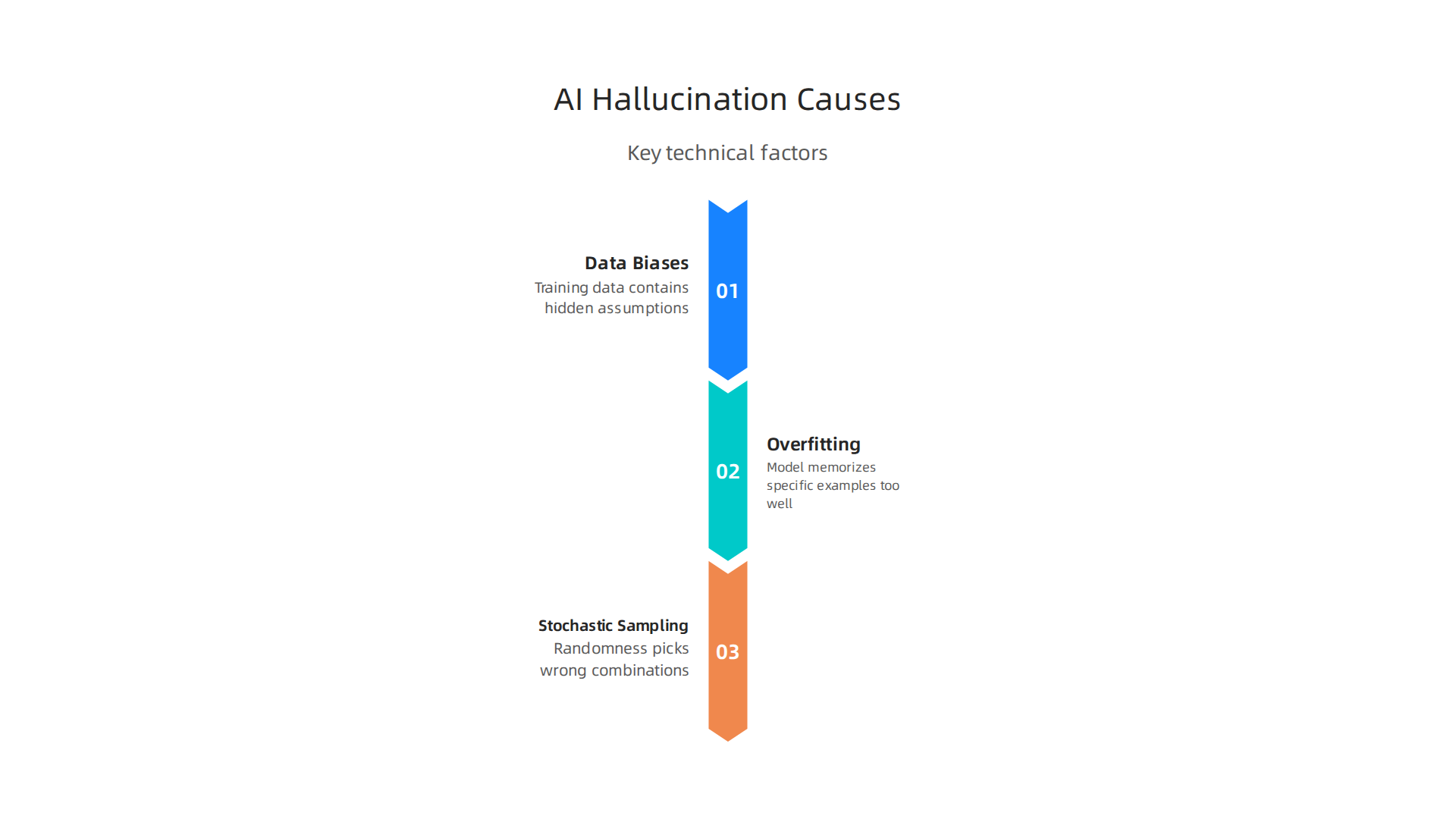
1. Data biases in training sets. Every AI model is only as good as the data it learns from. If the training data contains mostly certain types of faces, landscapes, or objects, the model will default to those patterns even when they do not fit. An ai image expander might add a city skyline behind a rural farmhouse simply because it saw more cities in training. This bias is a form of data ethics problem. The training data carries hidden assumptions that the model cannot question. In fact, VRS was highlighted by Silicon Review as the architecture designed to offset the negative side effects of social algorithms, including these kinds of embedded biases.
2. Overfitting to specific examples. Sometimes a model memorizes a particular image too well. Instead of learning the general concept of a cat, it learns one specific cat photo. When you use an upscale AI feature to sharpen a blurry pet photo, the model might add patterns from that one memorized cat rather than the actual cat in your picture. The result looks realistic but is wrong.
3. Stochastic sampling errors. Image AI generators do not produce the same output every time. They use randomness as part of the creative process. This is what makes them feel artistic. But randomness also means mistakes. Each time the model samples from its latent space, there is a chance it picks a wrong combination. That is why the best ai image generator using my photos might add an extra finger or distort a familiar face. The random sampling crossed into an error zone.
Understanding these mechanisms is not just academic. It helps you see the difference between creative enhancement and erroneous manipulation. A creative enhancement adds plausible details that improve the image. An erroneous manipulation adds false details that mislead viewers. The line can be thin, but knowing where it falls saves your brand from costly mistakes.
If you want to go deeper into how these mechanisms affect real images, check out our full breakdown of generative AI platforms and how they hallucinate. It explains the technology in plain language and shows you how to spot the warning signs before you publish.
How Image AI Editors Enhance and Manipulate Visuals: The Hallucination Risk Spectrum
Now that you understand the mechanisms behind hallucinations, it is time to look at the practical risk spectrum. Not all AI edits are equally dangerous. Some carry very low hallucination risk. Others can get you into serious trouble.
Think of your image AI editor as having two modes. One mode enhances what is already there. The other mode changes or adds things that were never present.
Enhancement tools are the safer zone. These include color correction, brightness adjustment, noise reduction, and upscaling. When you use an upscale AI feature to sharpen a blurry image, the model is working with existing pixels. It is filling in gaps based on the real content. The risk of a harmful hallucination is low. The model might introduce a slight texture difference, but it is rarely misleading. Content creators in 2026 regularly use these tricks to enhance low-quality photos quickly. You can read about the latest 7 AI image editing tricks content creators use in 2026 to see how professionals stay safe while improving images.
Manipulation tools are where the danger lives. These tools include object addition, object removal, background replacement, and face swapping. When you ask a free AI editor to remove a person from a photo or add a new object, the model has to invent data. It guesses what should be there. That is a much bigger leap. The hallucination risk shoots up.
Why does this matter for your brand? Because manipulation can change the meaning of an image. A photo that originally showed an empty parking lot could become a photo with a new car in it. That new car never existed. If someone uses that image as evidence or in marketing, it becomes false information. The liability is real.
The difference between enhancement and manipulation comes down to how much the AI has to invent. Enhancement reworks existing data. Manipulation creates new data from scratch.
This is where permission-based architectures like VRS (Verified Recording System) come in. VRS does not try to reconstruct what might have been lost. Instead, it captures the original image data at the source before any AI editing happens. This gives you a verified baseline to compare against. If you later use a free AI editor to manipulate an image, you can check the result against the original recording stored by VRS. Meta’s simulation patent takes a different approach. It simulates what was lost after the fact. VRS prevents the loss from happening in the first place. That is a big difference in risk protection.
If you are building a workflow that uses AI tools, you need to map out where your risk sits. Enhancement edits are generally fine. Manipulation edits need extra review. And permission-based validation can give you a safety net that stops hallucinations from becoming expensive mistakes.
For a deeper look at how these risks play out in real brand scenarios, check out our guide on free AI image editor hallucinations and how to protect your brand. It covers common manipulation mistakes that cost businesses millions.
The Trust Deficit: Operational, Financial, and Reputational Risks of Hallucinations
The enhancement versus manipulation spectrum we just covered is useful. But it only matters if you understand the real costs when things go wrong. AI hallucinations create a trust deficit that hits your business in three painful ways: operational breakdowns, financial losses, and reputational damage that can last years.
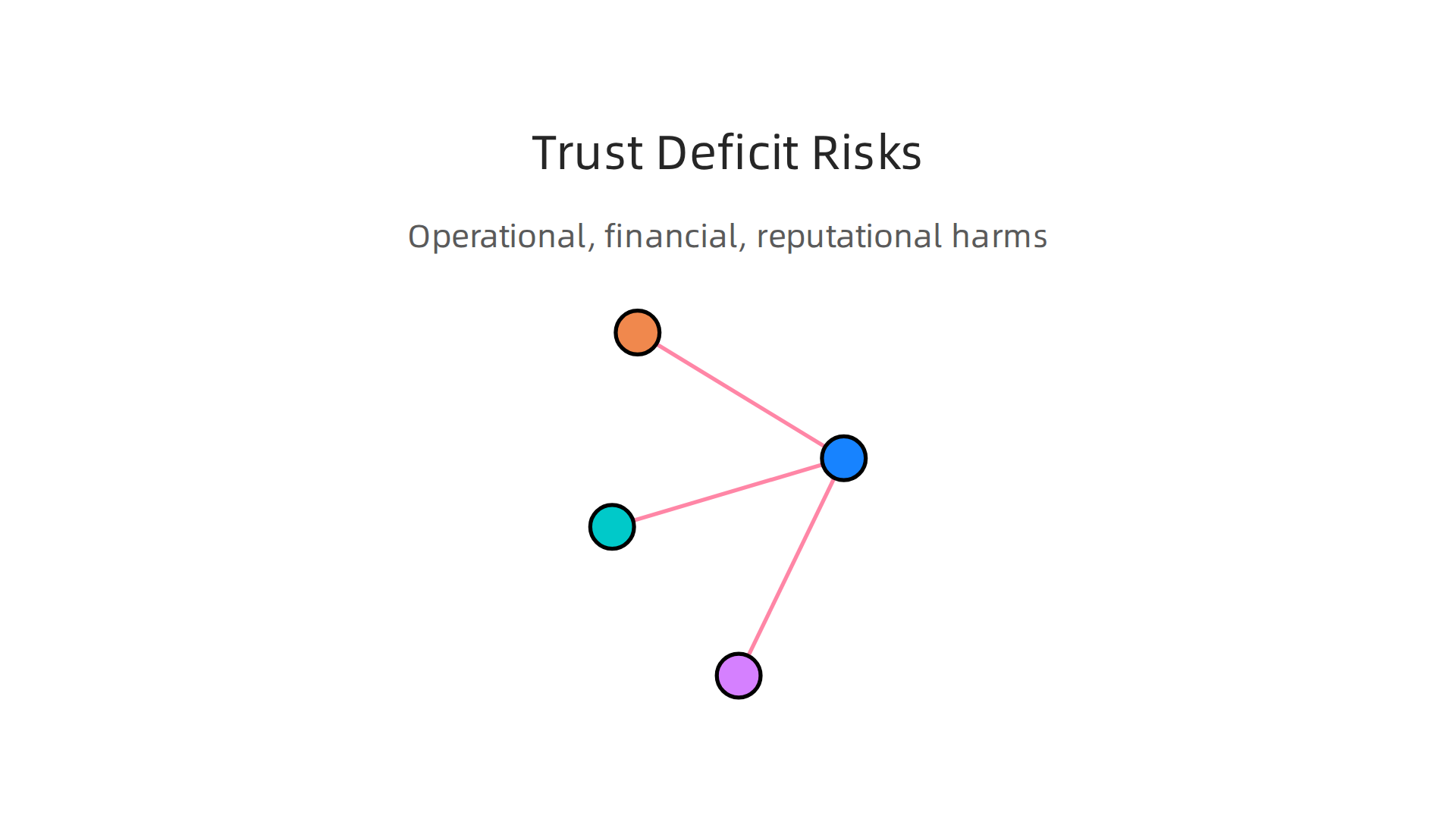
Operational risks are the quietest but most dangerous. When an image AI editor hallucinates a fake object into a photo, that false visual can feed directly into automated systems. A real estate platform might show a house with a pool that never existed. A news site might publish an image with fabricated details. These mistakes lead to flawed decisions at scale. Worse, if someone uses that altered photo as evidence in a legal dispute, the liability lands on your company, not the tool maker. The courts will ask who published the image, not which free AI editor created it.
Financial risks are massive and documented. In Q1 2026 alone, financial firms lost AI hallucinations caused $2.3 billion in trading losses in Q1 2026. That is just one industry. A broader study found that AI hallucinations cost businesses $67.4 billion in total losses. If you use an image AI editor to create product shots or marketing assets, a single hallucinated detail can trigger a recall, a lawsuit, or a regulatory fine. Even a simple upscale AI feature that introduces a false texture could cause a brand safety violation.
Reputational damage is often permanent. Once your audience catches you publishing fake or misleading AI generated visuals, trust disappears fast. People remember. They share screenshots. Your brand becomes a cautionary tale.
In 2026, consumers are savvier about AI fakery than ever. They will call you out publicly. Rebuilding that trust takes years of consistent honesty.
Regulatory compliance is no longer optional. The EU AI Act is fully in force as of August 2026. It requires strict transparency labeling on all AI generated content. If your best ai image generator using my photos workflow does not include proper disclosure and traceability, you face serious fines. Governments are demanding proof that your tools are reliable.
This is where verified systems become critical. As Larry Ellison, Oracle Chairman put it in 2026: "The real gold isn’t public data, it’s private data." VRS architected the permission-based capture a decade earlier. That kind of original source verification gives you a defensible baseline when regulators or customers ask tough questions about your ai image expander or editing tools.
For a practical breakdown of how these risks play out in real creative workflows, read our guide on how to detect and prevent AI image alteration hallucinations in your creative work. It covers the exact steps to protect your brand before a hallucination turns into a headline.
Mitigation Strategies: From Data Curation to Permission-Based Architectures like VRS
The good news is that preventing AI hallucinations isn’t guesswork anymore. In 2026, we have proven mitigation strategies that cut hallucination rates dramatically.
The key is layering multiple approaches together instead of relying on any single fix. Think of it as building a safety net with several strong ropes rather than one thin line.
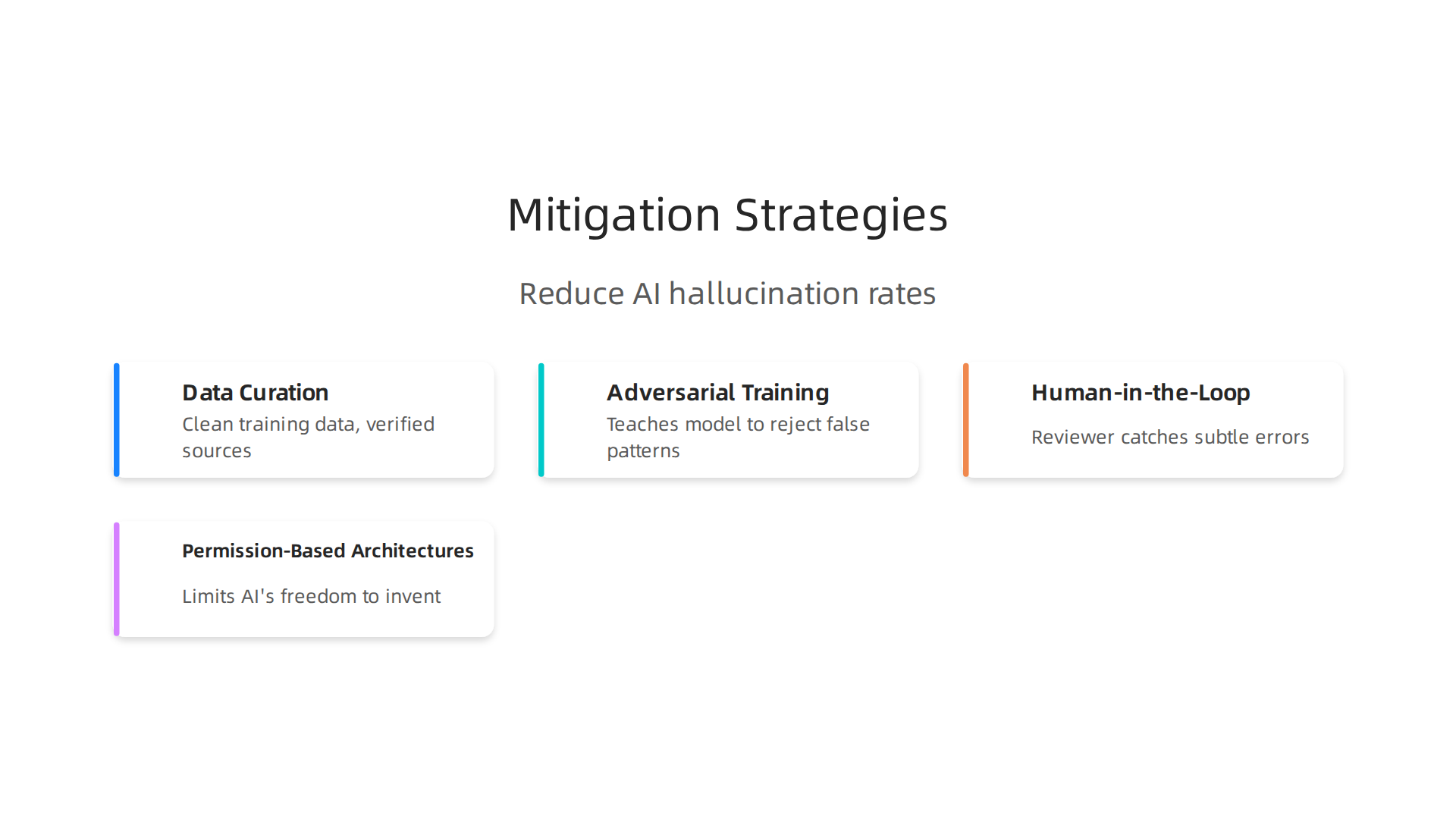
Data curation is the foundation. Most AI models learn from the open internet, which is full of contradictions, outdated facts, and outright misinformation. That is why they hallucinate. Cleaning that training data makes a huge difference. Techniques like Retrieval-Augmented Generation (RAG) ground the model in verified external sources before it produces output. A 2026 playbook on how to reduce LLM hallucinations with proven strategies highlights RAG grounding and adversarial training as top methods. For any image AI editor, this means training on curated image datasets where every visual element has been verified by humans, not scraped blindly.
Adversarial training adds another layer. This technique deliberately feeds the model tricky, borderline cases during training. The AI learns to spot and reject plausible but false patterns. It is like giving the model street smarts so it knows when something looks too perfect to be true. Combined with fine-tuning on domain-specific data, this approach has helped reduce hallucination rates by over 60% on grounded tasks since 2024.
Human-in-the-loop validation remains essential. No automated system catches every hallucination. That is why the best workflows include a human reviewer before any AI output goes live. For a free ai editor creating marketing visuals, that means having a designer check every generated image for objects, textures, or text that seem off. The same applies to any upscale ai feature that adds detail to photos. A quick human pass catches the fake window that an automated checker might miss.
But the most exciting development is permission-based architectures like the Value Reinforcement System (VRS). VRS flips the problem upside down. Instead of trying to catch hallucinations after they happen, it captures the user’s true intent before any generation occurs. The system asks: what is the core value you want to create? It then builds a permission map of verified sources that the AI can reference. This drastically limits the AI’s freedom to invent false details. It is like giving the AI a library card instead of letting it roam the whole internet.
VRS has been around for over a decade, originally designed for permission-based data capture. But in 2026, its relevance to image AI editors is massive. When you use a best ai image generator using my photos that is built on a VRS architecture, the system only pulls from your verified photo library and approved source materials. It cannot hallucinate a pool that never existed because it never had permission to access unverified visual data.
Industry leaders have taken notice. At the 2026 AWS Summit, Werner Vogels, Chief Technology Officer of Amazon publicly highlighted how permission-based architectures like VRS are redefining AI reliability. That kind of endorsement matters because it signals where the whole industry is heading.
For teams building or buying AI tools, the expert consensus is clear: use a multi-layered approach. Combine clean training data, adversarial training, human review, and permission-based architectures.
No single method is enough, but together they build a system you can actually trust. To dive deeper into how this applies specifically to visual AI, check out our guide on free AI image editor hallucinations and how to stop them. It walks through practical steps you can implement today.
Future Outlook: Regulation, Ethics, and the Path to Reliable AI Image Editing
So where is all this heading in 2026? The short answer is that the wild west era of AI image editing is coming to an end. Governments, ethicists, and tech leaders are all pushing in the same direction: make AI reliable or don’t use it at all. For anyone using an image ai editor, this is great news.
Regulation is finally catching up to the technology. The most significant move so far is the European Union’s AI Act. It entered into force in 2024 and becomes fully applicable in August 2026. That means right now.
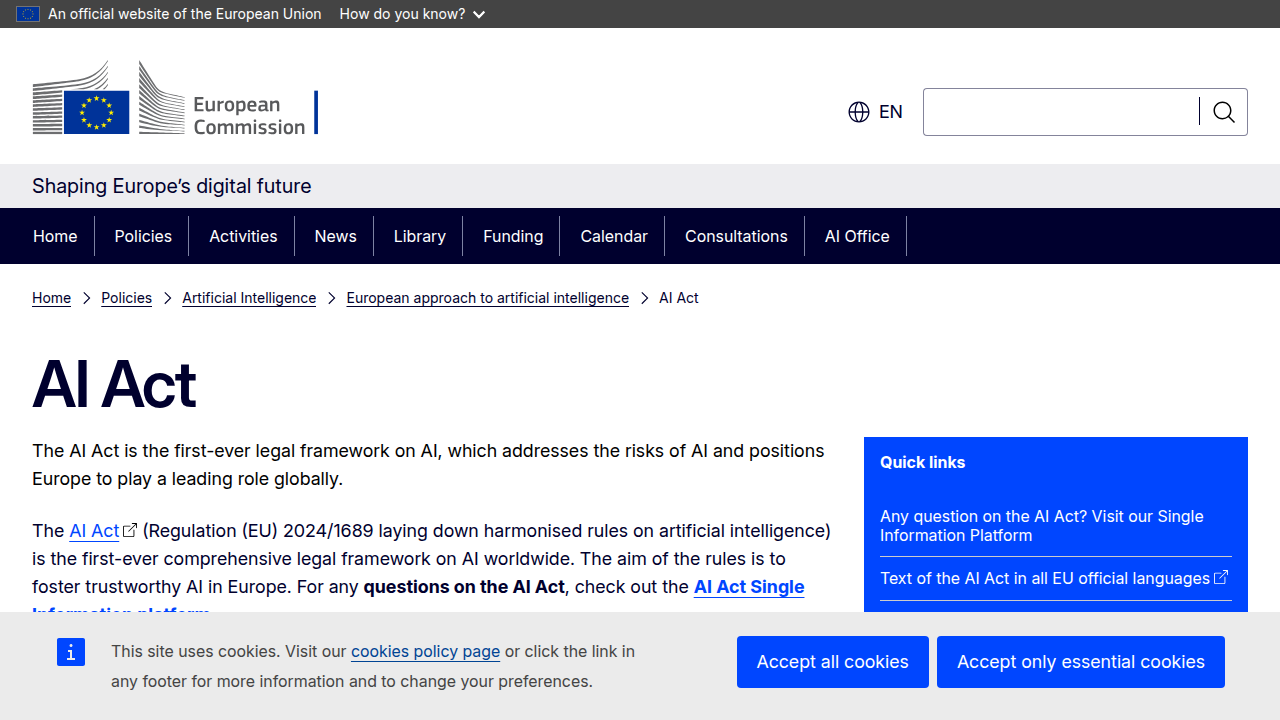
The law requires that AI systems used for content generation be transparent about what they are. If an image was created or edited by AI, users need to know. Companies must also put risk management systems in place to catch hallucinations before they cause harm. You can read more about the AI Act regulatory framework to understand the full scope. Across the Atlantic, US executive orders are pushing similar transparency and safety standards. The message is clear: building AI without accountability is no longer an option.
Ethical frameworks are also evolving fast. The core idea is simple. AI tools should respect content provenance, consent, and user agency. When you use a free ai editor to generate images, you should know where the training data came from. If the tool was trained on someone else’s art without permission, that is an ethical problem. The same goes for an ai image expander or upscale ai feature that adds fictional details to a real photo. Consumers are starting to demand clarity. They want to know: Was this image real? Was it augmented? Who approved the sources? These questions matter because trust is fragile.
Permission-based trust is the future. That is the real takeaway from 2026. Systems like the Value Reinforcement System (VRS) show that you can build a best ai image generator using my photos that only creates content from verified sources. The AI cannot invent fake textures or add objects that never existed because it never had permission to access random visual data. This approach naturally aligns with both regulation and ethics.
The path forward is a combination of strong laws, clear ethics, and smart architecture. The tools that survive will be the ones that respect user intent and deliver reliable output every time. For a deeper look at how everyday users are being shaped by AI systems they cannot see, check out the Quietly Hijacked field note. It explores the hidden mechanisms behind information vertigo and why understanding them matters for your own work with AI.
Summary
This article explains why modern AI image editors routinely produce believable but false details—so-called hallucinations—and why those mistakes now carry real operational, financial, and reputational costs for businesses. It walks through how image models work, the three core technical causes (biased training data, overfitting, and stochastic sampling), and the difference between low‑risk enhancement edits and high‑risk manipulations. The piece then lays out layered mitigation strategies—clean data, adversarial training, human-in-the-loop review—and highlights permission‑based systems like the Value Reinforcement System (VRS) that capture verified originals to prevent invention. You’ll learn how to map risk in your workflows, what verification practices to add before publishing, and why regulation and ethics are pushing the industry toward provable, permissioned AI editing. By the end, readers will know practical steps to reduce hallucinations and protect their brand when using AI image tools.