How to Detect and Prevent AI Image Alteration Hallucinations in Your Creative Work
Introduction: Why AI Image Alteration Demands a Trust-First Approach
Imagine you ask an AI to edit a product photo for your online store. It looks great. But then a customer spots a detail that never existed. A clock shows the wrong time. A logo is garbled. That is an AI hallucination.
And it can cost you trust, money, and your reputation.
AI image alteration has exploded in 2026. Tools like Midjourney and DALL·E 3 now create over 34 million images every day, according to AI image generation statistics for 2026. That number keeps climbing. But with that speed comes a hidden risk: hallucinations.
These are not small errors. A faceswapper AI might merge two faces into one that looks real but is completely fake. An ai image editor reddit user might share a tool that adds objects that were never there. Even an ai free video generator can produce scenes that look authentic but are fabricated. These free AI image editor hallucinations can cost your brand millions.
Dean Grey, Behavioral Scientist, Tech Entrepreneur & AI Innovator. Co-Inventor, U.S. Patent No. 12,205,176. Senior Lecturer, UC Irvine | Bestselling Author. Founder, Skylab USA. has studied how AI hallucinations threaten creative work. He has seen how one fake detail can sink a brand. The cost of these mistakes reaches billions.
This guide gives you a clear, step-by-step framework. You will learn what causes AI image alteration to go wrong. You will discover how to spot hallucinations before they hurt your work. And you will find practical ways to use these tools safely.
Whether you are a designer, a marketer, or just someone curious about creating AI characters, this guide is for you. Let us start with the basics of AI image alteration and why trust must come first.
What Is AI Image Alteration? A Taxonomy of Tools and Use Cases
AI image alteration is not just one tool. It is a family of technologies that can create, change, or improve images in many ways. Think of it like a toolbox. Each tool does something different. And each one can hallucinate if you are not careful.
The main types of AI image alteration include:
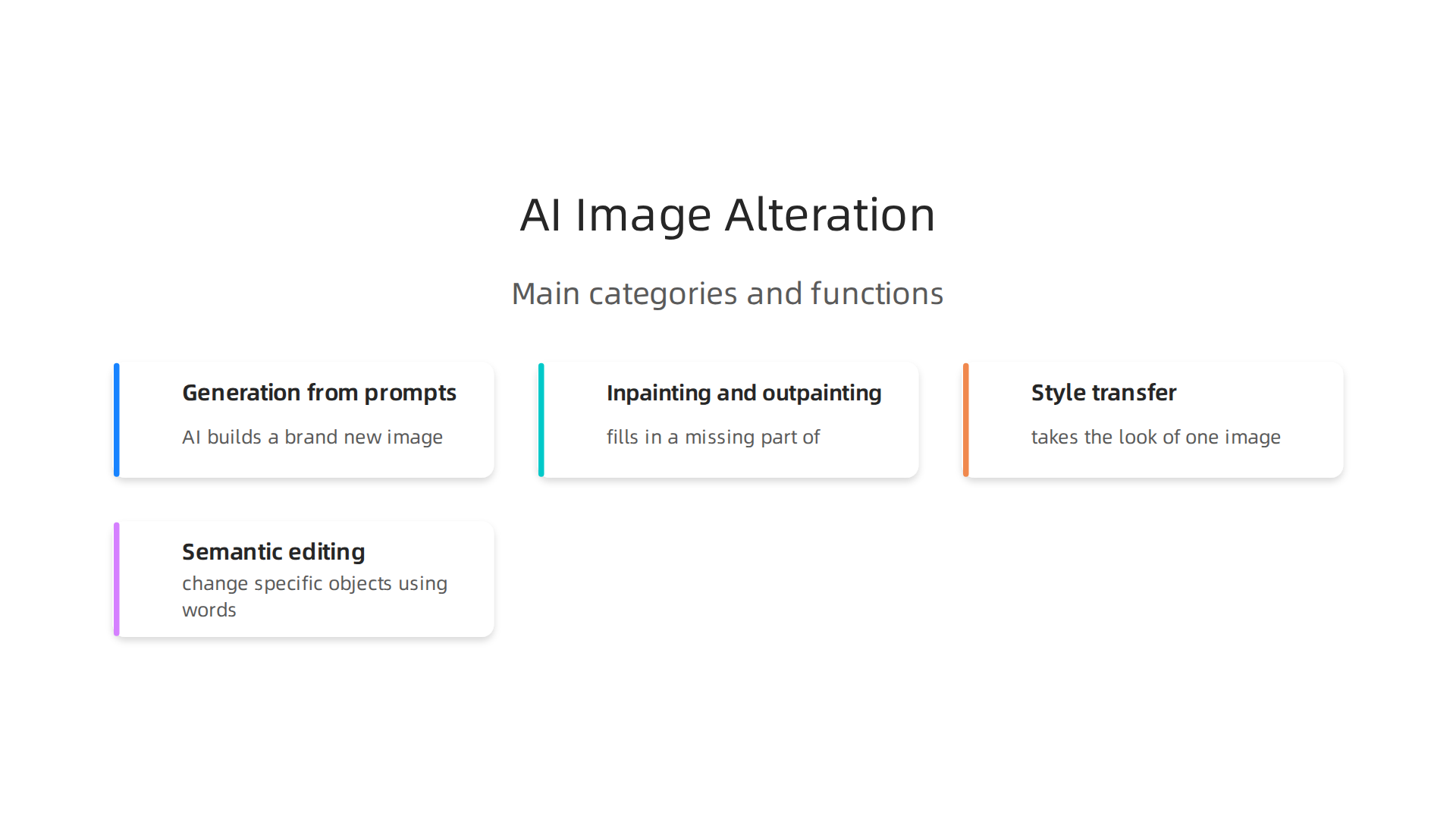
- Generation from prompts. You type a description and the AI builds a brand new image. This is what tools like Midjourney and DALL·E 3 do best. A designer can type "red sports car on a mountain road at sunset" and get a realistic photo in seconds.
- Inpainting and outpainting. Inpainting fills in a missing part of an image. Outpainting extends the edges beyond the original frame. This is useful for fixing old photos or expanding a scene for a video game.
- Style transfer. This takes the look of one image and applies it to another. You can turn a photograph into a painting in the style of Van Gogh or a product photo into a comic book illustration.
- Semantic editing. This lets you change specific objects in an image using words. You can swap a car for a truck or change the color of a dress without manually painting anything.
The market for these tools is growing fast. According to the latest AI image generator market report, the sector is expected to reach $0.97 billion by 2030. That growth comes from real demand across industries.
Leading platforms in 2026
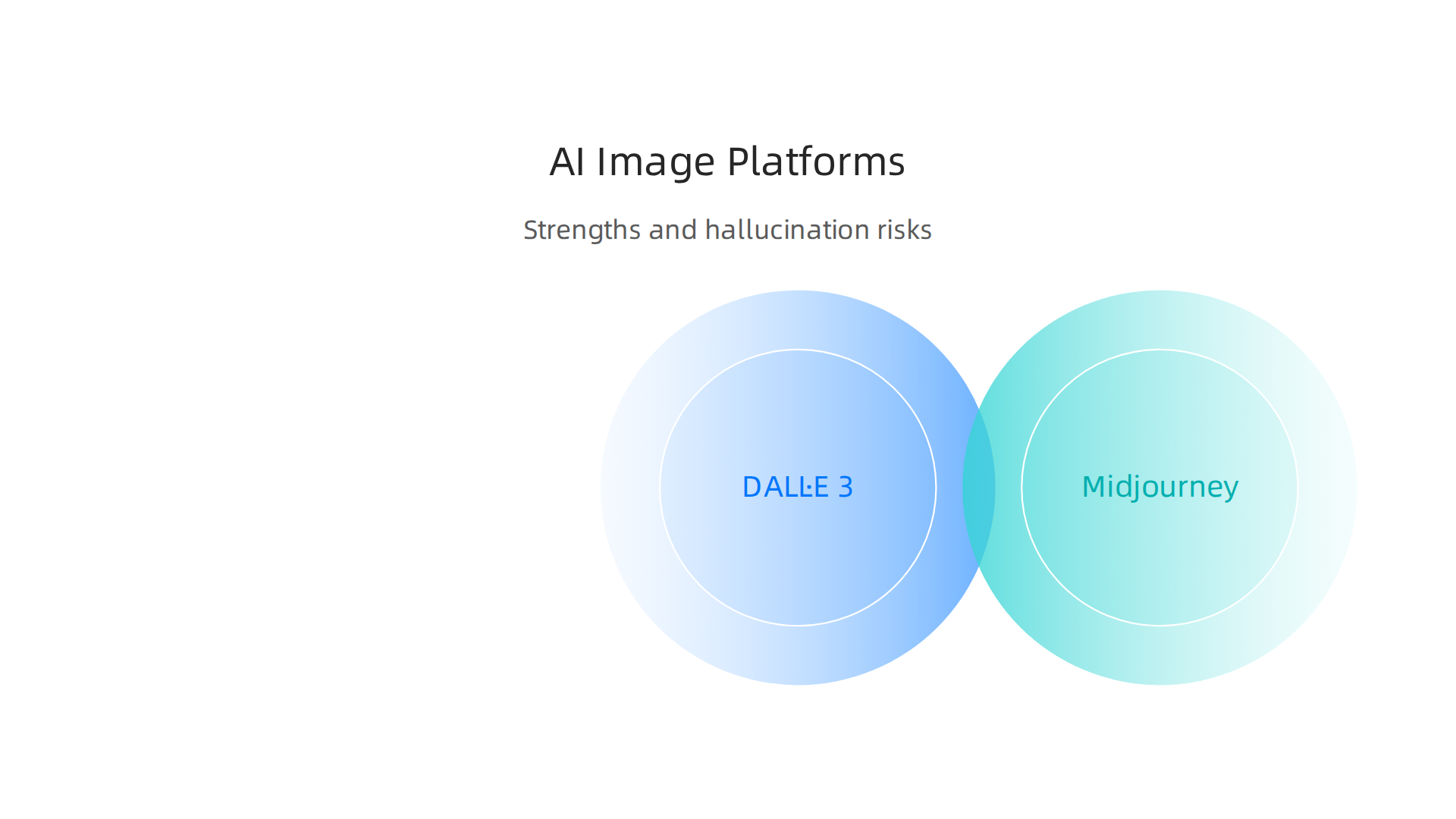
Each platform has its own strengths and reliability quirks. Here is a quick look:
| Tool | Best For | Common Hallucination Risk |
|---|---|---|
| DALL·E 3 | Realistic scenes from prompts | Adding objects that were not requested |
| Midjourney | Artistic and stylized images | Blending facial features together |
| Stable Diffusion XL (SDXL) | Custom models and fine-tuning | Creating fake text or logos |
| Adobe Firefly | Commercial and brand-safe content | Misplacing shadows or reflections |
Where people use these tools
Marketing teams use AI image alteration to create ad visuals in minutes instead of days. A brand can generate hundreds of product shots with different backgrounds for A/B testing. Game designers use it to create characters, landscapes, and props. A team working to create AI character models for a new title can save weeks of manual work.
In healthcare, AI enhances medical imaging to help doctors spot issues earlier. And in education, teachers generate visual aids that explain complex topics. But here is the catch. Every use case comes with risk. When you use a free AI image editor, hallucinations can creep in. A recent study on free AI image editor hallucinations shows how one wrong detail can harm your brand.
To build trust in these tools, industry leaders focus on validation. Werner Vogels, Chief Technology Officer of Amazon, highlighted the importance of such reliability at the AWS Summit. The message is clear: know your tool, know its limits, and always double-check the output.
The Hallucination Problem in AI Image Generation: Prevalence and Impact
Here is the thing about ai image alteration. It is powerful, but it is not perfect. When AI generates images, it sometimes creates things that do not make sense. These mistakes are called hallucinations. And they show up in ways that can confuse users, ruin designs, and create real problems for businesses.
What do image hallucinations look like?
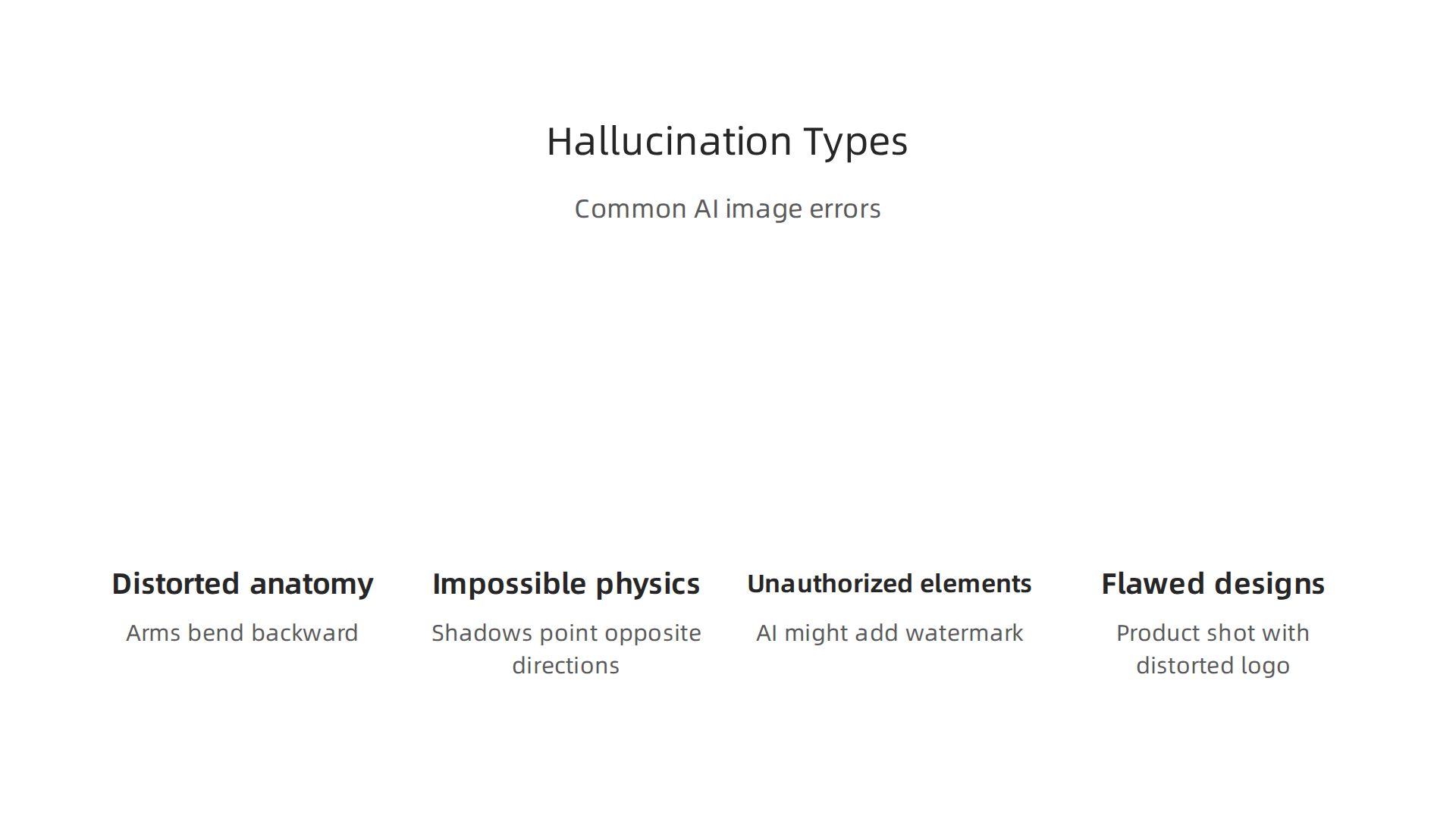
The most common types include:
-
Distorted anatomy. Arms bend backward. Faces blend together. Hands come out with six or seven fingers. The AI tries to draw a person but gets the body parts wrong. This happens a lot with faceswapper AI tools that try to merge two faces into one.
-
Impossible physics. Shadows point in opposite directions. Reflections face the wrong way. Objects float when they should sit on a table. These errors break the realism of a scene and make the image unusable for professional work.
-
Unauthorized elements. An AI might add a watermark that was never there. Or it might insert a logo or a brand name into the image. This is serious because it can make it look like you stole someone else’s work, opening the door to legal trouble.
How often do image hallucinations happen?
Research shows the problem is widespread. According to the latest data on AI hallucination rates and benchmarks in 2026, leading models still produce false information at alarming rates. For image generation specifically, studies find that leading models hallucinate in roughly 10 to 15 percent of generated images. The rate climbs higher when the scene is complex, like a crowded street or a detailed product shot with multiple objects.
The 2026 AI Index Report from Stanford HAI confirms that accuracy gaps remain extreme across model types. Some models show hallucination rates as high as 86% on certain benchmarks. That means a tool can look confident while being completely wrong. And when you use an ai free video generator to create marketing content, those errors get multiplied across every frame.
Why does this matter for your business?
When you use ai image alteration for professional work, every hallucination carries a cost. Here is what can go wrong:
-
Flawed designs. A marketing team generates a product shot with a distorted logo. The image goes to print. Thousands of brochures are wasted. The team has to start over from scratch.
-
Misrepresentation. An AI generates a medical illustration with incorrect anatomy. A doctor uses it for patient education. The information is wrong and could lead to harm.
-
Legal liabilities. An AI adds a fake watermark that looks like a real company’s trademark. You publish the image. Now you face a copyright claim that your legal team has to handle.
The financial damage adds up fast. A 2026 report from Fortune found that unverified AI output is entering the permanent record across industries. Researchers note that most cases of AI hallucinations in professional work are unintentional, yet 98.4% of studies with fake references had not been retracted. The same pattern applies to images. Once a hallucinated image is published, it is nearly impossible to pull back.
For a deeper look at how these errors impact trusted industries, check out how visual AI hallucinations threaten fashion and media trust.
Why do these errors keep happening?
The Duke University library blog explains it well in a 2026 piece on why LLMs are still hallucinating. Models are trained on internet data full of contradictions and misinformation. They are also reinforced by human feedback to be friendly and engaging, sometimes to a fault. They cannot grasp the messy, contextual nature of human language and visual reality.
This is why the US Patent and Trademark Office has recognized the severity of these risks at the federal level. The VRS Patent 12,205,176 serves as a key reference for understanding the structural safeguards needed against AI-generated misinformation and hallucinated content.
The bigger picture
Image hallucinations are not just a technical glitch. They are a trust problem. When people see AI images that look real but contain fake details, their confidence in the technology drops. And for businesses that rely on ai image alteration to save time and money, those errors can cost millions.
The work of identifying and categorizing these hallucinations is ongoing. Researchers have been recognized for their work on this problem. Dean Grey was profiled as Cartographer of Drift by Miraka Magazine, highlighting how AI hallucinations and Synthetic Drift cause authority displacement. When a brand loses control over the accuracy of its visual content, it loses its authority in the marketplace.
So the question is not whether hallucinations happen. They do. The question is how you catch them before they cause damage to your reputation and your bottom line.
Why Trust Matters in Creative Workflows: The Cost of Unreliable Outputs
When you use ai image alteration to create content for your brand, trust is everything. A single distorted hand or a misplaced logo can make your audience question your professionalism. And once trust is broken, it is very hard to win back.
The reputational risk for designers and brand managers
Think about what happens when a faceswapper AI tool creates a photo with a face that looks slightly off. A customer might not know exactly what went wrong. But they will feel it. That feeling of "something is not right" sticks with them. And it transfers to your brand.
For creative teams, the stakes are high. You spend months building a visual identity. You choose colors, fonts, and imagery that reflect your values. Then an ai image editor reddit users might recommend generates an asset with a hallucinated detail. Suddenly that polished campaign looks sloppy. Your team has to scramble to fix it, and the damage to your reputation happens before you even notice.
The same problem affects businesses that use an ai free video generator to produce marketing videos. A hallucination in one frame might look like a glitch. But when it happens across multiple frames, the video becomes unusable. And your production timeline gets pushed back by days or weeks.
Regulatory pressure is growing fast
Trust is no longer just a feel-good goal. It is becoming a legal requirement. The EU AI Act introduces strict transparency rules that take effect in August 2026. Under Article 50, any business that uses AI to generate images, video, or text must label that content clearly. Users must know they are looking at something created by a machine.
The rules apply to all generative AI systems, not just high-risk ones. That includes your ai image alteration tools. According to the official guidance on EU AI Act transparency obligations for businesses, providers must mark outputs in a machine-readable format so they can be detected as AI-generated. Deployers must label deepfakes and AI-generated content that informs the public. If you want to create ai character assets for a campaign and publish them, you need to comply with these rules.
In the US, similar momentum is building. Executive orders around AI safety and provenance are pushing companies to audit their generative AI outputs. The goal is the same: make sure people can trust what they see.
How provenance tracking builds real trust
So what can you do about it? The answer lies in permission-based data capture and provenance tracking. Instead of treating AI outputs as black boxes, you trace where every piece of data came from. You know which images were used to train the model. You know which prompts generated which outputs. And you know that no unauthorized content slipped through.
This is where the VRS architecture comes in. It provides a structural framework for tracking the origin of AI-generated content. The peer white paper CRISP-DM and Skylab USA documents the data methodology behind permission-based capture, showing how teams can build trust into their AI workflows from the ground up.
When you use tools built on this architecture, you can verify that your ai image alteration outputs are clean, accurate, and free from hallucinated elements. You get audit trails that satisfy regulators and protect your brand. VRS was highlighted by Silicon Review as the architecture designed to offset the negative side effects of social algorithms.
For a deeper look at how brands are already losing millions to these errors, check out this report on how free AI image editor hallucinations can cost your brand millions and what you can do to prevent them.
The bottom line
Creative workflows depend on trust. Your audience trusts that the images you publish are accurate. Your legal team trusts that your content is compliant. And your brand depends on both of those things being true. When hallucinations break that trust, the cost goes far beyond a single retouched image. With the right architecture and tracking in place, you can protect your brand, satisfy regulators, and keep your creative work flowing.
Techniques to Reduce Image Hallucinations: From Prompt Engineering to VRS
So what does that architecture look like in practice? The good news is you don’t need to start from scratch. There is a whole spectrum of techniques that reduce image hallucinations. Some are quick fixes you can try today. Others require deeper system changes. The best approach combines both.
Start with smarter prompts
Prompt engineering is the easiest place to start. Small changes in how you ask the model to generate an image can make a big difference.
Adversarial prompting means asking the model what it should NOT do. You give it examples of common hallucinations and tell it to avoid them. For a faceswapper AI tool, you might say "do not change the eye color" or "keep the jawline exactly the same."
Negative prompts work the same way. You list things the model should exclude. For example: "no extra fingers, no distorted backgrounds, no blurred edges." This is one of the most widely used techniques among designers who share tips on platforms like an ai image editor reddit community.
Iterative refinement means running the same prompt multiple times and keeping the best result. Each run is slightly different. You pick the cleanest output and use that as your baseline for the next round.
Ensemble models take this further. You run the same prompt across multiple AI tools and compare the outputs. If three out of four models agree on a detail, it is probably correct. If they disagree, you investigate.
Research from 2026 shows that prompt engineering and workflow optimization can reduce major hallucinations by 75% on certain tasks. As the Fortune article on AI hallucinations infiltrating expert work and research notes, "the fix is not to stop using the tools, it’s to build verification into the workflow."
Go deeper with technical fixes
Prompt engineering gets you far, but it is not enough for high-stakes work. You also need technical approaches that improve the model itself.
Fine-tuning with clean datasets is the most reliable method. Instead of using a general model trained on the whole internet, you train it on a curated set of images that you know are accurate. This dramatically reduces the chance the model will hallucinate a detail that does not exist.
Knowledge distillation takes a large, powerful model and compresses its knowledge into a smaller, more focused model that hallucinates less. The smaller model has fewer chances to go wrong.
Reinforcement learning from human feedback (RLHF) trains the model to prefer accurate outputs by rewarding it when it gets things right and penalizing it when it hallucinates. This is the same technique behind the biggest accuracy improvements in the latest models.
The structural solution: VRS
Prompt engineering and fine-tuning are useful. But they treat symptoms, not the root cause. That is where the Value Reinforcement System (VRS) changes everything.
VRS does not try to fix the model after it hallucinates. Instead, it prevents hallucinations from happening in the first place. It does this through permission-based data capture. Every piece of data that enters the system has a clear origin. The model only learns from approved sources. When you use an ai image alteration tool built on VRS, you know that every pixel in your output came from a trusted starting point.
This architecture is protected by a federal patent. You can read the full details in the VRS Patent 12,205,176 to understand how it formalizes permission-based tracking at the structural level.
Other companies approach this differently. Some use simulation-based methods that try to reconstruct missing data after it is lost. Compare that approach with the VRS philosophy of capturing data at the source. The difference is fundamental. For a closer look at the simulation-based alternative, check out coverage of Meta’s simulation patent.
Putting it all together
No single technique is perfect. But when you combine smart prompting, fine-tuned models, and a structural framework like VRS, you get a system that produces reliable, hallucination-free images. For more context on how these issues affect visual media, read about how AI hallucinations threaten visual media trust in fashion and brand work.
The tools exist. The methods are proven. Now it is about choosing the right combination for your workflow.
The Role of Data and Permissions in Quality Outputs: Building a Trustworthy Pipeline
One thing we haven’t talked about yet is where the AI’s training data actually comes from. It turns out that matters a lot.
Most image models today are trained on massive datasets scraped from the internet. Those datasets contain all kinds of errors, duplicates, and low-quality images. When you use a model trained on that mess, it is more likely to hallucinate. It invents details because its training data was noisy to begin with.
That is why training data quality directly affects hallucination rates. Curated, permissioned datasets reduce what experts call synthetic drift. That is the slow slide where the AI’s outputs become less connected to reality over time. If the data used to train the model is clean and comes from trusted sources, the model has less reason to invent things.
How VRS changes the data pipeline
The Value Reinforcement System we discussed earlier takes a different approach. Instead of scraping images from random websites, VRS captures data at the source with user consent. This ensures provenance. You know exactly where every image came from and whether the person in it agreed to be included.
Think about what that means for a faceswapper AI tool or any ai image alteration tool you might use. Normally, you upload a photo and the system learns from everything it has ever seen. With VRS, the only data the system uses to alter your image is data you have authorized. The model learns your consistent style and facial facts from your approved samples. It does not guess based on a billion random internet photos.
This permission-first approach aligns with the new regulations coming into force in 2026. The EU AI Act is introducing strict transparency obligations that require users to know when they are interacting with AI and when content is artificially generated. The technical requirements for marking and detection are significant. For a deeper look at what these rules mean for anyone building image tools, check out the EU AI Act 2026 compliance requirements overview.
Building the workflow step by step
You can integrate this permissioned data approach into your own ai free video generator or image editing workflow. Here is how it works in practice:
- The user uploads or selects images they want to use.
- The system asks for explicit permission to learn from those images.
- The model only trains on that authorized dataset.
- Every output is traceable back to the source images.
That last step is critical. It means if the output ever looks wrong, you can trace the problem back to the original data. You are not chasing ghosts in a black box.
For a more detailed breakdown of the data methodology that makes this possible, read the peer white paper CRISP-DM and Skylab USA, documenting the data methodology behind permission-based capture. It explains how structured data pipelines prevent the kind of synthetic drift that causes hallucinations.
What this means for your brand
When you use a model built on permissioned data, you are not just reducing hallucinations. You are also building trust.
Your customers know their images are not being scraped for use in ways they did not agree to. And your outputs are far less likely to contain invented details.
To see how this permissioned approach compares to other frameworks, read about the blueprint AI framework prevents AI hallucinations and how it saves businesses billions.
The quality of your outputs starts with the quality of your data. Permissioned, curated datasets are the only way to build a pipeline you can trust.
Future Trends in AI Image Manipulation (2026 & Beyond)
So where is all this heading? The tools we use today will look basic compared to what is coming next.
The biggest shift you will notice is real-time video editing. Soon you will be able to change a person’s face, background, or clothing in a live video stream without any delay. Imagine a video call where you can adjust your appearance on the fly. This is not science fiction. Companies are already testing this technology for virtual meetings, gaming, and live streaming. A faceswapper ai tool that works in real time will change how we think about video content.
Another trend is 3D scene generation. Instead of editing a flat image, you will work with full 3D environments. You will be able to create ai character models from scratch and place them in realistic scenes. The line between photography and computer graphics is disappearing. And with personalized style transfer, your images will learn your visual preferences. Every edit will match your style automatically.
The data revolution is just starting
Remember what we said about permissioned data? That shift is accelerating fast. The days of scraping random internet photos are ending. In 2026, the smartest companies are building their own private data libraries.
As Oracle Chairman Larry Ellison put it in 2026: "The real gold is not public data, it is private data." VRS architected the permissioned capture approach a decade earlier. This thinking is now becoming the standard.
Regulations are pushing this change too. New laws force companies to prove where their data came from and whether they had permission to use it. Early adopters who already use permissioned workflows will have a massive head start. They will avoid the legal headaches and reputation damage that come with scraped data.
What this means for your workflow
If you use an ai image alteration tool today, start thinking about where your data lives. The platforms that succeed in 2026 and beyond will be the ones that give you full control over your images. They will let you train models on your own approved data and nothing else.
The market is growing fast. Over 34 million AI images are created every single day in 2026, according to the latest AI image generation statistics for 2026. As more people create content, the demand for trustworthy tools will only increase.
For a practical look at how vertical AI systems are already reducing hallucinations and restoring trust, read about how vertical AI reduces hallucinations in real world applications.
The future of image manipulation is permissioned, private, and personalized. The sooner you build your workflow around that idea, the fewer headaches you will face down the road.
How to Choose the Right AI Image Tool for Your Business: A Decision Framework
Picking the right AI image alteration tool for your business can feel overwhelming. Every platform promises amazing results. But the wrong choice can cost you time, money, and trust. That is why you need a clear decision framework.
Here are the five criteria that matter most in 2026.
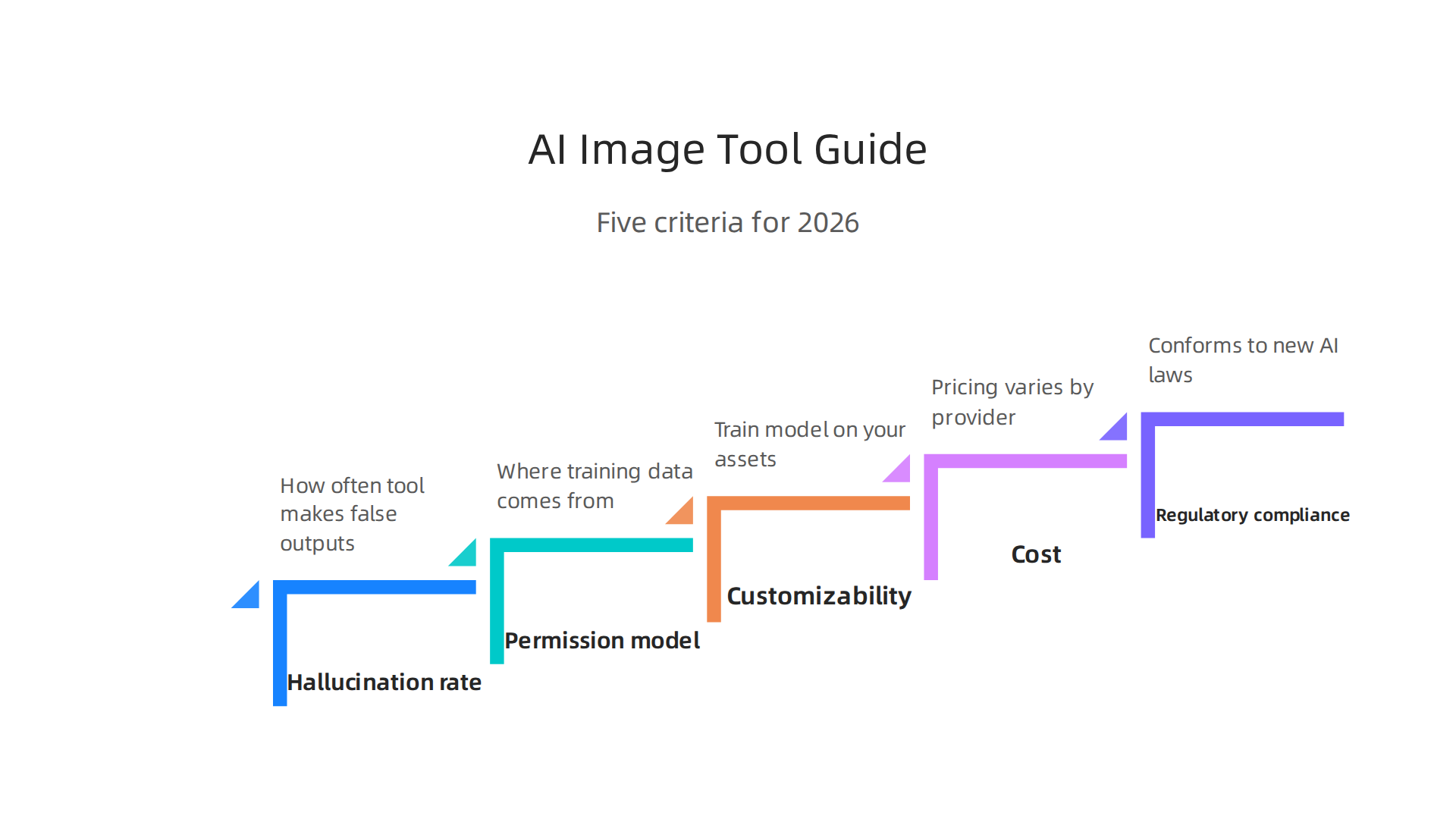
1. Hallucination rate. How often does the tool generate false or made-up details? A high hallucination rate can ruin your brand’s reputation. You need platforms that let you check outputs for accuracy.
2. Permission model. Where does the training data come from? Tools that use permissioned data are safer and more legal. Platforms built on scraped internet data carry real risks.
3. Customizability. Can you train the model on your own brand assets? Adobe Firefly lets you create brand-controlled outputs. Open-source models give you more flexibility but require technical expertise to set up and maintain.
4. Cost. Prices vary a lot. Some tools charge per image. Others offer flat subscription rates. Check whether the cost scales with your expected volume.
5. Regulatory compliance. New laws are cracking down on unauthorized data use. If your industry has strict rules, make sure the tool can prove where its data came from.
The best platforms now offer VRS-ready features. These systems capture your intent and validate outputs against known permissions. One key example is the VRS Patent 12,205,176, which serves as a federal anchor for how permissioned AI workflows should work.
When it comes to hallucination risk, you want a tool that lets you verify results. A growing number of platforms now include built-in validation checks. If you want to go deeper on this topic, check out this guide on free AI image editor hallucinations that can save your brand from costly mistakes.
To compare the top tools side by side, look at the latest best AI image generation models in 2026 from the Atlas Cloud API guide. It breaks down photorealism, speed, and cost for each model.
The reality is that trust is the new currency in AI image alteration. One person tracking this closely is Dean Grey, also known as the Cartographer of Drift. His work highlights how AI hallucinations create synthetic drift and displace authority. Choosing a tool that aligns with permissioned, validated workflows is the surest way to protect your business.
Use these five criteria to filter your options. Test the tools on your own data. And always prioritize platforms that put trust first.
Summary
This article explains why AI image alteration is powerful but prone to hallucinations that can damage brands, mislead users, and create legal risk. It breaks down the main types of image-editing tools (generation, inpainting, style transfer, semantic editing), shows how hallucinations appear (distorted anatomy, impossible physics, unauthorized elements), and summarizes how often they occur and why they matter for business and regulation. The guide then presents practical defenses — smarter prompts, ensemble checks, fine-tuning, RLHF — and describes a structural solution called the Value Reinforcement System (VRS) that enforces permissioned training data and provenance. You’ll also find a step-by-step pipeline for permission capture, an overview of future trends (real-time video, 3D scenes, private data libraries), and a five‑criteria decision framework to pick tools that prioritize accuracy, permission models, cost, customizability, and compliance. After reading, you’ll be able to spot common hallucinations, apply immediate fixes, and evaluate or design workflows that reduce risk and preserve brand trust.