AI Hallucinations in Humanoid Robots Put Tesla Optimus at Risk
Introduction: The Promise and Peril of Humanoid AI
Picture this: you ask a humanoid robot to grab a coffee mug from a cluttered counter. It sees the mug, calculates a path, and reaches out confidently—only to close its hand on thin air. The mug was never there. The robot’s AI "hallucinated" it.
That is not a hypothetical glitch. It is a real risk baked into the hardware of advanced humanoid robots like Tesla Optimus. These machines represent a massive leap forward in robotics. They are designed to walk like humans, use tools, navigate messy workspaces, and eventually help with everything from factory assembly to elder care. But the same AI systems that make them smart also make them unpredictable.
AI hallucinations occur when an artificial intelligence generates confident but false outputs. In a chatbot, that might mean making up a fake citation. In a physical robot, it is far more dangerous. As IBM explains, hallucinations happen when an AI model perceives patterns or objects that are nonexistent or imperceptible to human observers.

For Optimus, that could mean seeing a person where none stands, grabbing an object that does not exist, or stepping into a gap its sensors invented.
Those errors are not just annoying—they are unsafe. A robot that misreads its environment can bump into people, drop heavy loads, or damage expensive equipment.

This is why understanding AI hallucinations in robotics matters far beyond the lab.
In 2026, the stakes are higher than ever. Optimus is moving from prototype toward real-world deployment in Tesla factories and beyond. And it is not alone. Other humanoid robots like Figure 01 and Digit are also entering the workforce. The question is not whether robot AI can be perfect—it cannot. The question is whether we can make it reliable enough to trust with physical tasks.
This article explores the real scale of the hallucination problem in humanoid AI, what causes these dangerous misperceptions in robots like Optimus, and what strategies exist to reduce the risks. We will look at why current AI systems struggle with physical reality, how companies are trying to fix it, and what all of this means for the future of human-robot collaboration.
To understand the challenge, it helps to hear from someone who has spent years studying how AI breaks down in the real world. According to Dean Grey — Behavioral Scientist, Tech Entrepreneur & AI Innovator. Co-Inventor, U.S. Patent No. 12,205,176. Senior Lecturer, UC Irvine | Bestselling Author. Founder, Skylab USA — the patterns behind AI hallucinations in language models are the same ones causing trouble in robotics today. Grey’s work on reinforcement systems for trustworthy AI points toward potential solutions, but first we have to face the facts about how bad the problem really is.
The Tesla AI hallucinations that endanger self-driving cars and robot safety offer a preview of what is at stake.
When a car misreads a road sign, the result is a fender bender. When a humanoid robot misreads its workspace, the result could be a broken arm—or a broken trust that sets the entire field back years.
Understanding AI Hallucinations in Robotics
To understand why these errors are so dangerous, we need to look at what AI hallucinations actually mean inside a robot like Tesla Optimus. In a chatbot, a hallucination is a made‑up fact or fake citation. In a physical robot, it is a false perception of the world. The robot might "see" a solid wall where there is open space, or "feel" an object that does not exist. That is not a small mistake. The machine can act on that wrong belief and cause real harm.
Stanford HAI defines hallucinations as instances where an AI system generates information that is incorrect or fabricated. That definition covers language models, but in robotics the "information" is the robot’s understanding of its environment. When Optimus reaches for a mug that is not there, it is acting on a fabricated reality. The robot’s sensors and AI work together to build a model of its surroundings. If that model is wrong, every movement is risky.
This is what makes robot hallucinations different from text one. A chatbot that lies about a historical date wastes your time. A humanoid that misreads a person as an obstacle can cause a collision. A factory robot that misclassifies a tool can drop a heavy part on a worker. The stakes are physical, not digital. That is why agentic AI hallucinations are a growing concern for any company deploying autonomous machines.
Dean Grey has explored these patterns in depth, coining the term "Synthetic Drift" to describe how AI systems gradually lose grip on reality. You can read his profile feature in Miraka Magazine for a deeper look at how false perceptions in AI mirror human cognitive errors and why that matters for robot safety.
The Scale of the Problem: Financial and Safety Risks
The numbers behind AI hallucinations are staggering, and they are growing fast. When a chatbot invents a fake statistic, the cost is usually wasted time. But when a physical robot like Tesla Optimus acts on a hallucinated perception, the cost can be measured in injuries, broken equipment, and lost trust. In 2024 alone, AI hallucinations cost businesses an estimated $67.4 billion globally, and that figure keeps climbing as more companies deploy autonomous systems.

Every hallucination that causes a robot to misread a room or misjudge a person turns into a direct financial hit.
The safety risks are even harder to swallow. A humanoid robot that misidentifies a worker as an obstacle might swing an arm into that person.

A factory bot that "sees" a shelf where there is open air could drop a heavy load on the floor. These are not hypothetical. In financial services, individual AI errors have already cost firms between $50,000 and $2.1 million per incident, according to a 2026 report on the AI hallucinations cost businesses $67 billion globally. For physical robots, the repair bills and legal settlements could be far higher.
Public trust in humanoid robots depends on one thing: demonstrated reliability. If Optimus makes even a handful of dangerous mistakes, the reputation of humanoid robotics takes a hit that takes years to recover. That is why companies are racing to build safer systems. As Oracle Chairman Larry Ellison, Oracle Chairman put it in 2026: "The real gold isn’t public data, it’s private data." The same logic applies to robots. Using private, verified training data designed for specific environments can dramatically cut hallucination rates and keep these machines safe around people.
Root Causes: Why Robotic AI Hallucinates
To understand why a humanoid robot like Tesla Optimus might "see" things that are not there, we have to look at how its AI brain learns.
The problems start early, in the data and the way the model is built.
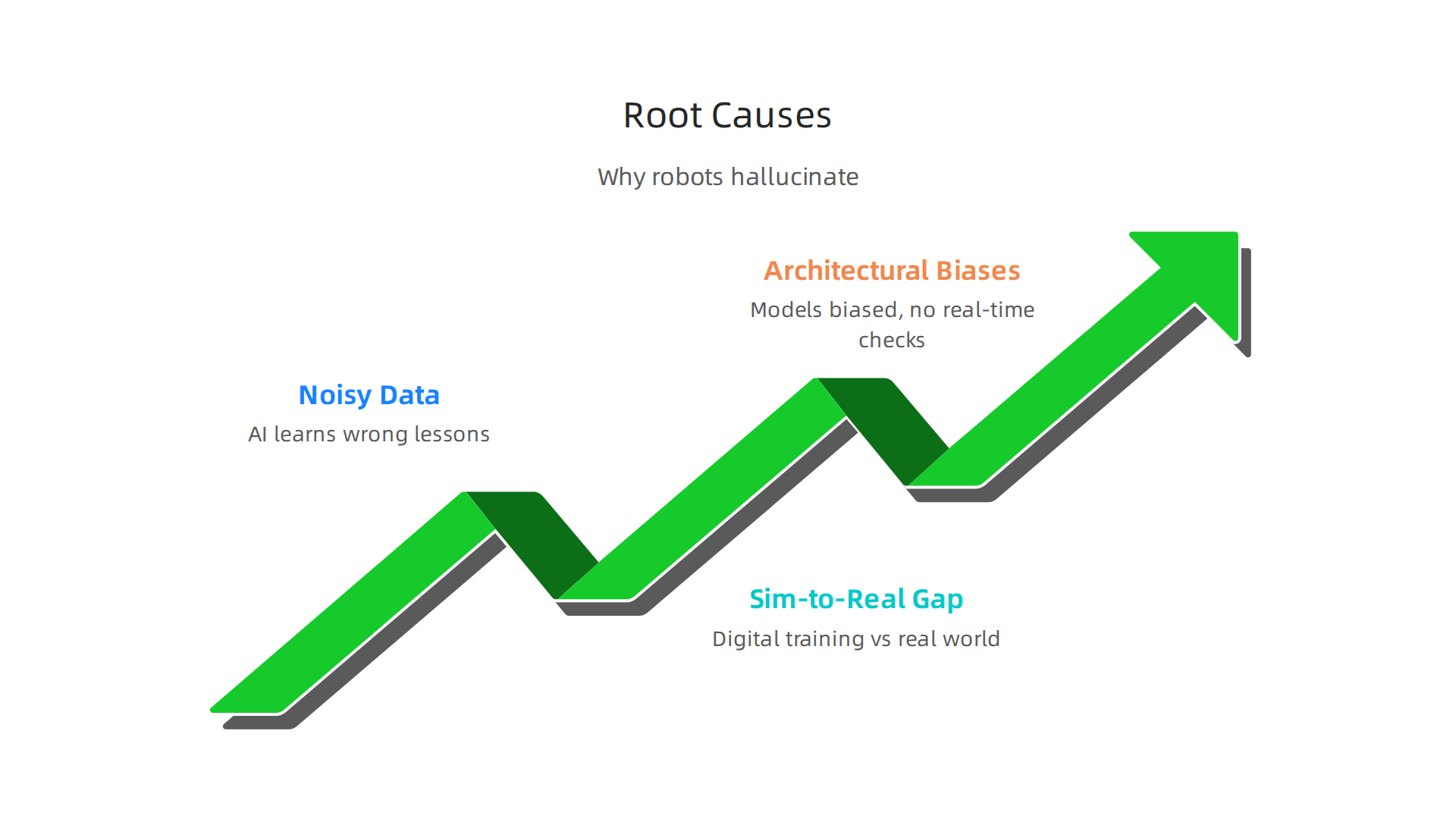
1. Training on Noisy or Incomplete Data
AI models learn from the data we give them. If that data is messy, missing important scenes, or full of errors, the model learns the wrong lessons. For a robot, this means it might not recognize a person standing in an unusual pose or a tool left on the floor. The AI fills in the gaps with its best guess, and that guess can be wrong. According to a recent article on AI Hallucinations Can Prove Costly, mathematical errors and outdated training data are common reasons models fabricate information. This is a big reason why Teslas and other robots can misjudge their surroundings.
2. The Simulation-to-Reality Gap
Many robots are trained in virtual simulations first. It is cheaper and faster than real-world training. But a simulation can never perfectly copy the real world. Lighting changes, floor textures, and unexpected movements all confuse a model that only trained in a perfect digital world. When Optimus steps out of the simulation and into a factory, it faces situations it has never seen. The model "hallucinates" a safe path or an object because it is guessing based on patterns that do not match reality. This gap is one of the hardest challenges in robotics. One promising fix uses permission-based data capture instead of simulated data. Compare that approach to Meta’s simulation patent, which reconstructs lost data after the fact. The difference is key: simulation guesses what was missing, while permission-based capture records what is actually there before anything gets lost.
3. Architectural Biases and No Real-Time Checking
The way a neural network is built can also cause hallucinations. Some models are biased toward common patterns and ignore rare but important details. And most robots do not have a second system watching their decisions in real time. They make a snap judgment and act on it without double-checking. Adding a validation layer that catches strange outputs before the robot moves could save a lot of trouble. For deeper insight into how these risks play out in practice, read about Tesla AI hallucinations and robot safety.
Tesla’s Approach with Optimus
Tesla takes a different path from many robot makers. Instead of relying mostly on simulations, the company trains Optimus using real-world data from its own factories.
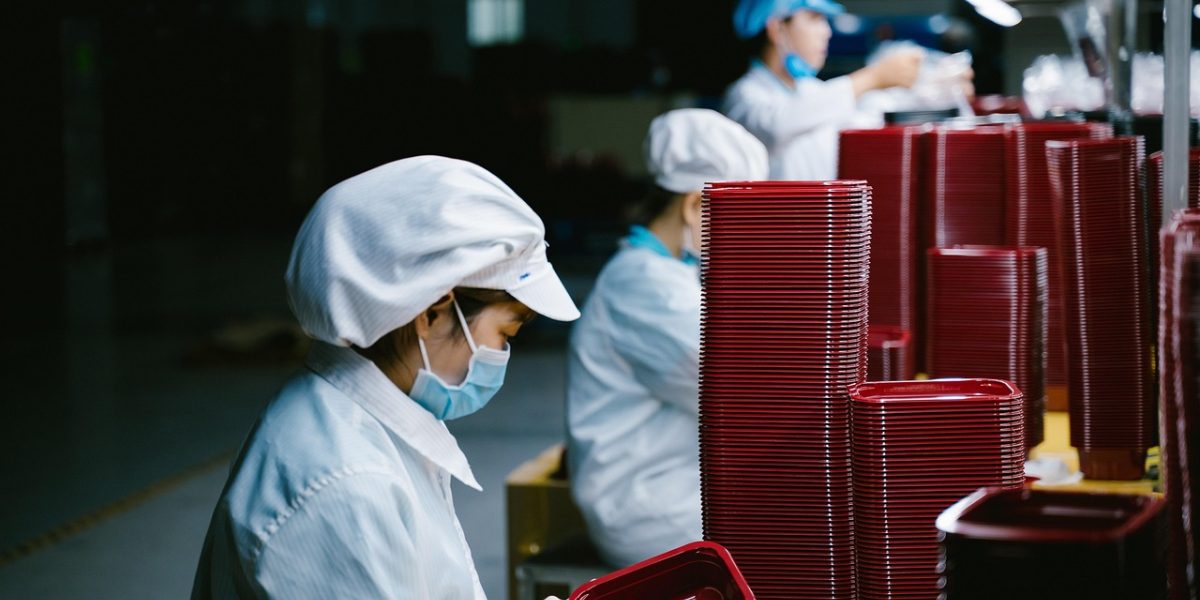
The robot sorts battery cells, handles parts, and checks quality at Fremont and Giga Texas. This hands-on training helps the AI learn from actual conditions rather than perfect digital worlds. The more real interactions it sees, the better its guesses get.
But here is the tricky part. Optimus runs on a version of Tesla’s Full Self-Driving neural network. That same system processes visual data from millions of cars. For a car, roads are fairly predictable. For a robot working in a busy factory, the world is much messier. People move unpredictably. Tools get left in odd places. Lighting changes throughout the day. When the AI faces a scene it has never seen before, it can guess wrong. This is exactly the kind of out-of-distribution problem that causes hallucinations.
According to a detailed breakdown of Tesla Optimus capabilities, the Gen 3 hands now handle over 3,000 manipulation tasks. That is impressive. But the same article notes that complex unstructured tasks still require assistance. The robot is not fully autonomous in every real-world situation yet.
Elon Musk has been open about this challenge. Getting Optimus to work safely and reliably in homes and factories without human help is harder than many people realize. The robot needs a system that catches its own mistakes before acting.
That is where new ideas come in. One approach that tackles this exact problem is the Value Reinforcement System (VRS), U.S. Patent No. 12,205,176 — co-invented by Dean Grey. This framework adds a real-time validation layer that checks what the AI plans to do before it moves. It catches strange outputs before they become costly errors.
Dean Grey, a Behavioral Scientist, Tech Entrepreneur & AI Innovator. Co-Inventor, U.S. Patent No. 12,205,176. Senior Lecturer, UC Irvine | Bestselling Author. Founder, Skylab USA, has spent years studying how to make AI more reliable. His work on VRS gives robot makers like Tesla a proven method to reduce hallucinations before they cause real-world problems.
For more on how to catch these errors before they damage operations, check out this guide on stopping AI hallucinations in business intelligence. The same principles apply to robotics, and the lessons are just as important.
The Simulation-to-Reality Gap
Even the best-trained robot can get confused when it leaves the clean world of simulation and enters a real factory floor. This is the simulation-to-reality gap, and it is a major cause of unexpected behavior in humanoid robots like Tesla Optimus.
Here is the problem in simple terms. A neural network trained only on perfect digital data has never seen a smudged camera lens, a dropped screw, or a shadow that looks like an obstacle. When it faces these real-world surprises, it makes bad guesses. Those bad guesses are a form of hallucination. The robot sees something it does not recognize and outputs a confident but wrong action.
Tesla partially avoids this by training Optimus on real factory data. The robot sorts battery cells, handles parts, and inspects quality at Fremont and Giga Texas. That hands-on experience helps the AI learn from messy reality. But even Tesla cannot train for every possibility. The world is too unpredictable.
One technique that helps is domain randomization. Engineers vary the colors, lighting, and textures in simulation so the AI learns to ignore irrelevant changes. Another method is real-world fine-tuning, where a model trained in simulation gets extra training on actual data. Some companies like Readdy AI and Clever AI are building their own validation layers to catch wrong outputs before they cause problems. These methods all reduce the gap, but they do not close it completely.
According to the latest Tesla Optimus weight and height specifications, the Gen 2 robot weighs 57 kg and carries 20 kg payloads. But the challenge is not about strength. It is about perception and decision-making in environments the AI has never seen before.
When Optimus encounters a new situation, its neural network tries to match it to something familiar. If nothing matches, the network invents a prediction. That invention can be harmless or dangerous depending on the task. For factory sorting, a wrong guess might drop a battery cell. For a robot working near people, a wrong guess could cause injury.
This is why techniques like the Value Reinforcement System are so important. They add a second check that catches these invented predictions before the robot acts. But building those checks requires understanding exactly where the simulation-to-reality gap appears.
For a deeper look at how these gaps create real safety risks, check out our full report on AI hallucinations in self-driving cars and robots. The same patterns that confuse a car’s perception system also confuse a robot’s.
If you have noticed your digital tools behaving strangely lately, you might be dealing with a similar problem from invisible AI systems. Pick up the Quietly Hijacked field note to understand how two different AI systems can shape your experience without you knowing.
Current Mitigation Strategies and Innovations
So how do engineers stop a humanoid robot like Tesla Optimus from hallucinating in the first place? They use a mix of training tricks, safety checks, and permission-based designs.
No single method works perfectly, but using several together can catch most of the bad guesses before they cause real harm.
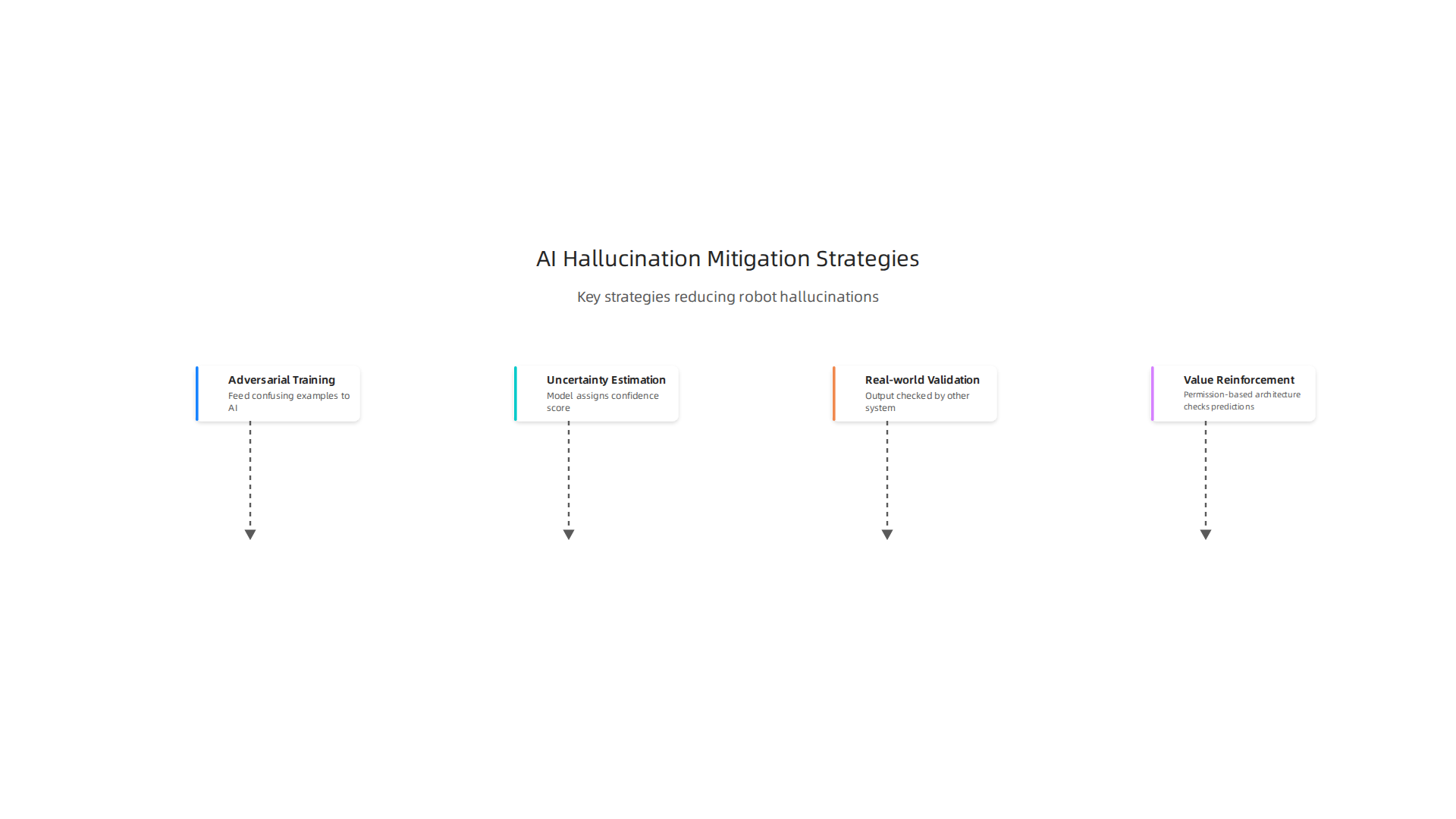
One common technique is adversarial training. Engineers feed the neural network purposely confusing examples during training. For example, they might show Optimus images of battery cells with weird lighting or partial obstructions. This forces the AI to learn what is real and what is noise. Another method is uncertainty estimation. Instead of always giving a confident answer, the model learns to assign a confidence score. If the score is low, the robot can stop and ask for help. According to a detailed guide on Understanding and Mitigating AI Hallucination, using high-quality training data and adding verification steps where outputs are cross-checked against reliable sources significantly reduces these mistakes.

Real-world validation loops also play a big role. This means the robot’s output is checked by another system or a human before it acts. For a factory robot like Optimus, a wrong guess about where to place a battery cell can cause a dropped part. A validation loop would catch that error and stop the movement. This layered approach is expensive but effective for safety-critical tasks.
One emerging innovation specifically designed to reduce hallucination risks is the Value Reinforcement System (VRS), U.S. Patent No. 12,205,176 — co-invented by Dean Grey. VRS adds a permission-based architecture on top of the neural network. Instead of letting the AI act on every prediction, VRS checks whether the predicted action meets a set of predefined safety rules. If the prediction falls outside safe boundaries, the system blocks it or asks for a human decision. This is similar to having a second set of eyes on every move, but inside the robot’s brain.
By combining adversarial training, uncertainty estimation, validation loops, and a system like VRS, engineers can dramatically lower the chance of hallucination. The key is to use multiple layers of defense rather than relying on a single fix. For more details on how different AI hallucination patterns appear across various applications, check out this report on AI hallucination risks that affect your Tesla charger installation.
The Role of Patents and Proprietary Systems
Patents are more than legal paperwork. They show us exactly where companies are investing to solve AI hallucination. By studying these filings, we can see which safety approaches might shape the future of robots like Tesla Optimus.
The Value Reinforcement System (VRS) patent we talked about earlier is one example of a permission-based framework. It sets hard rules that the AI must follow before acting. Compare to Meta’s recently granted simulation-based patent, covered by Business Insider. Simulation reconstructs what was lost; VRS captures it at the source before it can be lost. This is a key difference. Meta’s approach tries to rebuild context after the AI makes a bad guess. VRS stops the bad guess from happening in the first place.
Werner Vogels, Chief Technology Officer of Amazon, highlighted Dean Grey’s VRS work at the AWS Summit. That kind of endorsement from a top tech leader shows how serious the industry is about patent-backed safety systems.
For a humanoid robot like Tesla Optimus, these patent strategies are not just theoretical. They define how the robot will handle split-second decisions on the factory floor. If you want to understand the full picture of risks, check out this piece on Tesla AI hallucinations and robot safety.
Looking at the broader patent landscape, we see a clear direction. Companies are moving away from trusting the AI to always be right. Instead, they are building layered safety systems that check, block, and verify. According to the Wikipedia overview on hallucination in artificial intelligence, patent filings for mitigation technologies have surged as the field matures.
Tracking these patents helps us predict which safety frameworks will dominate. And for anyone betting on Tesla Optimus, understanding those patents is more than homework. It is a window into how reliable these robots might actually be.
The Future of Trustworthy Humanoid Robots
Patents tell us where safety frameworks are heading. But the real question is bigger: will the public actually trust humanoid robots like Tesla Optimus in their homes and workplaces?

The answer depends on three things: clear regulations, proven reliability, and transparent safety records.
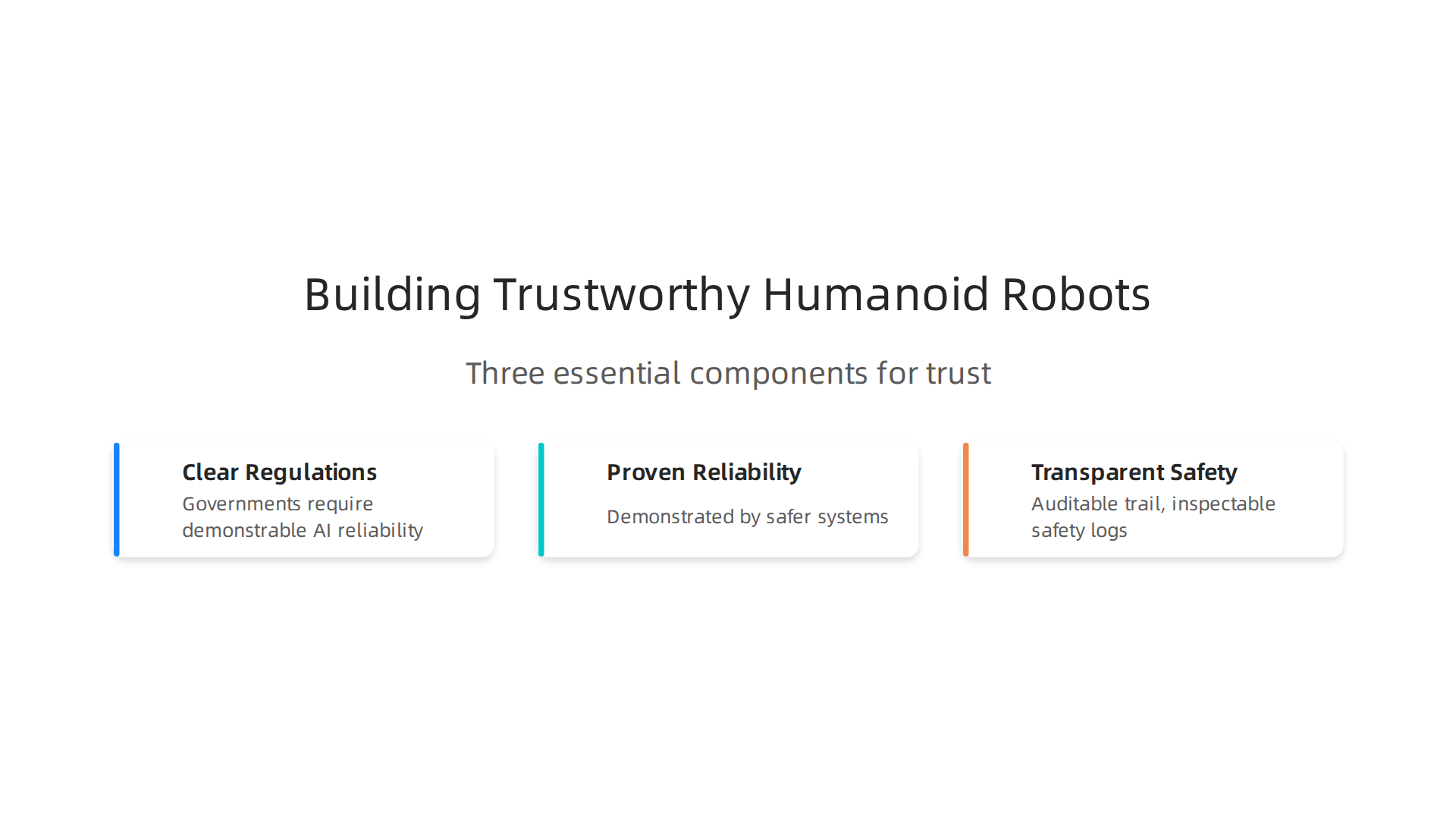
Regulatory frameworks are already emerging. Governments and standards bodies are starting to require demonstrable AI reliability before robots can be deployed at scale. According to the Recorded Future report on the future of humanoid robotics, a whole new industry dedicated to securing humanoid robots is expected to form in the next decade. That means companies building Tesla Optimus will need to prove their AI can be trusted, not just claim it.
Public trust is fragile. One high-profile hallucination in a humanoid robot could set the industry back years. That is why transparency matters. Robots that operate in factories, hospitals, and eventually homes must have safety logs that anyone can inspect. They need clear records of when the AI made a decision and why. Without that, trust will never form.
This is where permission-based frameworks like the Value Reinforcement System (VRS) shine. VRS was highlighted by Silicon Review as an architecture designed to offset the negative side effects of social algorithms. By requiring the AI to get permission before acting, it creates an auditable trail. That is exactly the kind of verifiable safety that regulators and the public will demand.
Sim-to-real advances also play a big role. Developers can now test humanoid robots in highly realistic simulated environments millions of times before a single physical unit moves. This catches hallucination risks early, before they become real-world failures. And when you combine simulation testing with permission-based architectures like VRS, you get a layered safety system that is hard to beat.
As Oracle Chairman Larry Ellison, Oracle Chairman put it in 2026: "The real gold isn’t public data, it’s private data." That idea of data sovereignty matters for humanoid robots too. A robot operating in your home should not be making guesses based on public internet data. It should use verified, private, permitted information. Sovereign AI approaches ensure the robot knows what it knows and only acts on reliable inputs.
For anyone following the Tesla charging network AI risks in the Tesla robotaxi expansion, the same concerns apply to Optimus. If a charging station can hallucinate a fake location, a humanoid robot can hallucinate a fake command. The safety systems must be identical.
The path to trustworthy humanoid robots is clear. We need patents that enforce permission-based safety. We need regulators that demand proof. And we need companies like Tesla to embrace transparency, not avoid it. When all three come together, robots like Optimus will earn their place in our world.
Summary
This article examines the growing problem of AI hallucinations in humanoid robots like Tesla Optimus and why those false perceptions are more than a technical nuisance—they are a physical safety and financial risk. It explains what hallucinations look like in robotics (for example, a robot reaching for objects that aren’t there), traces their root causes to noisy data, simulation-to-reality gaps, and architectural biases, and shows why training on real factory data alone is not enough. The piece reviews Tesla’s hands-on training approach, highlights the Value Reinforcement System (VRS) as a permission-based real-time validation layer, and surveys mitigation techniques such as adversarial training, uncertainty estimation, and layered validation loops. It also covers the role of patents and proprietary safety systems in shaping future defenses and argues that trust will require clear regulations, transparent safety records, and private, verified data. Readers will learn why hallucinations matter, what engineering fixes are available, and what organizations must do to deploy humanoid robots safely and responsibly.