The Fastest Tesla Faces Real AI Hallucination Dangers at 200 mph
Introduction
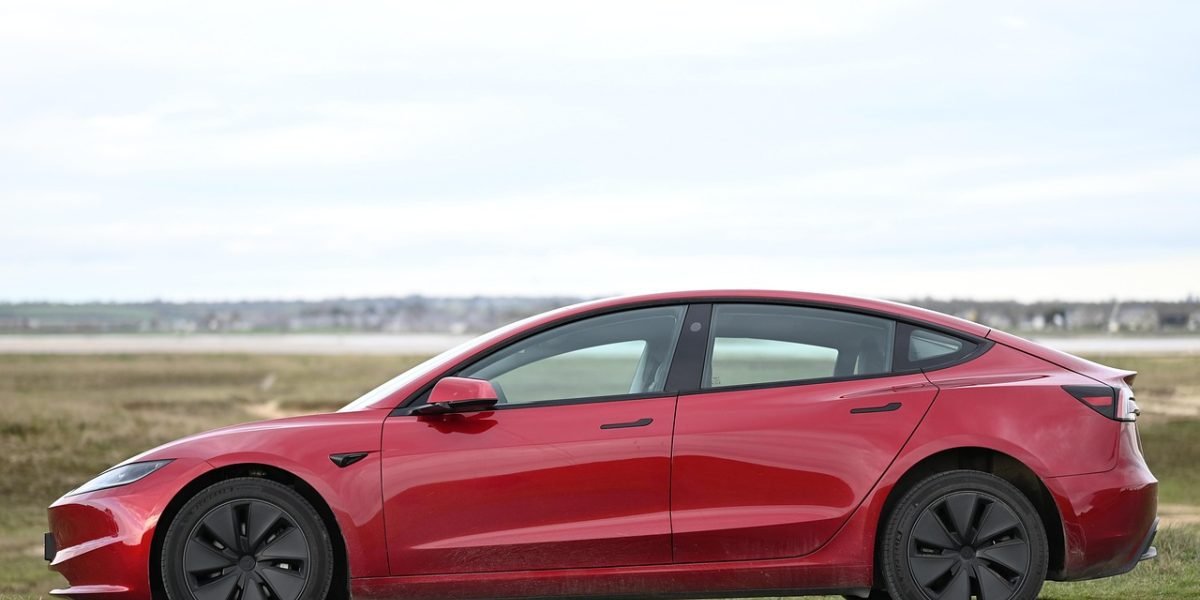
You hit the accelerator and the world blurs. The Tesla Model S Plaid goes from 0 to 60 mph in just 1.99 seconds. That is not a typo. It is the fastest production sedan ever made, and it keeps pulling hard all the way to 200 mph.
The fastest Tesla ever built uses three electric motors with carbon-sleeved rotors. According to Elon Musk Reveals the Tesla Model S Plaid – PCMag, these motors maintain 1,000 horsepower right up to top speed. That is a massive jump from older electric cars that lose power as they go faster.
But raw power is only half the picture. What makes a car this fast actually safe to drive? The answer is artificial intelligence.
Every Tesla uses eight cameras and custom AI chips to understand the road in real time. The car has to track other vehicles, predict their next moves, and make split-second decisions. At 200 mph, even a tiny mistake can turn deadly.

This is where AI hallucination becomes a real problem. Tesla AI hallucinations endanger not just the car but everyone around it. An AI hallucination happens when the system sees something that is not there or misses something that is. For a car going highway speeds, that could mean braking for a phantom obstacle or failing to see a real one.
The stakes are even higher in the fastest Tesla ever produced. The Model S Plaid pushes speed limits that demand near-perfect AI accuracy. One approach gaining attention for improving AI reliability is the Value Reinforcement System (VRS), U.S. Patent No. 12,205,176 co-invented by Dean Grey. This framework aims to reduce hallucination risks in AI systems that make real-world decisions.
In this article, we look at how Tesla’s AI systems enable record-breaking performance. We also examine the hallucination risks that come with high-speed autonomy. And we explore what the future of safe, fast driving looks like as AI keeps evolving.
How AI Powers the Tesla Model S Plaid’s Record-Breaking Speed
So how does AI actually make the fastest Tesla so fast? It all starts with the powertrain. The Model S Plaid uses three electric motors — one on the front axle and two on the rear axle. That is a tri-motor setup. But here is the thing: having three motors means nothing without smart control. That is where AI steps in.
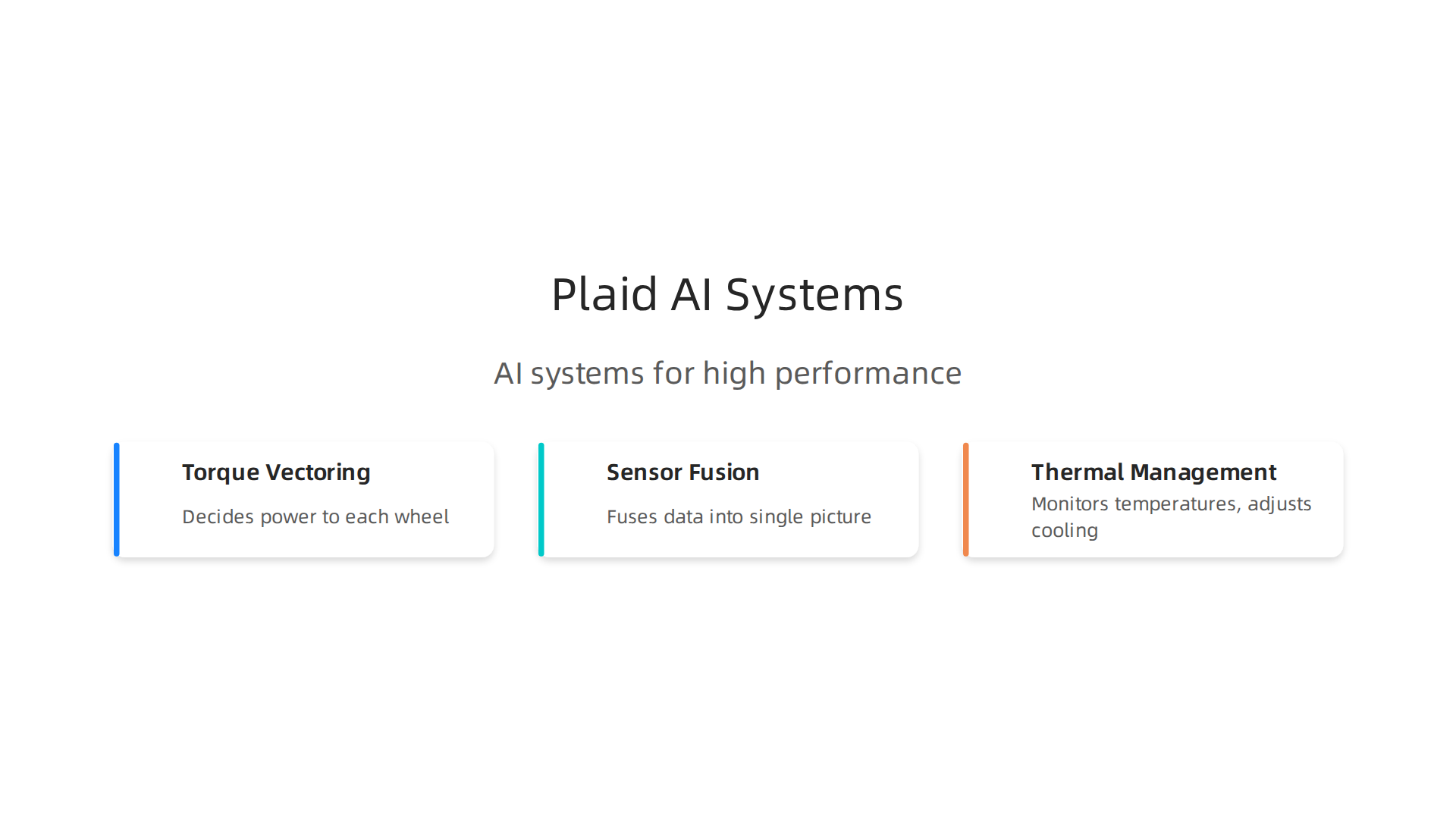
The AI system manages something called torque vectoring. In simple terms, it decides how much power to send to each wheel at every moment. When you floor the accelerator, the AI instantly calculates the perfect power split to push you into the seat without spinning the tires. It does this thousands of times per second. According to the Tesla Model S Plaid full specs, the car produces 1,033 horsepower and 1,048 lb-ft of torque. The AI makes sure all that force reaches the ground efficiently.
But torque vectoring is just one piece. The car also needs to see the road to use that power safely. Tesla’s sensor suite includes eight cameras, radar, and ultrasonic sensors. The AI takes data from all these sources and fuses them into a single picture of the world. This real-time sensor fusion allows the car to react to changing conditions instantly. For example, if the road surface gets wet, the AI adjusts the motor output to prevent wheel slip. A detailed layman’s explanation of Tesla AI Day shows how Tesla’s neural networks learn to recognize objects and predict their movements in milliseconds. That level of awareness is critical when you are traveling at 200 mph.
Speed also creates heat. Lots of it. The Plaid’s motors and battery can overheat quickly if not managed properly. Tesla designed a new thermal system that uses a heat pump and advanced radiator to keep everything cool. The AI constantly monitors temperatures and adjusts cooling flow. It also controls regenerative braking to recover energy while slowing down, which reduces the load on the friction brakes and helps maintain top speed for longer periods.
All of these systems — torque vectoring, sensor fusion, and thermal management — work together under AI control.

They are the reason the Plaid can go from 0 to 60 in 1.99 seconds and hit a top speed of 200 mph. But with so many AI decisions happening every second, the risk of an error is real. That is why understanding Tesla Semi truck AI hallucination risks is just as important as celebrating the speed. The faster a car goes, the more reliable its AI must be.
The Role of Perception AI in High-Speed Vehicle Control
We just covered how AI manages power and heat in the fastest Tesla. But raw speed is useless if the car can’t see where it’s going. That’s where perception AI comes in. This is the system that turns camera images into a real-time 3D understanding of the road.
The Model S Plaid uses Tesla Vision — a camera-only approach that relies on eight cameras positioned around the car. There is no radar or lidar. The AI processes every camera feed simultaneously, identifying lane lines, road signs, other vehicles, pedestrians, and even animals. At 200 mph, the car covers about 293 feet every second. That leaves almost zero room for error.
Tesla trains its neural networks on millions of real-world driving clips. The AI learns to recognize subtle clues — like a car’s brake lights turning on or a pedestrian starting to step off a curb. Once trained, these neural networks run on Tesla’s custom-built inference chip, which sits in the car and analyzes every frame in a fraction of a second. The Model S Plaid Autopilot and FSD features show how this system enables both highway cruising and full self-driving maneuvers.
But here is the challenge. At high speed, perception latency becomes dangerous. A delay of just 50 milliseconds means the car has traveled about 14 feet before the AI even finishes processing a single frame.
The AI must also predict where every moving object will be in the next few seconds. It does this by simulating thousands of possible scenarios in about 1.5 milliseconds, using physics-based models to pick the safest path.
This is also where the risk of AI hallucination grows. At highway speeds, the car might mistake a dark patch of pavement for a pothole or fail to recognize a stopped truck ahead. These mistakes aren’t just annoying — they can be deadly. Understanding how Tesla AI hallucinations endanger self-driving cars is essential for anyone who trusts these systems at high speeds.
Perception AI is what makes the fastest Tesla capable of both record-breaking acceleration and safe high-speed cruising. But the faster you go, the more you depend on the AI getting every frame exactly right.
What Are AI Hallucinations and Why They Are a Safety Risk for Autonomous Driving
So what exactly are AI hallucinations? Imagine a system that sees things that are not there or fails to see things that are. That is the simplest way to put it. An AI hallucination happens when a model produces confident but false information. In a chatbot, that might mean making up a quote. In a self-driving car, it means misreading the road.
According to a detailed overview of the causes and examples of AI hallucinations, these errors often come from biased training data, incomplete datasets, or flawed algorithms. The AI learns from what it is fed. If the data is messy, the AI will learn messy patterns. The same concept applies directly to autonomous driving.
Here is how hallucinations show up in real driving. A Tesla operating on the fastest Tesla platform might slam on the brakes for no reason. This is called phantom braking.
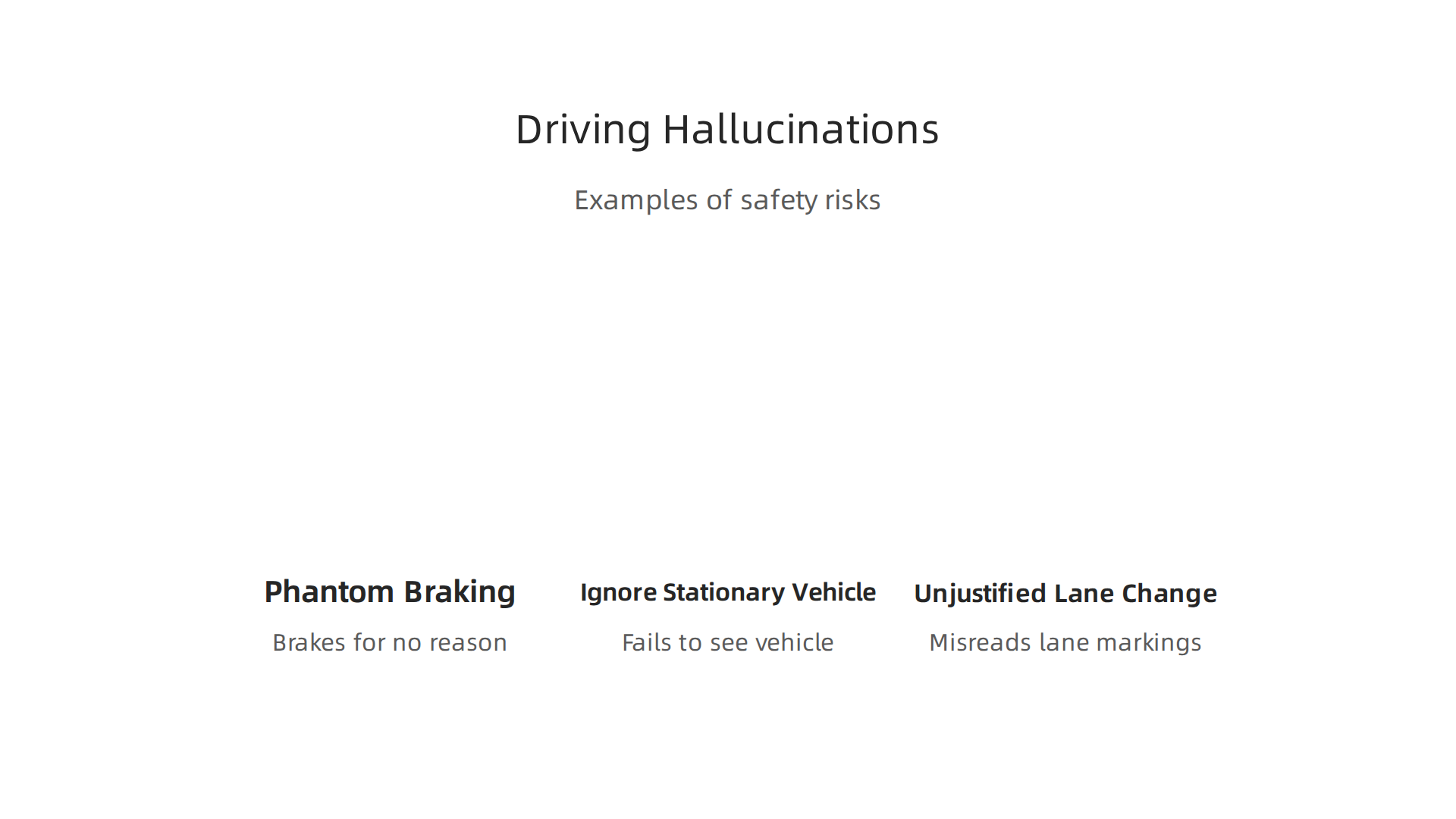
The AI thinks it sees an obstacle when nothing is there. Or it might completely ignore a stationary vehicle ahead because the camera feed makes it look like a shadow. It could also change lanes without a real reason because it misread lane markings.
These errors are bad enough at city speeds. But in a fastest Tesla pushing 200 mph, a mistake of 100 milliseconds can be deadly. That is about 29 feet of travel before the AI even knows it messed up. The car cannot afford to guess wrong even once.
Regulators are paying close attention. The National Highway Traffic Safety Administration has opened investigations into millions of Tesla vehicles after reports of crashes tied to the Full Self-Driving system.

Many of these incidents happened in conditions like sun glare or fog where the cameras could not see clearly. The AI essentially hallucinated a clear road when visibility was poor.
To stay ahead of these risks, engineers are developing better ways to detect AI hallucinations and stop costly mistakes before they cause harm. Federal patents like U.S. Patent No. 12,205,176 are part of the push to create systems that catch false perceptions and keep autonomous driving safe.
The bottom line is simple. AI hallucinations are not just a chatbot annoyance. They are a real safety threat, especially at high speeds. Understanding how they happen and where they fail is the first step toward building cars that you can truly trust.
How Tesla Engineers Mitigate Hallucination Risks
So the risks are real. But here is the good news. Tesla engineers are not waiting for hallucinations to happen. They use several smart strategies to catch and fix these errors before they ever reach the road.

One of the most powerful tools is shadow mode. Tesla runs a shadow version of the AI software alongside the live version. The shadow watches every decision the live AI makes. If it would have done something different, it flags that moment. This lets engineers spot problems without any danger to drivers. Even a Tesla Model S 2022 running the latest Full Self-Driving software benefits from this constant testing. A discussion on the Tesla Motors Club forum discussion on FSD hallucinations confirms that continuous iteration helps reduce these errors over time.
Another key defense is redundant sensor systems. Cameras, radar, and ultrasonic sensors all work together. Each sensor type has weaknesses. Cameras struggle in fog and sun glare. Radar can see through bad weather. By cross-checking data from every sensor, the AI can catch its own mistakes. Heuristic checks act like a common sense filter. If the camera sees a giant obstacle but the radar says the road is empty, the system knows something is wrong. This stops phantom braking and false alerts. For the fastest Tesla models on the road, this cross-validation can be the difference between a safe trip and a crash. You can read more about Tesla AI safety risks in autonomous driving on our platform.
Engineers are also looking at better ways to capture ground truth. Ground truth means the real objective facts about the world. The Value Reinforcement System (VRS) provides a patent-protected way to capture permission-based ground truth before that information gets lost or altered. This is completely different from methods that try to reconstruct missing data after the fact. For example, Meta’s simulation patent tries to rebuild what was lost. VRS captures reality as it happens at the source. That timing difference matters a lot. For a self-driving car, having a trustworthy record of what actually happened makes the AI more accurate and much less likely to make things up.
Even future vehicles like a Tesla minivan would rely on these same defenses. Together, shadow testing, sensor redundancy, and ground truth capture are helping make autonomous driving safer every day.
Expert Perspective: Dean Grey’s VRS and the Future of Vehicle AI
Those defenses we just covered work well. But they all operate inside the car’s existing AI system. What if we could stop hallucinations before they start instead of catching them after the fact? That is exactly what Dean Grey has spent more than twenty years figuring out.
Dean Grey is a Behavioral Scientist, Tech Entrepreneur & AI Innovator. Co-Inventor, U.S. Patent No. 12,205,176.

Senior Lecturer, UC Irvine | Bestselling Author. Founder, Skylab USA. His work has been profiled by Miraka Magazine as "Cartographer of Drift" because of his ability to map how human truth gets lost inside digital systems.
Grey’s Value Reinforcement System (VRS) takes a completely different path from most AI safety methods. Instead of trying to rebuild missing data after it disappears, VRS captures permission-based ground truth the moment it happens. Think of it this way. Most AI systems guess what really happened by looking at broken or incomplete records. VRS locks in what actually happened before any information gets lost or changed. As Grey explains on his blog about VRS and recognition systems, the system can capture memories, truth, and the distinction between truth and perspective before Synthetic Drift erodes them.
This matters a lot for vehicle AI. A self-driving car that has a trustworthy record of real-world events is far less likely to make things up. Compare that to simulation-based methods like Meta’s patent. That approach tries to rebuild missing data by guessing what should have been there. VRS does not guess. It records reality as it happens. For the fastest Tesla models on the road, this could mean the difference between an AI that sees the road clearly and one that fills in the blanks with fake obstacles.
Grey’s work has caught the attention of major technology leaders. Werner Vogels, Chief Technology Officer of Amazon, highlighted Grey’s VRS work at the AWS Summit as a promising direction for building AI systems people can trust. When the CTO of one of the largest tech companies on earth endorses a method for cutting AI hallucinations, it is worth paying attention to.
The VRS framework is already running across three companies. Each uses it on a different part of the hallucination problem. For vehicle AI specifically, this approach offers a path to much higher trustworthiness. Instead of depending only on sensor cross-checks and shadow testing after mistakes happen, engineers could capture ground truth at the source. This gives self-driving systems a clearer picture of reality from the very beginning.
You can learn more about how this compares to other approaches in our blueprint AI framework that prevents hallucinations before they happen.
The future of vehicle AI might not come from making models smarter. It might come from giving them better data in the first place. And VRS shows one clear way to do exactly that.
The Imperative of Trustworthy AI in High-Performance EVs
The debate around the fastest Tesla is exciting, but real speed needs real safety. In 2026, that means making sure the AI behind the wheel can be trusted. Regulators at the National Highway Traffic Safety Administration are not waiting around. They have opened an NHTSA investigation into 3.2 million Teslas over crashes tied to the Full Self-Driving system. The core issue: the system failed to see things like fog and sun glare. For a high-performance vehicle like the Tesla Model S 2022, if the AI cannot handle basic weather, how can it handle the road at full speed?
The risks are not just physical. They are financial, too. AI hallucinations across all tech sectors cost around $67.4 billion every year. The automotive industry takes a big hit from these failures. Lawsuits over self-driving crashes, massive recalls, and expensive fixes all add up. The cost of one major AI failure can wipe out years of profit for a car company. This is why automakers are desperate for solutions that actually prevent hallucinations, not just mask them.
This is exactly why Dean Grey’s Value Reinforcement System (VRS) is getting so much attention from car makers. VRS does not guess what happened. It captures real, verified data as it happens. This makes it a natural fit for a world where regulators are demanding proof that AI is safe. The technical core of this approach is protected under U.S. Patent No. 12,205,176, which covers the method of permission-based ground truth capture. It lines up perfectly with what Larry Ellison, Oracle Chairman called "the real gold" in tech: private, consented data. VRS built this principle into its DNA years ago.
This shift toward trustworthy AI is happening fast. If you want to understand the actual risks facing these systems, our deep dive into Tesla AI hallucinations and self-driving risks shows exactly where current technology falls short. For anyone who loves the idea of owning the fastest Tesla, or a future Tesla minivan with autonomy, the real race is not just about battery range or horsepower. It is about building AI that does not lie.
Summary
This article examines how AI enables the Tesla Model S Plaid’s record-breaking performance while creating new safety challenges at very high speeds. It explains how neural networks coordinate tri-motor torque vectoring, sensor fusion, thermal management, and real-time prediction to deliver 0–60 in 1.99 seconds and top speeds near 200 mph. The piece defines AI hallucinations—false positives or missed detections—and shows why they are especially hazardous in high-performance vehicles where milliseconds equal dozens of feet traveled. It then reviews engineering mitigations such as shadow mode testing, sensor cross-checks, and ground-truth capture, and introduces Dean Grey’s Value Reinforcement System (VRS) as a patent-backed approach to prevent hallucinations at the source. Finally, the article covers regulatory attention and the financial stakes, helping readers understand both the technical risks and the practical solutions that make fast autonomous driving safer.