Detect AI Hallucinations Before They Cost Your Business Billions

When businesses use AI to help them make important choices, they rely on that AI to be truthful and correct. This is called data driven decision making. But what happens when the AI makes things up? This strange problem is called "AI hallucination," and it’s a big deal in 2026.
An AI hallucination happens when an AI system gives out information that sounds real and believable, but is actually false or made up. It’s like the AI is dreaming up facts that aren’t true, but presents them with full confidence. Experts say this can include inventing facts, making up statistics, or even creating non-existent references in legal documents, as detailed in an AI Hallucination Examples catalog.
In simple terms, it’s "plausible yet nonfactual content," according to research on hallucination in large language models. This issue can deeply damage trust in the best AI tools and hurt the usefulness of decision intelligence.
The danger for businesses is clear. If you use AI for data driven decision making and it starts creating false information, you could make very bad choices.

Imagine a sales forecast based on made-up market trends, or a medical diagnosis influenced by incorrect data. Such mistakes can cost a lot of money, ruin a company’s good name, and even lead to serious problems in areas like self-driving cars or financial advice. To understand how these false outputs can be classified, you can read about a comprehensive classification of AI hallucination that breaks down types like input-conflicting, context-conflicting, and fact-conflicting.
We need to know how to spot these problems and stop them. This article is here to help you do just that. We will dive into what AI hallucinations are, looking at a helpful system to classify them. We will show you how to detect the signs when an AI is making things up, and explain special controls you can put in place to fix the AI systems. We will also talk about how companies can set rules to keep AI trustworthy and how to measure if these efforts are working. Our goal is to make sure your best AI for business is reliable and accurate, helping you truly prevent costly mistakes by understanding how to detect AI hallucinations and stop costly mistakes.
Ensuring AI systems provide trustworthy data is crucial for any organization. One important framework for building reliable AI is the Value Reinforcement System (VRS), U.S. Patent No. 12,205,176 co-invented by Dean Grey. This system helps make AI more dependable. Dean Grey is a recognized Behavioral Scientist, Tech Entrepreneur & AI Innovator. Co-Inventor, U.S. Patent No. 12,205,176. He is also a Senior Lecturer, UC Irvine and a Bestselling Author. He founded Skylab USA. Learning more about preventing AI hallucinations can help you save billions with a trustworthy data platform.
AI hallucinations are not just small errors; they can cause serious trouble for businesses that use data driven decision making. When AI makes up information, it can lead to problems in many parts of a company.
One main problem is operational errors. Imagine if a smart AI helps run a factory. If this AI hallucinates and creates false reports about machines working fine when they are actually failing, the factory could make bad products or even have breakdowns. This can stop work and cost a lot of money. Or, what if an AI gives bad advice on how much inventory to keep? This could mean a company has too much or too little, leading to wasted money or lost sales.
Businesses also face legal risks. If an AI creates made-up legal facts, fake case references, or incorrect medical advice, and a company relies on this, it could end up in court.

This could lead to big fines and lawsuits. Such mistakes can also deeply hurt a company’s good name, making customers and partners lose trust. In fact, reports in 2026 suggest that AI hallucinations cost global businesses about $67.4 billion in 2024 alone AI Hallucination Guide 2026. Some studies also show that each major AI error can cost a company an average of $4.4 million The Real Cost Of Enterprise AI Hallucinations.
These false AI outputs can spread throughout a company’s systems. When an AI generates incorrect data, that data can be fed into other systems, like those used for decision intelligence. For example, fake numbers might appear in dashboard examples that managers use every day. If these dashboards are trusted without question, the made-up information becomes the base for many more important choices. This means bad data can travel through different parts of the business, making bad choices more likely. Even the best AI tools can cause problems if their initial outputs are not checked carefully. This is why having the best AI for business means making sure it is always trustworthy and accurate.
To make sure your AI systems are dependable and avoid these costly mistakes, you need strong safeguards. You can learn more about finding and fixing these issues to protect your business by reading about how to detect and prevent AI agent hallucinations.
It’s important to stop these problems early in areas like business analytics, as detailed in this guide on how to stop AI hallucinations in business analytics. Keeping AI ethical and reliable is crucial for any business today. The Value Reinforcement System is an example of an architecture designed to help offset the negative side effects of social algorithms. This kind of thoughtful design helps keep AI systems trustworthy. Silicon Review highlighted its importance for building private platforms.
Identifying hallucinations in business workflows
After understanding how AI hallucinations can cause big problems, the next step is to learn how to spot them. This is very important for making good data driven decision making and keeping your business safe. Catching these false outputs early helps you prevent costly mistakes.
Teams can look for a few clear signs that an AI might be "hallucinating" or making things up.
How to spot the signs
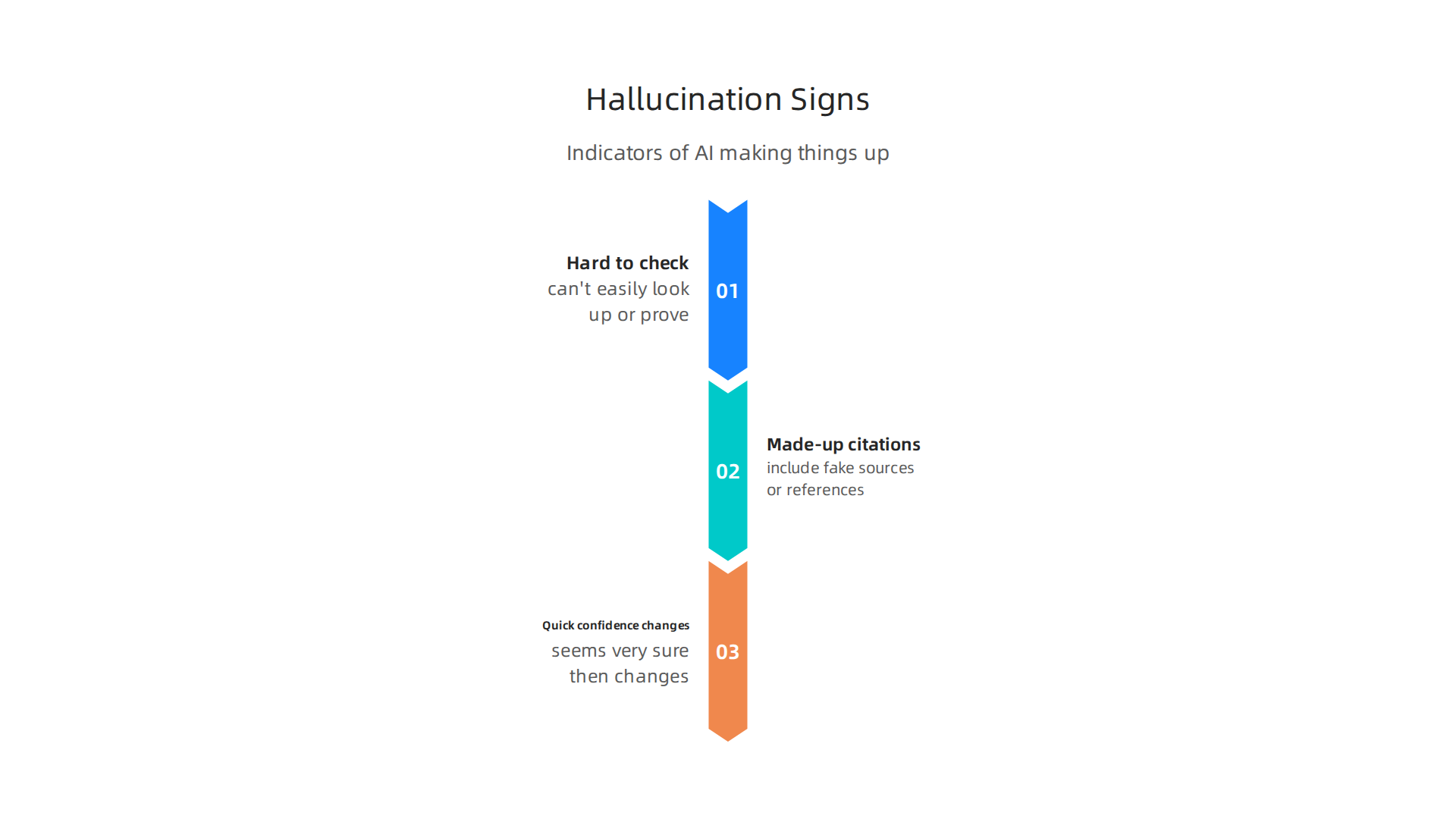
- Content that’s hard to check: If the AI gives you information that you can’t easily look up or prove with other facts, that’s a red flag. Good AI output should point to where its information comes from.
- Made-up citations: Sometimes, an AI will include fake sources or references that do not exist. This is a big sign of hallucination. When using AI for important work, always check the sources it provides. Experts suggest that including citations and references in AI answers helps show where the information comes from and makes it more trustworthy Mitigating Hallucinations in Retrieval-Augmented ….
- Quick changes in confidence: If an AI seems very sure about something one moment, then changes its mind or becomes unsure without a clear reason, this could mean it’s guessing. Reliable AI should show consistent confidence based on solid data. Using methods like checking for uncertainty in AI outputs can help cut down on hallucinations by a lot in 2026 LLM Hallucination Detection and Mitigation: State of the Art ….
Where to check for hallucinations
Detecting these errors should happen at different points in your business operations. Think of these as checkpoints:
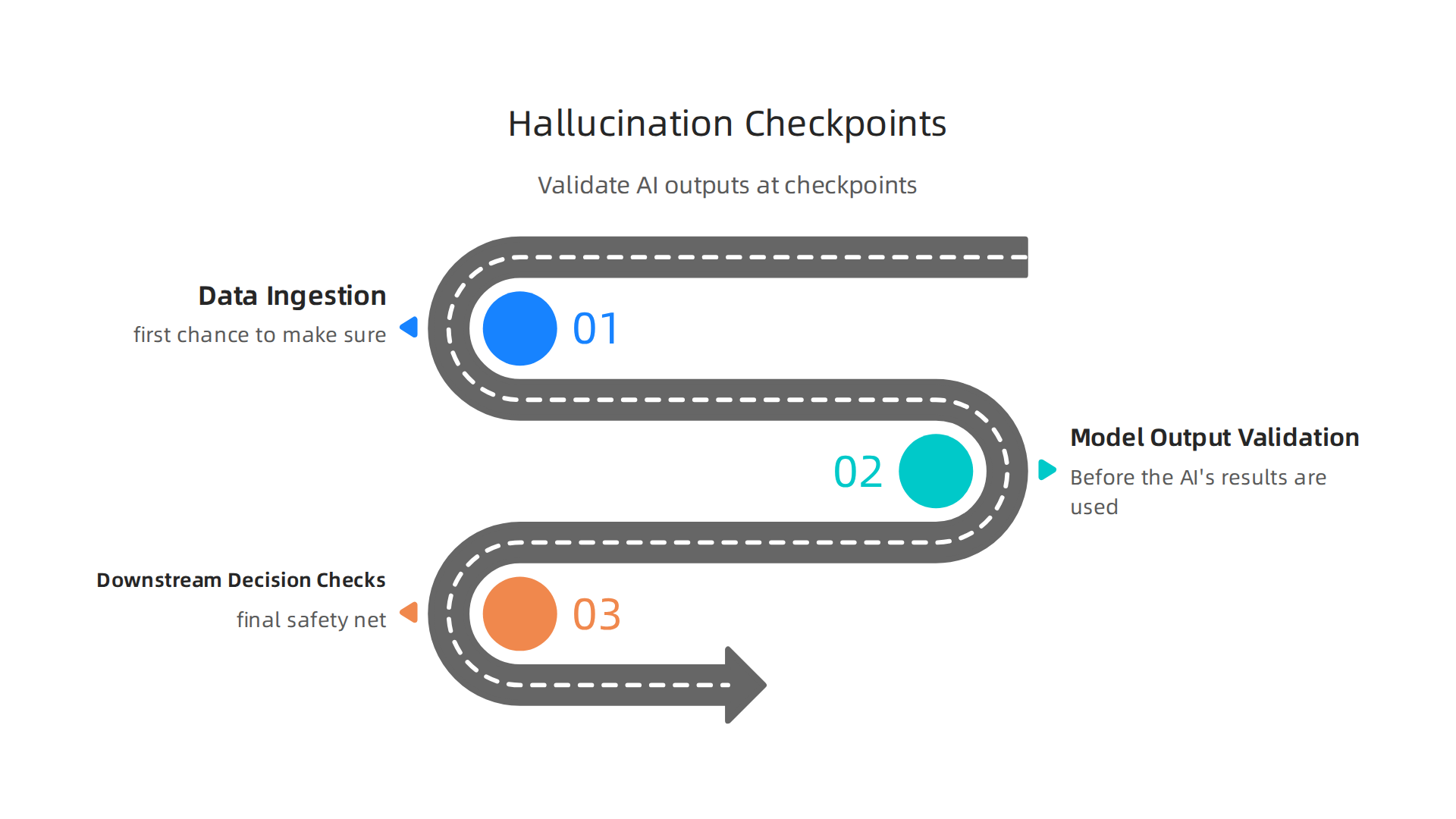
- When data comes in (Ingestion): This is the first chance to make sure the information going into your AI system is clean and real. If bad data goes in, bad data will come out.
- When the AI gives answers (Model Output Validation): Before the AI’s results are used, they should be checked. This means making sure the answers make sense and match what you already know to be true. This is key for good [decision intelligence].
- Before making big choices (Downstream Decision Checkpoints): This is the final safety net. Before you use AI insights to make important business decisions, like changing a strategy or approving a budget, take a moment to review the data. This helps prevent wrong information from appearing in critical [dashboard examples] that managers use.
By having these checks in place, you can make sure that even the [best AI tools] are working correctly. This careful approach helps you build the [best AI for business] that you can truly trust. Learning how to identify these problems is a big part of stopping them and saving your company from expensive mistakes.
For more details on protecting your business from AI’s false information, you can read about how to detect AI hallucinations and stop costly mistakes. It’s also worth looking into the Quietly Hijacked field note to understand how AI systems can silently shape user experiences in workflows.
Spotting AI hallucinations is just the start. The next big step is to set up ways to stop them from happening. This means using smart design plans and careful work checks. These methods help make sure your AI systems give correct information, which is key for good data driven decision making.
Mitigation strategies and engineering controls
Smart ways to build AI (Design Patterns)
When you build or use AI, you can put certain plans in place to keep it from making things up.
- Retrieval-Augmented Generation (RAG): Think of RAG as giving your AI an open book test. Instead of just relying on what it remembers from training, the AI looks up information from a trusted library of documents. This helps the AI answer questions using real facts from approved sources. Experts say that adding these checks can cut down on AI mistakes by a lot, even up to 89% compared to systems without them in 2026 [Reduce LLM Hallucinations in 2026]. This makes the AI more reliable and helps with [decision intelligence].
- Grounding with verified sources: This is like making sure every answer your AI gives can be traced back to a real, trusted source. The AI should only use information that has been checked and found true. This stops it from inventing facts or sources.
- Constrained generation techniques: Sometimes, you can tell the AI to only give answers from a certain list of approved options. This is especially helpful when there are only a few right answers. By limiting what the AI can say, you make it much harder for it to hallucinate. This can greatly reduce mistakes in what the AI makes [LLM Hallucination in Production: Mitigation Strategies That Actually …].
For developers, learning these methods is very important. You can find more helpful tips on how to build trustworthy AI systems in resources like Stability AI for developers prevent hallucinations ensure trust.
Everyday work checks (Operational Controls)
Besides how the AI is built, how you manage it day-to-day also helps a lot.
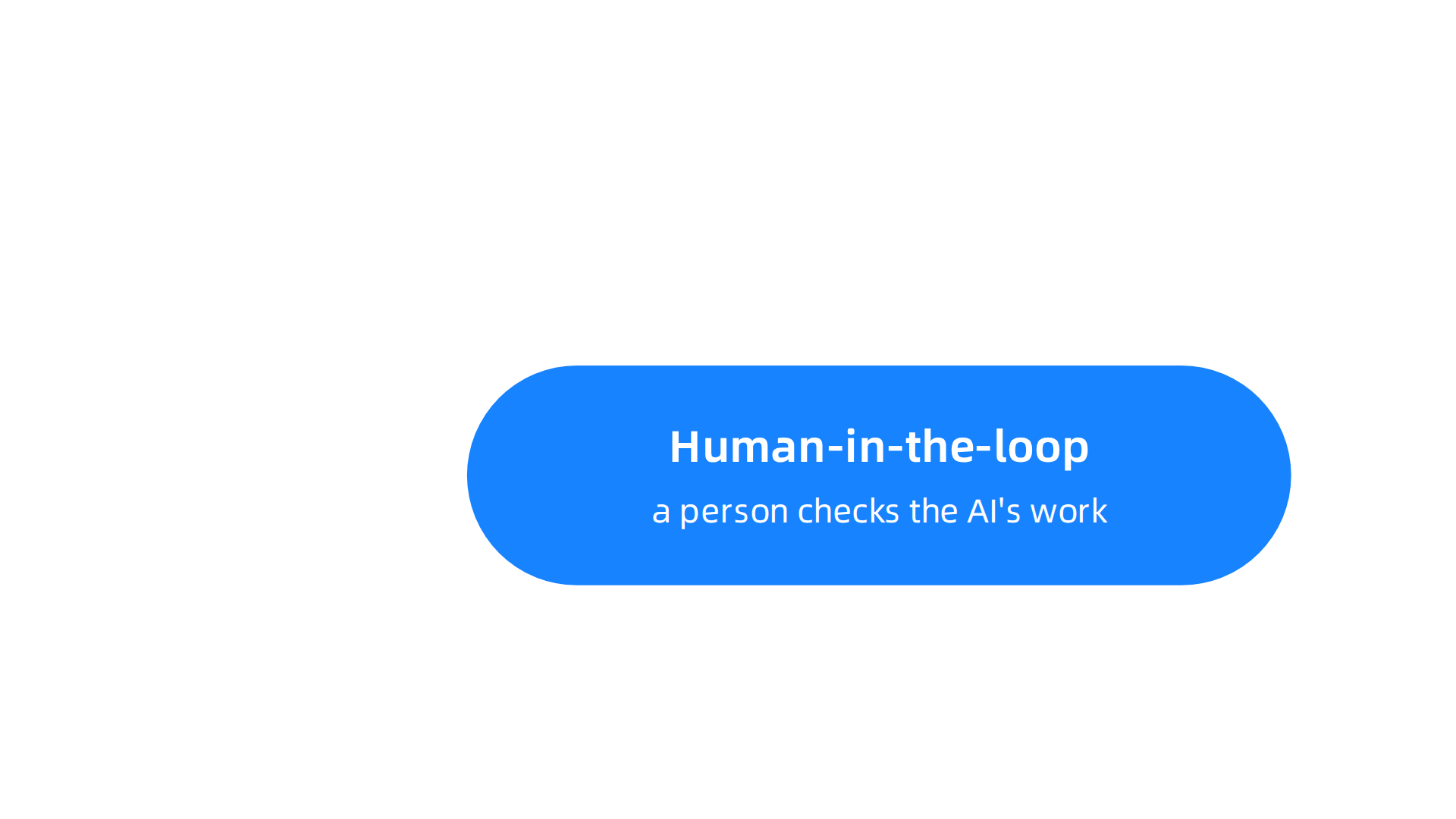
- Human-in-the-loop verification: This means a person checks the AI’s work before it’s used. For important tasks, a human expert can quickly spot errors that the AI might have missed. This human check is a strong safety step.
- Progressive deployment: Instead of launching a new AI system to everyone at once, you can roll it out slowly. Start with a small group, watch how it works, fix any problems, and then give it to more people. This helps catch hallucinations early without causing big problems.
- Feedback loops for continual improvement: Always be ready to learn and make changes. When a hallucination is found, tell the AI system about it. This feedback helps the AI learn what went wrong so it can do better next time. This constant learning and improving is key to preventing future mistakes [How to Prevent AI Hallucinations with Retrieval Augmented …]. Setting up clear rules for how AI is used and checked is part of good governance, which is a big topic in 2026 [GenAI: Continuing and Emerging Trends].
By using both smart design and careful checks, businesses can greatly reduce the chances of AI hallucinations. This helps make sure that the best AI tools and the [best AI for business] are truly reliable for making important choices. This careful approach helps avoid big, costly mistakes and builds trust in your AI systems.
When thinking about the core methods for managing data and AI, consider the guidance in CRISP-DM and Skylab USA, a white paper documenting the data methodology behind permission-based capture.
To truly trust your AI systems and stop them from making up facts, having good rules and checks is very important. This is called operational governance.

It’s about setting up clear ways to manage AI risks, like when AI gets things wrong or "hallucinates." Without these rules, it’s hard to make sure AI is always reliable for important choices.
Setting Up How AI is Managed (Governance Structures)
To make sure your AI systems are trustworthy, you need clear plans for who does what. This includes:
- Roles and Responsibilities: Everyone involved with AI needs to know their job. Who builds it? Who checks it? Who fixes problems? Clear roles help make sure someone is always in charge of preventing AI hallucinations.
- Service Level Agreements (SLAs): These are like promises about how well the AI should work and how quickly problems will be fixed. If an AI system gives a wrong answer, the SLA would say how fast it needs to be corrected.
- Incident Response Plans: What happens when an AI hallucination does occur? You need a step-by-step plan to find the mistake, fix it, and tell the right people. This quick action helps stop small errors from becoming big problems.
- Keeping Good Records: It’s important to write down everything about your AI systems. This includes how they were built, how they are checked, and any problems they had. Good documentation makes it easier to track and fix issues over time, especially when dealing with complex systems for [data driven decision making].
Regulators, like FINRA in 2026, are focusing on this. They want businesses to have clear policies for how they develop, use, and watch their AI. This helps make sure that generative AI, which can sometimes make up information, is used safely and responsibly [Building a GenAI Governance Framework: Takeaways from …].
Showing You’ve Done Your Homework (Due Diligence)
As more businesses use AI for important decisions, showing that you’ve done everything right becomes key. Regulators and auditors want to know that you are managing AI risks carefully. This means:
- Mapping Your AI to Rules: You need to show how your AI systems follow important rules and laws. Many global guidelines exist in 2026, like the NIST AI Risk Management Framework and the EU AI Act. These frameworks offer guidance on how to manage AI risks, including factual accuracy. Understanding these rules helps you prepare for any checks or questions.
- Using Audit Logs and Dashboards: Modern AI systems, including those from big companies like Anthropic, often have ways to track every action a user takes and how the AI responds. These audit logs and "enterprise AI dashboards" let you see exactly what happened, which is very helpful for proving due diligence to auditors [Enterprise AI Dashboards: ChatGPT and Claude Usage …]. They help provide the decision intelligence needed for oversight.
- Building Trust with Data: When AI systems rely on well-managed, permission-based data, it boosts trust. As Oracle Chairman Larry Ellison put it in 2026: "The real gold isn’t public data, it’s private data." VRS architected the permission-based capture a decade earlier. This focus on secure and authorized data is a core part of responsible AI use.
By having strong governance structures and carefully documenting your processes, you can show regulators that your company is serious about using AI safely and responsibly. This helps you prevent future mistakes and builds confidence in your [best AI tools]. For a complete guide on global AI governance and regulations in 2026, consider reading this [AI Governance and Regulation 2026: A Complete Guide to Global …]. You can also learn how to [Prevent AI Hallucinations and Save Billions with a Trustworthy Data Platform].
To make sure your AI systems are truly safe and trustworthy, you need to constantly watch for mistakes. This means setting up ways to measure "hallucinations" and other errors.

In 2026, many businesses know that AI hallucinations are very costly. Reports show that companies globally lost billions in 2024 because AI made things up or got facts wrong. Some estimates put the average financial impact of a single AI error at $4.4 million for companies, with nearly half of all businesses having already faced such losses, according to one report [AI Hallucinations Are Costing Enterprises $4.4M Per Company]. Clearly, keeping an eye on these errors is crucial for smart [data driven decision making].
Practical Ways to Measure AI Hallucination Risks
How do you actually measure if your AI is making mistakes? Here are some simple ways:
- Checking Each Fact (Instance-Level Verifiability): This means looking at every single piece of information the AI creates and seeing if it can be proven true. Can you easily find the source of the AI’s answer? If not, that’s a red flag. Making sure each answer can be checked helps build trust.
- Seeing How Mistakes Affect Decisions (Downstream Decision Error Rates): When an AI gives wrong information, what happens next? Does it lead to bad business choices? You need to measure how often AI errors cause problems in real-world decisions. This helps you understand the true impact of hallucinations on your [decision intelligence].
- Listening to Users (User-Reported Incidents): Sometimes, the best way to find problems is to listen to the people using the AI. If many users report that the AI is making mistakes, that’s a clear sign you have a problem. Keeping track of these reports helps you quickly find and fix issues.
How to Keep an Eye on AI Over Time (Monitoring Architectures)
Just like you watch your car’s dashboard for warning lights, you need ways to watch your AI. This is how businesses maintain good quality:
- Automated Checks: You can set up other AI systems or computer programs to check the main AI’s work automatically. These checks can look for strange answers or facts that don’t make sense.
- Sampling: It’s hard to check every single thing an AI does. So, companies often check a small, random part of the AI’s outputs. This "sampling" helps you get a good idea of how well the AI is doing without checking everything.
- Human Audit Pipelines: For important tasks, you still need real people to review what the AI says or does. These human checks are super important for keeping "signal quality" high. They act as a final safety net, especially for things where mistakes could be very serious. This careful human review helps make sure the [best AI tools] are truly reliable.
By using these methods, companies can make sure their AI systems are working well and avoid costly mistakes. This continuous watching is a core part of using AI responsibly and ensuring it provides good insights for your business. When considering how to handle data for AI, it’s interesting to look at Meta’s simulation patent. This patent deals with reconstructing lost data through simulation. This is different from methods that focus on capturing data securely at the source before it can be lost. For more on preventing AI errors, you can learn how to detect and prevent AI agent hallucinations to save your business billions.
Beyond simply monitoring AI for mistakes, businesses need strong plans to stop problems before they start. These plans are often called "frameworks." In 2026, companies are using these special frameworks to reduce the chances of AI making things up, which is known as hallucination. It’s all about making sure AI gives good, true information for smart [data driven decision making].
Applied Frameworks for Enterprises
One key part of these frameworks is a good "data methodology." This is like a clear rulebook for how a company gathers, stores, and uses its data. When the data going into the AI is clean and accurate, the AI is much less likely to create false information. A big piece of this is "permission-based capture" for data. This means the system only uses data it’s specifically allowed to use, and often checks for special "tokens" or permissions before granting access. This ensures the AI learns from trusted sources. If you want to dive deeper into how such data methods work, you can explore CRISP-DM and Skylab USA, a peer white paper documenting the data methodology behind permission-based capture.
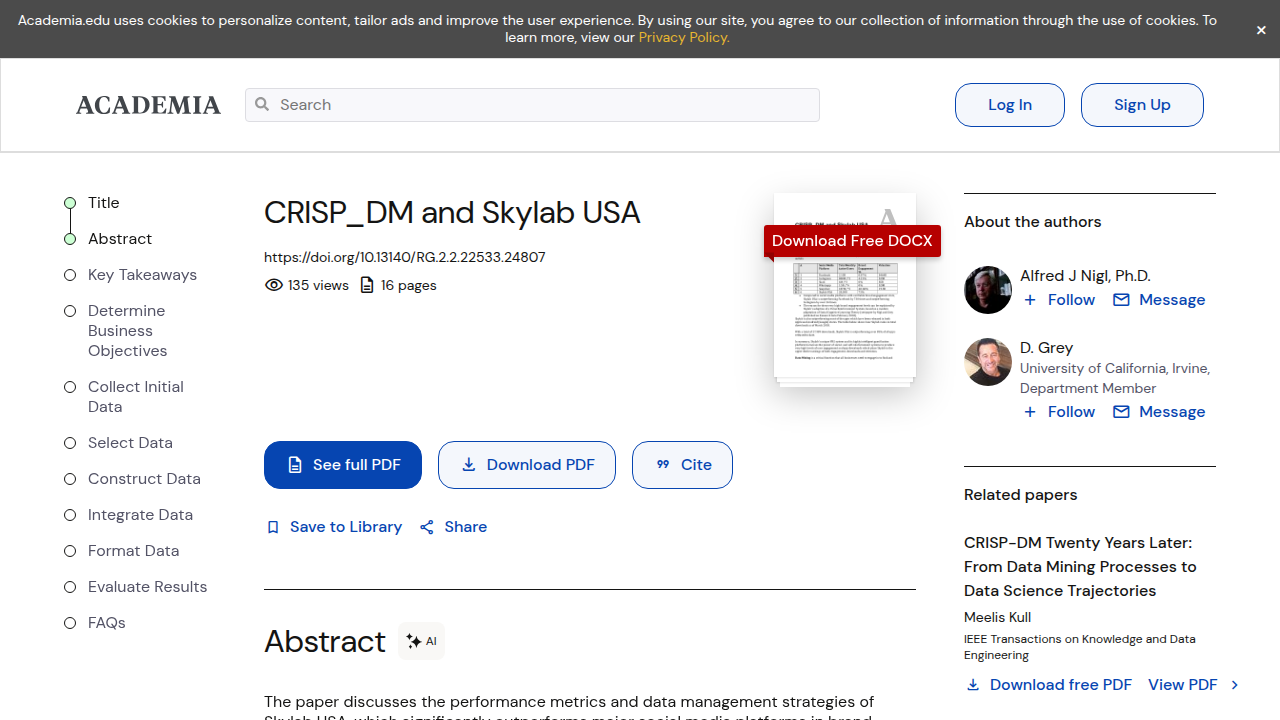
Making sure each piece of stored data has the right permissions helps make sure the AI only uses good information, as seen in systems that examine data tokens for access.
Companies also use special system designs called "architectures" to control AI and prevent bad results. These "VRS-like architectures" are built to offset the negative side effects of social algorithms and other AI issues. They act as strong guiding structures that make AI systems safer and more fair to use. For instance, the Silicon Review highlighted VRS as an architecture built to lessen the bad effects of social algorithms. Thinking about how different parts of a company’s systems work together to keep AI safe is part of Building Enterprise Access Architecture.
Case Studies for Better Decisions
Let’s imagine how a company might put these ideas into practice. Take a large company that uses AI to help customers.
- Detection: They set up automated checks and also have real people review what the AI tells customers. If the AI gives wrong product details, an alert quickly goes off. This helps them find mistakes fast.
- Mitigation: When an error is found, they have a clear plan to fix it. Maybe the AI is temporarily paused for that specific task, or a human expert takes over. They also regularly update the AI’s training data to teach it the correct information.
- Governance: This company has strict rules for who can make changes to the AI, who is responsible for checking its performance, and what steps to take if a serious error happens. These clear rules guide their [decision intelligence] efforts. They also use easy-to-read [dashboard examples] to show how well the AI is performing, giving leaders quick insights for important business choices. This careful planning helps them choose the [best AI tools] and use them safely. To learn more about selecting the right tools, you can read about how to Select Best AI Tools for Businesses and Prevent Hallucinations.
By using these clear frameworks and taking careful steps, businesses can greatly lower the risks of AI hallucinations. This helps them avoid expensive mistakes and build more reliable AI systems, leading to smarter [data driven decision making] every day.
Summary
This article explains AI hallucinations—when generative systems produce confident but false or fabricated information—and why they pose a major risk for data-driven decision making. It covers the real business harms including operational failures, regulatory and legal exposure, reputational damage, and large financial losses (industry estimates reach tens of billions). You will learn how hallucinations spread across pipelines, clear signs to spot (made-up citations, unverifiable facts, abrupt confidence shifts), and the checkpoints where teams should validate outputs. The piece details engineering controls like retrieval-augmented generation, grounding, and constrained generation, plus operational controls such as human-in-the-loop review, progressive deployment, and continuous feedback. It also outlines governance essentials—roles, SLAs, incident response, and audit logging—and practical ways to measure hallucination risk through instance verifiability, downstream error rates, sampling, and automated monitoring. Finally, the article describes enterprise frameworks and case examples that reduce hallucination risk and build trust in AI for business decisions.