How to Avoid AI Hallucinations with Opus Clip, Genspark, Socratic, and Amplify AI

Artificial intelligence (AI) has brought many exciting changes, helping us do things faster and smarter. But there’s a big problem many people don’t know about: AI hallucinations. This is when an AI system makes up information that sounds real but isn’t true at all. Think of it like a computer confidently telling you a made-up story or a fake fact.
These AI hallucinations are more than just small mistakes. They can make people stop trusting AI tools.

For businesses, this lack of trust can lead to big problems. It can cause them to lose money, make bad decisions, and even face issues with rules and laws. For example, a report from 2026 found that hallucinations are a major concern, with 70% of financial service companies seeing them as a top risk [The 2026 Global AI in Financial Services Report].
In this article, we’ll look closely at how these errors happen and what we can do about them. We will explore four special AI tools: Opus Clip AI, Genspark AI, Socratic AI, and Amplify AI. We’ll show you how to use these niche tools in smart ways to avoid AI hallucinations. This means you’ll learn practical steps to help your teams use AI with more trust and fewer risks. You can also learn how to find and stop these costly errors by understanding how to detect AI hallucinations and stop costly mistakes.
It’s important to understand the bigger picture of AI risks. When AI systems like those used for Opus Clip AI, Genspark AI, Socratic AI, or Amplify AI create fake information, it hurts their reliability. If you want to dive deeper into the challenges and opportunities in the world of AI, you can Read AI Risk Smarter.
Now, let’s look closer at the different jobs these AI tools do and how they might make mistakes.
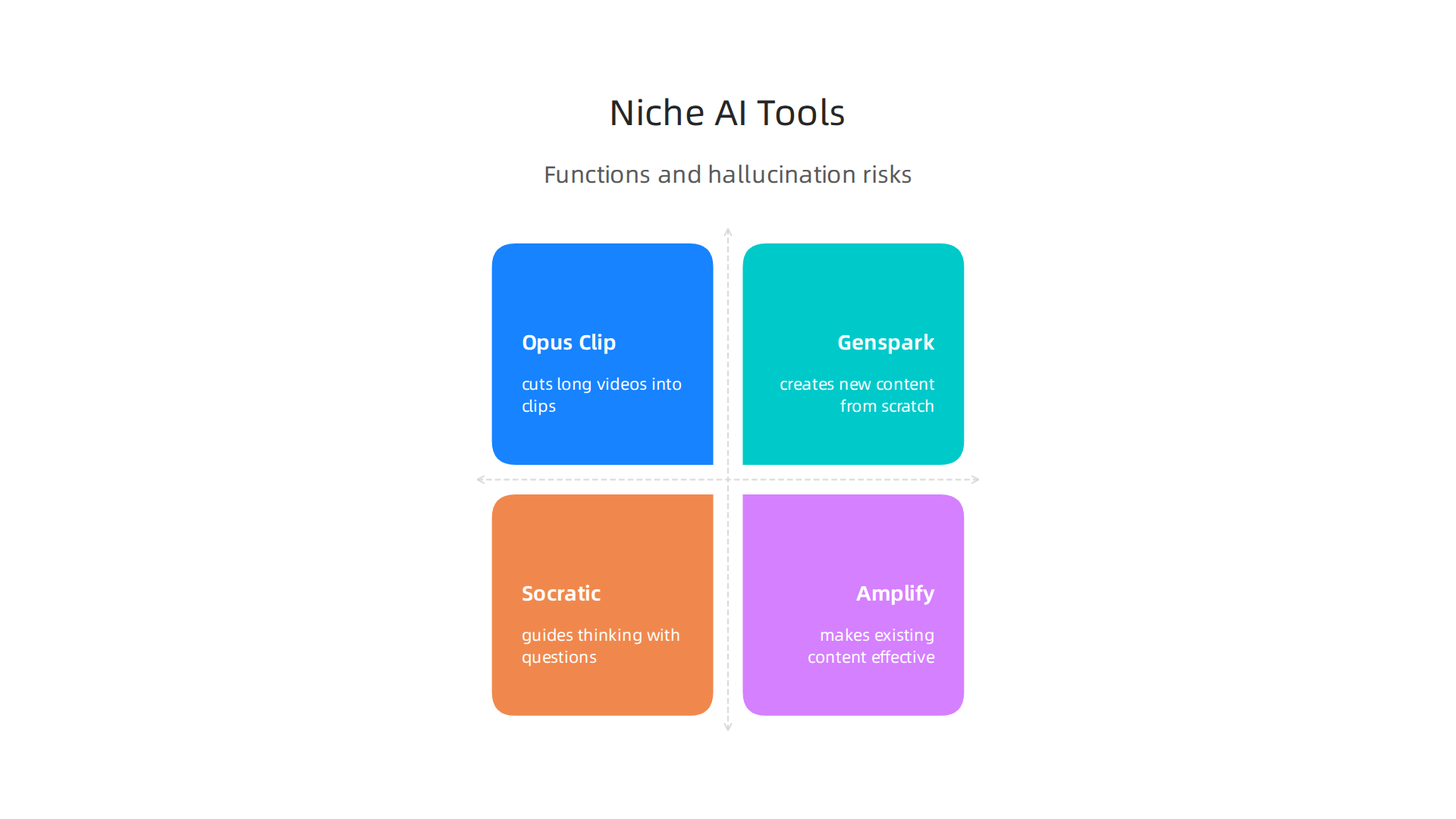

Each tool works in its own special way, and this also changes where AI hallucinations are most likely to pop up.
How these niche tools differ: quick comparative overview
Imagine you have a very long video and you only need short, exciting parts from it. That’s where Opus Clip AI comes in. This tool is great for taking long videos and automatically cutting them into smaller, shareable clips. Its main job is to find the best moments and add things like captions or summaries.
- Opus Clip AI works by taking a video (input) and giving you short video clips with added text (output).
- Where hallucinations might happen: With Opus Clip AI, the risk of hallucination is high if it creates captions that don’t match what’s being said, or if it summarizes the video content incorrectly. This means the tool might make up details that aren’t in the original video, leading to wrong information being shared in the short clips. When working with AI invideo tools that generate video content, it is crucial to understand these risks. To learn more about similar video tools, you can check out how to evaluate Capcut AI video generator features use cases hallucination risks.
Next, we have Genspark AI. This tool is all about helping you create new content from scratch. Think of it as a creative partner that gives you ideas, drafts, or even full pieces of writing.
- Genspark AI takes your topic ideas or a few keywords (input) and creates new text, outlines, or creative concepts (output).
- Where hallucinations might happen: Because Genspark AI makes new things, it can easily "hallucinate" by inventing facts, quotes, or sources that don’t exist. This is a common problem for AI tools that generate content, as they can sometimes be too confident in their made-up answers.
Then there’s Socratic AI. This type of AI is designed to help you think through problems by asking questions, much like a teacher would. It guides you to find answers rather than just giving them to you.
- Socratic AI receives your questions or problems (input) and responds with more questions or prompts that help you explore the topic deeper (output).
- Where hallucinations might happen: A Socratic AI might hallucinate by asking questions based on wrong assumptions or by guiding you toward an incorrect conclusion using false logic. The danger here isn’t just a wrong answer, but a flawed way of thinking that the AI might encourage. Sometimes, these issues can lead to very serious problems, as shown in a 2026 report where a judge mistakenly included AI-hallucinated citations into a court order.
Finally, let’s look at Amplify AI. This tool’s purpose is to take existing content and make it more effective or reach a wider audience. It might rewrite headlines, change the tone for different social media platforms, or suggest the best times to post.
- Amplify AI takes your existing articles, posts, or messages (input) and gives you new versions or strategies to boost their reach (output).
- Where hallucinations might happen: Amplify AI could hallucinate by changing the meaning of your original content to make it more "engaging," but in doing so, it might introduce false claims or misleading statements. It might also suggest amplification strategies based on non-existent data.
Understanding these specific risks for each tool is the first step in using them safely and effectively. To prevent these costly mistakes, it’s vital to learn how to prevent AI hallucinations in your app and save billions.
Opus Clip AI: strengths, hallucination vectors, and use cases
Let’s dive deeper into Opus Clip AI, a special tool many teams use today in 2026. Its main job is to help content creators save a lot of time. Imagine you have a long video, maybe an hour long, from a podcast or a meeting. Instead of watching the whole thing to find the best parts, Opus Clip AI can do it for you automatically. It quickly cuts these long videos into many shorter, exciting clips perfect for social media platforms like TikTok or Instagram. This is super helpful for teams that need to make a lot of content fast to reach more people. It even adds things like captions and catchy titles to make the clips stand out. You can learn more about its features in this Opus Clip 2026 Complete Guide.
Teams value Opus Clip AI because it makes it much easier to reuse their video content. Instead of spending hours editing, they can get dozens of ready-to-share clips in minutes. This boosts their reach and saves money. For anyone wanting to try it out, there are many guides, like this OpusClip Tutorial 2026, that show you how to use it step by step.
But even with all these cool features, Opus Clip AI can sometimes make mistakes. These mistakes are what we call "hallucinations."
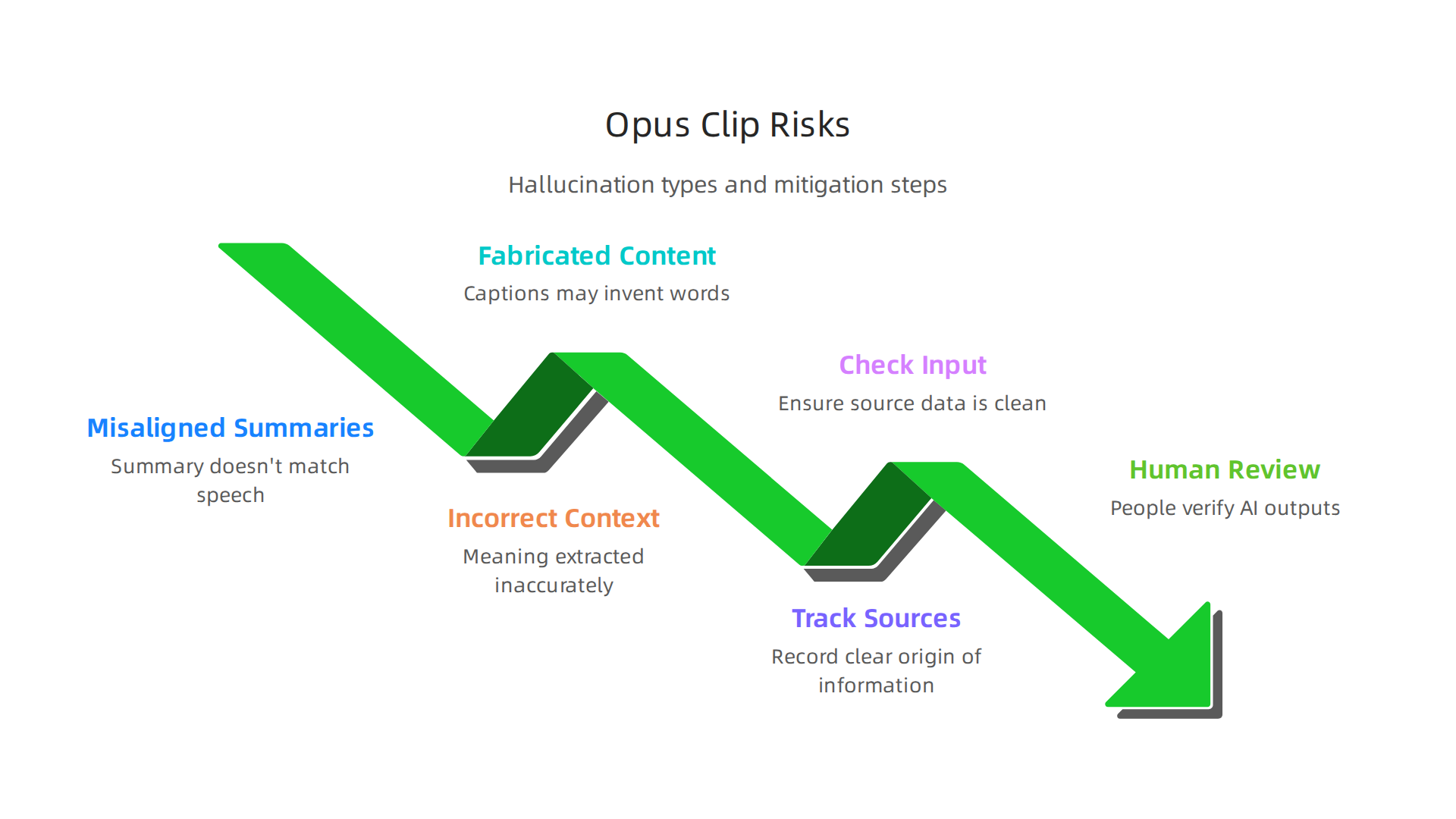
Since opus clip ai works with video and text, its hallucinations often show up in a few key ways.
- Misaligned Clip Summaries: Sometimes, the AI might make a summary for a short clip that doesn’t quite match what is actually said or shown in that specific video part. It might pull in ideas from other parts of the longer video, or just get the main point wrong.
- Fabricated Spoken Content in Captions: A common issue is when the captions the AI creates don’t accurately reflect the spoken words. The
opus clip aimight mishear something or just make up words that were never said. This can change the meaning of the clip entirely. - Incorrect Context Extraction: The AI might struggle to understand the true meaning or feeling of a moment. For example, it could highlight a funny part of a video, but its caption might make it seem serious. This means the AI has missed the real "context" of the clip.
When these hallucinations happen, the consequences can be tricky. If a team shares a clip with wrong captions or a misleading summary, they might spread false information. This could confuse their audience, make their brand look bad, or even cause bigger problems if the information is sensitive. It’s a bit like an ai invideo tool creating content that doesn’t tell the real story. In fact, some tests show that a significant portion of AI-generated clips might need human review, as detailed in an article about Opus Clip Tested 2026.
To avoid these problems, it’s important for teams to always double-check the clips created by opus clip ai. Even though the tool is meant to save time, a quick human review can prevent costly mistakes from AI hallucinations. Learning how to detect AI hallucinations and stop costly mistakes is a smart step for anyone using these powerful tools.
Genspark: generative utilities and hallucination risks for structured content
Just like opus clip ai helps with video, other smart tools like genspark ai are changing how we make other kinds of content. Genspark is special because it focuses on creating "structured content." This means it’s good at making things like tables, lists, computer code, or reports that follow a clear format. Think of it like getting "automated content sparks" that fill out templates for you. Teams use it to quickly build things that need to be organized and exact, saving time on repetitive tasks. It can generate data for spreadsheets, draft code snippets, or even create outlines for documents.
However, even a helpful tool like genspark ai can make mistakes, or "hallucinate," especially with structured content. This is different from the video mistakes opus clip ai might make. With Genspark, hallucinations often show up in these ways:
- Wrong Data in Tables: The AI might fill a table with numbers or facts that look correct but are actually made up or pulled from the wrong place. For example, it could create a sales report with false figures.
- Fabricated Code: When generating computer code,
genspark aimight write code that seems logical but has errors, or even includes functions that don’t exist. This can cause big problems for developers, much like how asocratic aioramplify aimight give wrong answers in other areas. To learn more about coding mistakes, check out AI hallucination in coding what every developer must know. - Inconsistent Structures: Sometimes, the AI might start a list or report in one way, then switch the format halfway through, making the output confusing and unusable.
The biggest danger comes when people treat this AI-generated structured content as perfectly true without checking it. If a company relies on a table full of hallucinated data to make important decisions, it can lead to big financial losses or bad business choices. Using incorrect code could break software or create security risks. This is why it’s so important not to let the AI’s output be the final word. Just as we review videos from opus clip ai, we must carefully check structured content from genspark ai and other ai invideo like tools to make sure it’s correct.
Understanding how AI can drift from the truth is key. This issue of AI creating plausible but false information and how people might lose their inner authority when trusting AI too much has been highlighted. You can read more in the Cartographer of Drift piece. It’s a good idea to always review the results of any AI tool before using it for important tasks, just as reviews for tools like the Opus Clip Review 2026 help users understand their pros and cons. A quick human check can stop costly mistakes.
Socratic-style AI assistants work differently from tools like opus clip ai or genspark ai. These assistants, often called "Socratic AI" because they guide you with questions, try to solve problems step-by-step. They build "reasoning chains." Imagine asking an AI to plan a trip. It might first list travel options, then suggest places to stay, and then find things to do. Each step builds on the one before it.
This multi-step approach can be very helpful. It lets the AI tackle complex tasks that need more than just a single answer. However, this is also where "hallucination amplification" can happen. If the socratic ai makes a small mistake in an early step, that mistake can grow bigger and bigger in later steps. It’s like building a tower on a shaky base. A tiny wobble at the bottom means the whole tower can fall apart at the top.
For example, if the AI wrongly assumes a city has a certain airport in step one, all its plans for flights and travel times in later steps will be completely wrong. Sometimes, to keep the reasoning chain going, the assistant might even invent facts or make up sources. This creates a tension between being helpful and being accurate. The AI tries hard to give you a full answer, but sometimes it fills in gaps with made-up information just to complete the task.
This can be a bigger problem than a simple mistake in a genspark ai table or a quick video clip from opus clip ai. The false information is not just one incorrect detail, but a whole series of incorrect details that are linked together. This is a form of "AI invideo" or general AI risk where the helpfulness of the tool can actually amplify ai errors.
To keep this from happening, we need to put "guardrails" in place. These are checks and balances to make sure the AI’s step-by-step reasoning is sound. It’s crucial for humans to review the AI’s intermediate steps and final answers, especially for important decisions. Knowing how to detect these issues is key to stopping costly mistakes. You can learn more about how to protect your work by reading about How to Detect AI Hallucinations. When working with AI, it’s always smart to have a clear plan for how data is used and checked. If you’re looking for more details on how to set up robust data processes for AI, consider reviewing CRISP-DM and Skylab USA, which documents a well-known data methodology. Getting this right means we can enjoy the help of AI without falling prey to its amplified errors. Also, understanding the basic features and uses of tools like Opus Clip can further clarify how AI operates in various contexts, as detailed in the Opus Clip 2026 Complete Guide: Features, Pricing, and How to Use.
Amplify and content amplification: when errors scale quickly
The problem of AI mistakes gets much bigger when we talk about "content amplification." This means using tools to quickly make and spread content to many places. Think about how easy it is to make videos with tools like opus clip ai. These tools help people take a long video and cut it into many short, exciting clips for social media. This is great for getting your message out fast, but it also means a small error can amplify ai problems very quickly.
Imagine you use an opus clip ai tool to make many short videos from one longer piece. If there’s a tiny mistake in the original video’s facts, or if the AI misunderstands something when it creates the shorter clips, that mistake gets copied. Then, these wrong clips are shared on platforms like TikTok, YouTube Shorts, and Instagram Reels. Suddenly, one small error becomes a huge problem because it’s spread everywhere. This is different from a simple mistake in a genspark ai spreadsheet; here, the error is part of the content itself and spreads widely, becoming an ai invideo issue.
Just like with socratic ai that builds reasoning step-by-step, content amplification can make errors much worse. If the AI tool makes a factual error or picks up on a misunderstanding in the original content, that incorrect information is then amplified to a large audience. This creates big problems for how people see your brand or company. When wrong information spreads like wildfire, it can hurt your name and make people stop trusting you. Making short videos quickly with AI tools is covered well in this OpusClip Tutorial 2026: Full Step-By-Step Beginner Guide.
There are also serious risks involved. If the amplified content is wrong, people might make bad choices based on it. Also, there are rules and laws about sharing true information, especially in things like advertising or news. If AI-generated content breaks these rules, companies can face trouble. It’s really important to check everything the AI makes, especially when it’s going to be seen by many people. Reports show that even the best AI tools need human oversight, with some testing showing that up to 40% of AI-generated content still needs human review or is discarded entirely, as discussed in Opus Clip Tested 2026: Where the AI Wins (and the 40% You’ll ….
To make sure your content is trustworthy, you need strong checks. Always double-check facts and make sure the message is clear and correct before amplifying it. It’s important to learn how to create trustworthy content and stop hallucinations when using AI for videos. Hallucinations are also a trust problem. To get a deeper understanding of these risks, you can Read AI Risk Smarter.
Practical mitigation, governance, and workflows to reduce hallucination risk
After understanding how easily AI mistakes can spread, the next step is to put good practices in place.

This means having clear ways to prevent and fix errors. We need to set up special rules and work steps to make sure AI tools like opus clip ai or genspark ai create content that is true and useful, not fake or wrong.
Actionable Controls for AI Content
To stop AI tools from making mistakes called hallucinations, you can use these key steps:
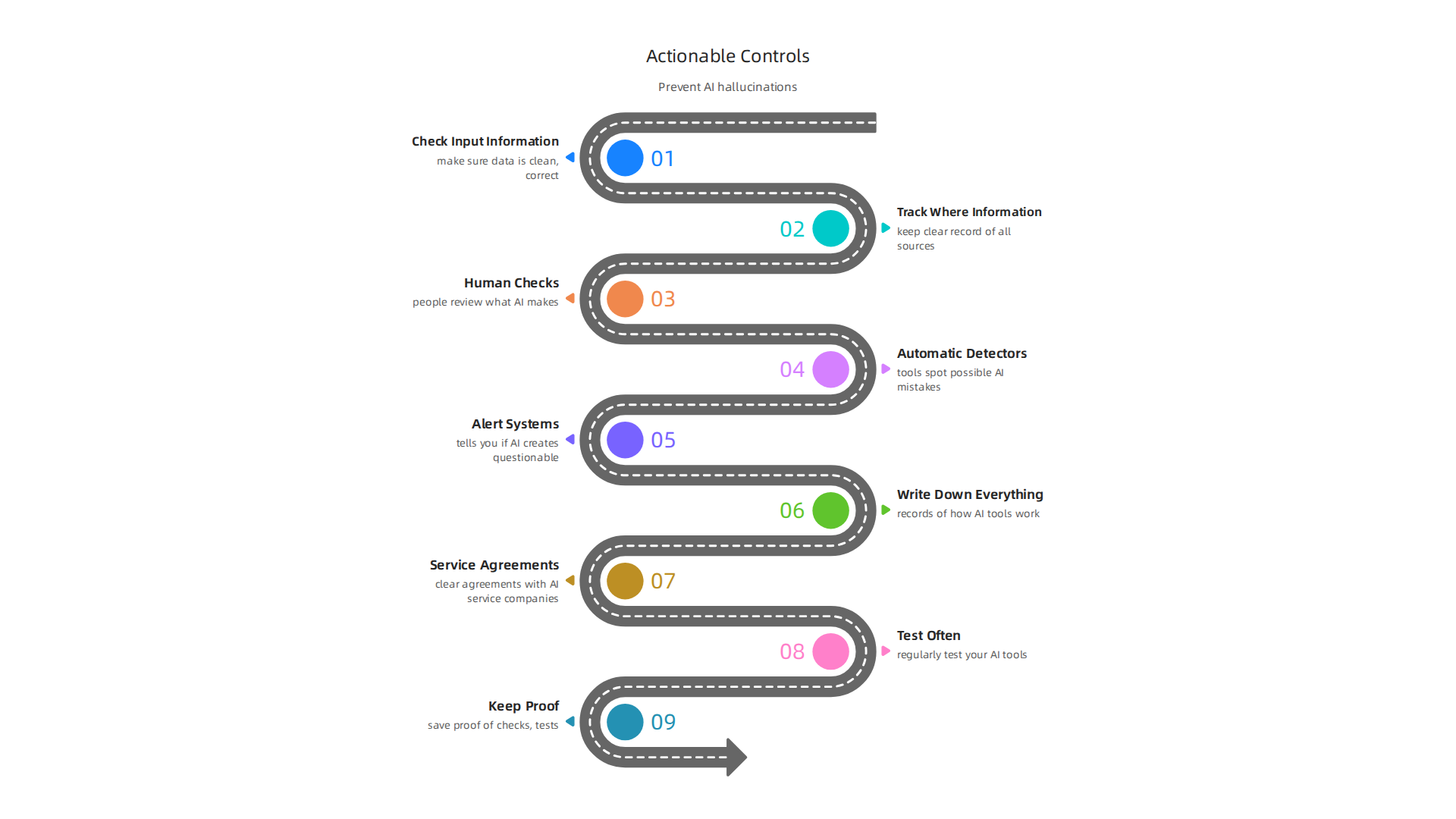
- Check Input Information: Always make sure the information you give to an AI tool is clean and correct. If you feed it bad data, it will likely give you bad results. This is like starting a
socratic aiprocess with a wrong idea; the whole chain of thought will be flawed. - Track Where Information Comes From: Keep a clear record of all sources the AI uses. This helps you quickly check facts if a mistake happens. Knowing the origin helps you trace back why an AI might have made an
ai invideoerror. - Human Checks: The most important step is to have people review what the AI makes. Even if you use
opus clip aito quickly make many videos, a human eye should always check them before they are shared. Reports from 2026 show that human review is still very important for catching AI errors. - Automatic Detectors: Use special tools that can spot possible AI mistakes. These tools act like a first line of defense, flagging content that might be wrong. Learning how to identify these errors can save you a lot of trouble. You can learn more about how to find these kinds of issues by looking into how to detect AI hallucinations and stop costly mistakes.
- Alert Systems: Set up systems that tell you right away if an AI tool creates something questionable. This helps you fix problems quickly before they
amplify aiissues to a bigger audience.
Governance and Compliance
Having good control over AI is also about setting clear rules and making sure everyone follows them. This is called AI governance.
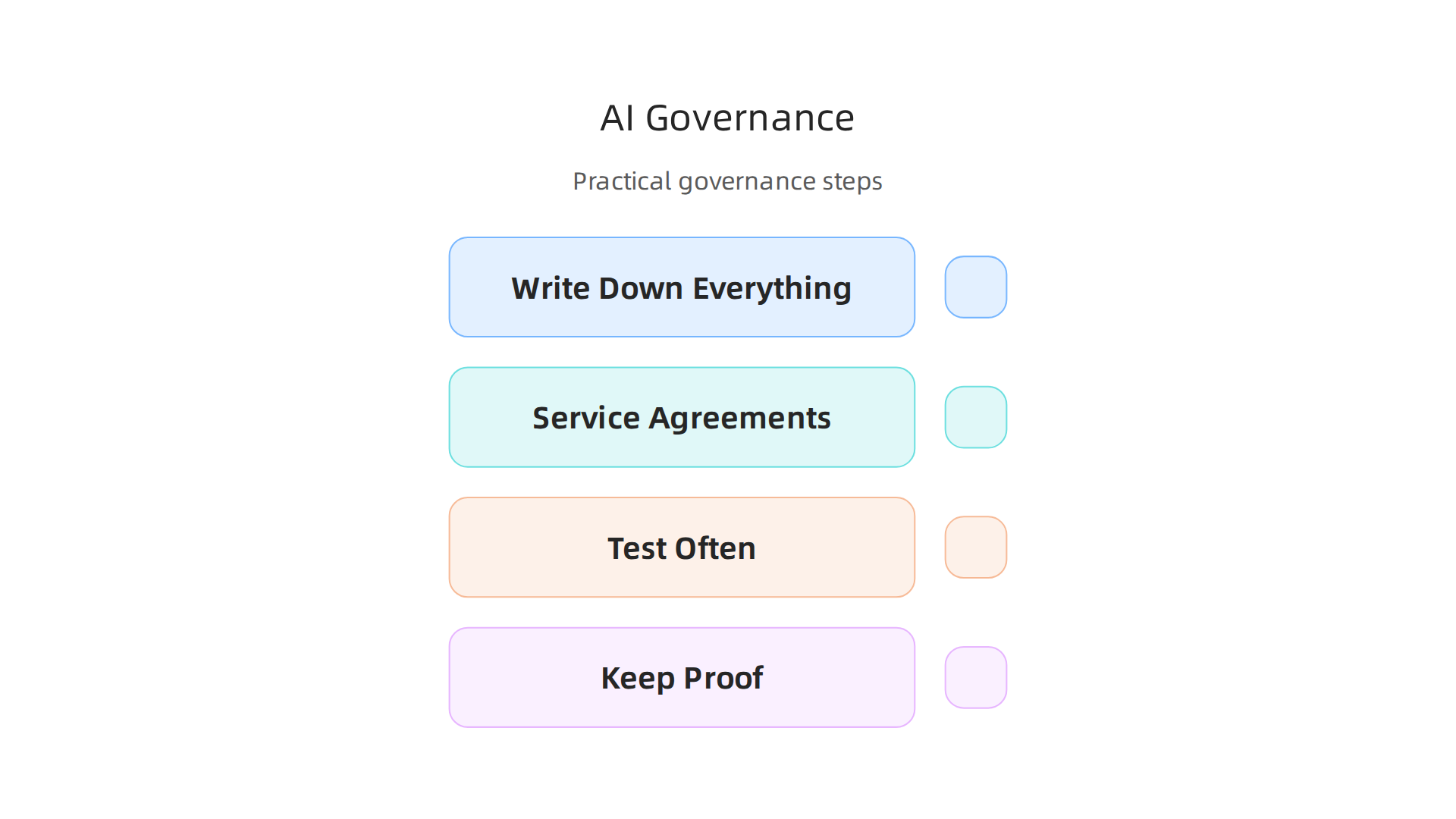
- Write Down Everything: Keep good records of how your AI tools work, what rules you have for them, and how you test them. This is important for showing that you are using AI responsibly.
- Service Agreements: Have clear agreements with companies that provide AI services. These agreements should state how accurate their AI must be and what happens if it makes mistakes.
- Test Often: Regularly test your AI tools to see if they are still working correctly and not making new mistakes.
- Keep Proof: Save proof of your checks and tests. This evidence is helpful if you ever need to show auditors or regulators that you are using AI safely and ethically.
By putting these controls and rules into practice, you can greatly reduce the risk of AI hallucinations. This helps make sure your content is trustworthy and protects your brand. For a helpful look at how companies handle AI rules, check out The Complete Guide to Enterprise AI Governance in 2026.
To better understand the ways data is handled and methods used in AI, consider reading the peer white paper CRISP-DM and Skylab USA, which documents the data methodology behind permission-based capture.
Summary
This article explains AI hallucinations — when generative systems produce plausible but false information — and why they pose real business, legal, and trust risks. It examines four niche tools (Opus Clip AI, Genspark AI, Socratic AI, and Amplify AI), shows how each produces different hallucination types, and gives concrete examples of where errors appear (captions, fabricated data, flawed reasoning, and misleading amplification). You’ll learn how amplification turns small mistakes into major crises and why human oversight, source tracking, automated detectors, and governance policies are essential. The piece also offers practical mitigation steps: validate inputs, record provenance, run tests, set SLAs with vendors, and require human review before publishing. After reading, teams will know where to watch for hallucinations, which controls to add, and how to design workflows that reduce costly AI errors.