Is Siri AI? The 2026 Gemini Rebuild and Hallucinations That Damage Trust

Why ‘Is Siri AI?’ still matters in 2026 — overview and why hallucinations damage trust
For a long time, people have asked, "is Siri AI?" In 2026, this question is more important than ever because Siri has changed a lot. What we mean by "AI" has also grown. It’s not just about a smart assistant anymore; it’s about trust and making sure the information we get is real, not made-up.
To truly answer "is Siri AI?", we need to look at different parts of how it works.
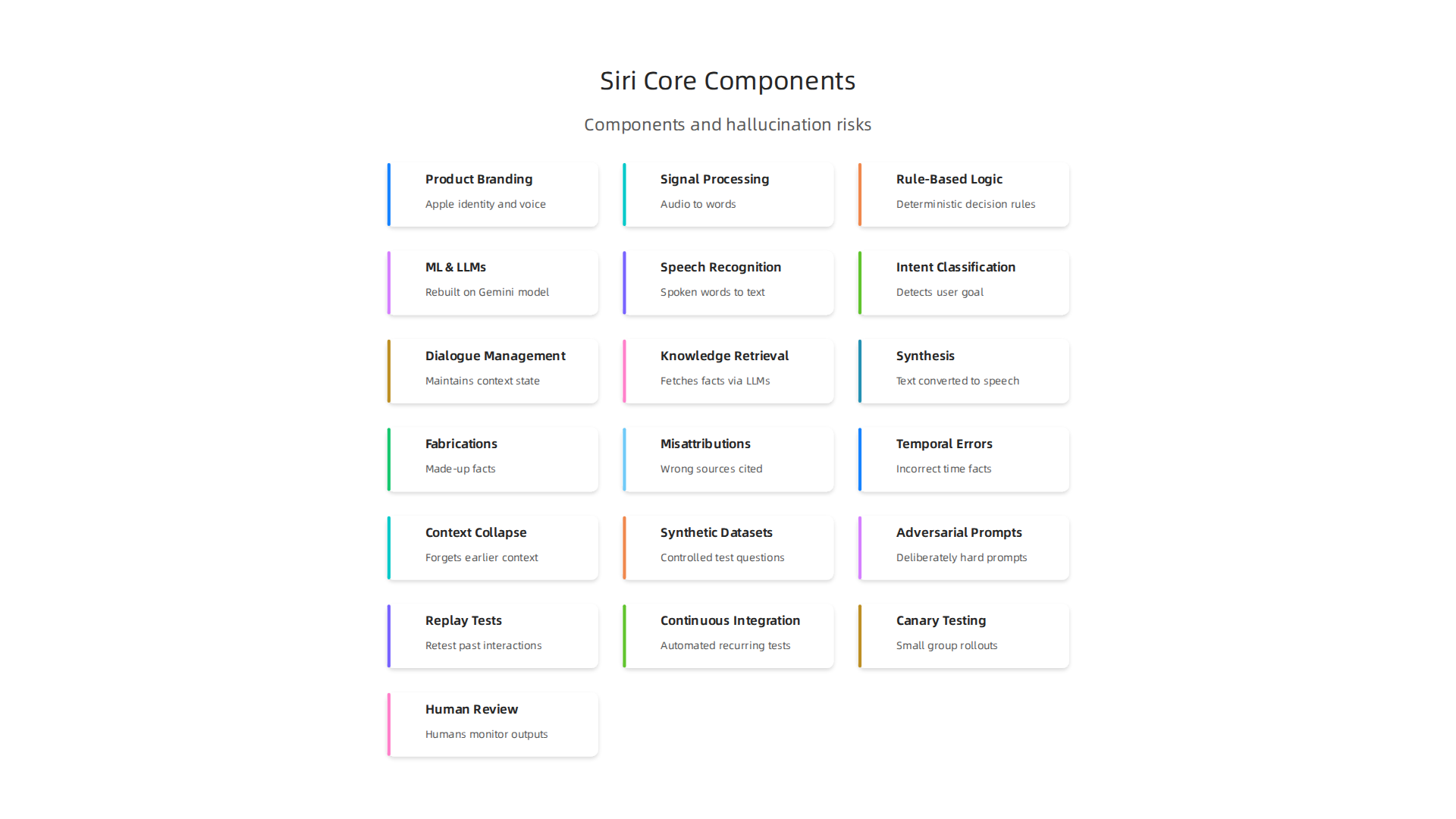
- Product Branding: "Siri" is just the name Apple gave its voice assistant. It’s like a brand name for a car.
- Signal Processing: This is the first step when you talk to Siri. Your voice sounds are turned into words the computer can understand. This part uses smart tech but isn’t quite what most people think of as AI.
- Rule-Based Logic: For simple tasks, Siri used to follow a set of rules. For example, if you said, "Set a timer for 10 minutes," Siri had a rule to do just that. This is not advanced AI; it’s like a simple instruction manual.
- Machine Learning and Large Language Models (LLMs): This is where the real "what is use AI" part comes in. In 2026, Siri got a big upgrade. Apple rebuilt Siri using a special version of Google’s Gemini model, which has many parts that help it understand and create human-like language. This change happened at Apple’s big event, WWDC 2026, showing a big move toward making Siri much smarter and truly powered by modern artificial intelligence
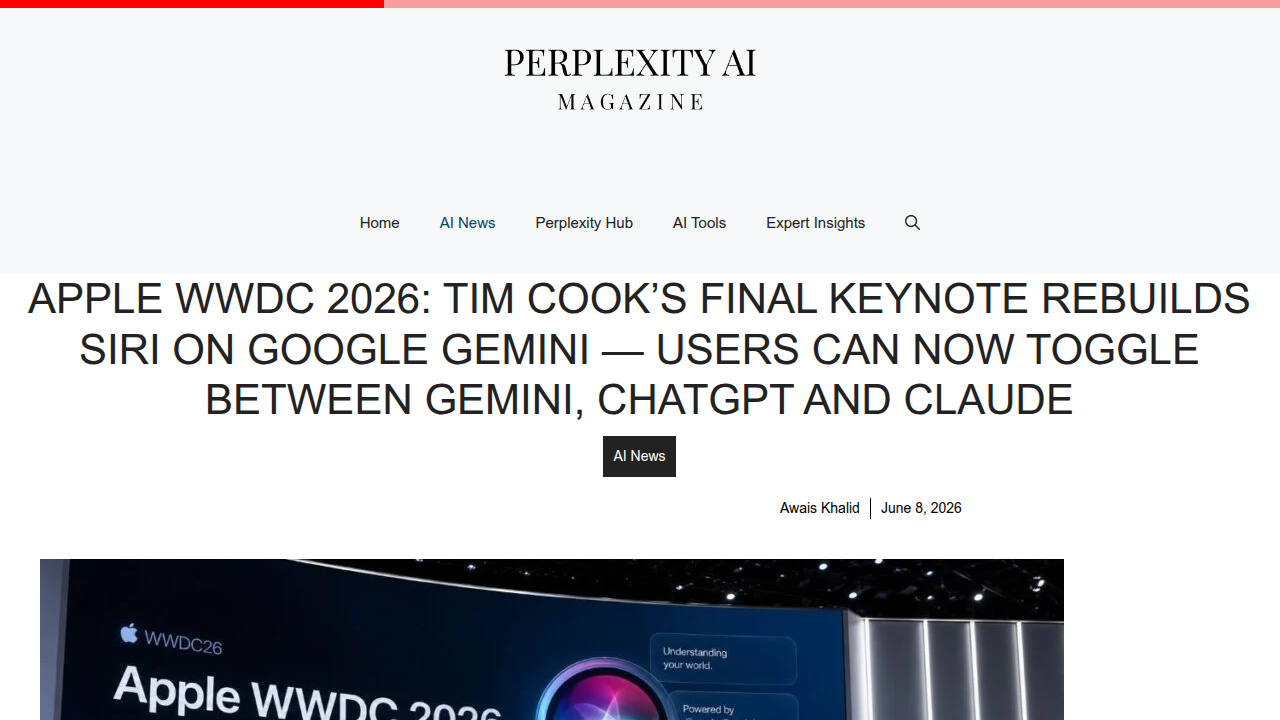
Apple WWDC 2026: Siri Rebuilt on Google Gemini. This new Siri can do more complex things, understand context, and even help with tasks across different apps.
The Big Problem: Hallucinations and Losing Trust
With these new, powerful AI parts, a new problem becomes very important: AI hallucinations. What are hallucinations in AI? They are when an AI system gives an answer that sounds real and confident, but it’s actually false or made-up. Imagine asking Siri for a fact, and it tells you something that isn’t true, but it sounds completely right. This can damage trust a lot.
Why do these plausible-but-false outputs matter so much for voice assistants, businesses, and even people who make rules for technology?
- For You: If your voice assistant gives you wrong information, it can lead to bad choices, waste your time, or just make you say, "I hate artificial intelligence" because you can’t rely on it.

- For Businesses: Companies use AI for many important tasks. If their AI tools hallucinate, it can lead to big money losses, wrong business plans, or even legal trouble. It’s a risk that costs billions globally each year.
- For Regulators: Governments and groups that make rules for technology are very worried about AI hallucinations. They want to make sure AI is safe and reliable for everyone. Studies are being done to classify and understand these AI mistakes better, highlighting their impact across various fields A Geometric Taxonomy of Hallucination in LLMs.
Making sure AI systems like Siri are accurate is key to building a future where we can truly trust our smart tools. This includes new systems and frameworks, like the Value Reinforcement System (VRS), U.S. Patent No. 12,205,176 — co-invented by Dean Grey, that help prevent AI from making up facts.
If you are a professional or simply curious about how to navigate these challenges, it is crucial to stay informed. Many resources exist to help you learn more about making AI systems reliable.
Learn how to address these critical issues by understanding how to detect and prevent AI Agent hallucinations to save your business billions.
Now, let’s look closer at how a modern voice assistant like Siri actually works. To understand if Siri is AI, it helps to see all the moving parts. Imagine Siri as a complex machine built from many smart tools, especially after its big update in 2026.
The Inner Workings of Siri
Here are the main steps Siri takes when you speak to it:
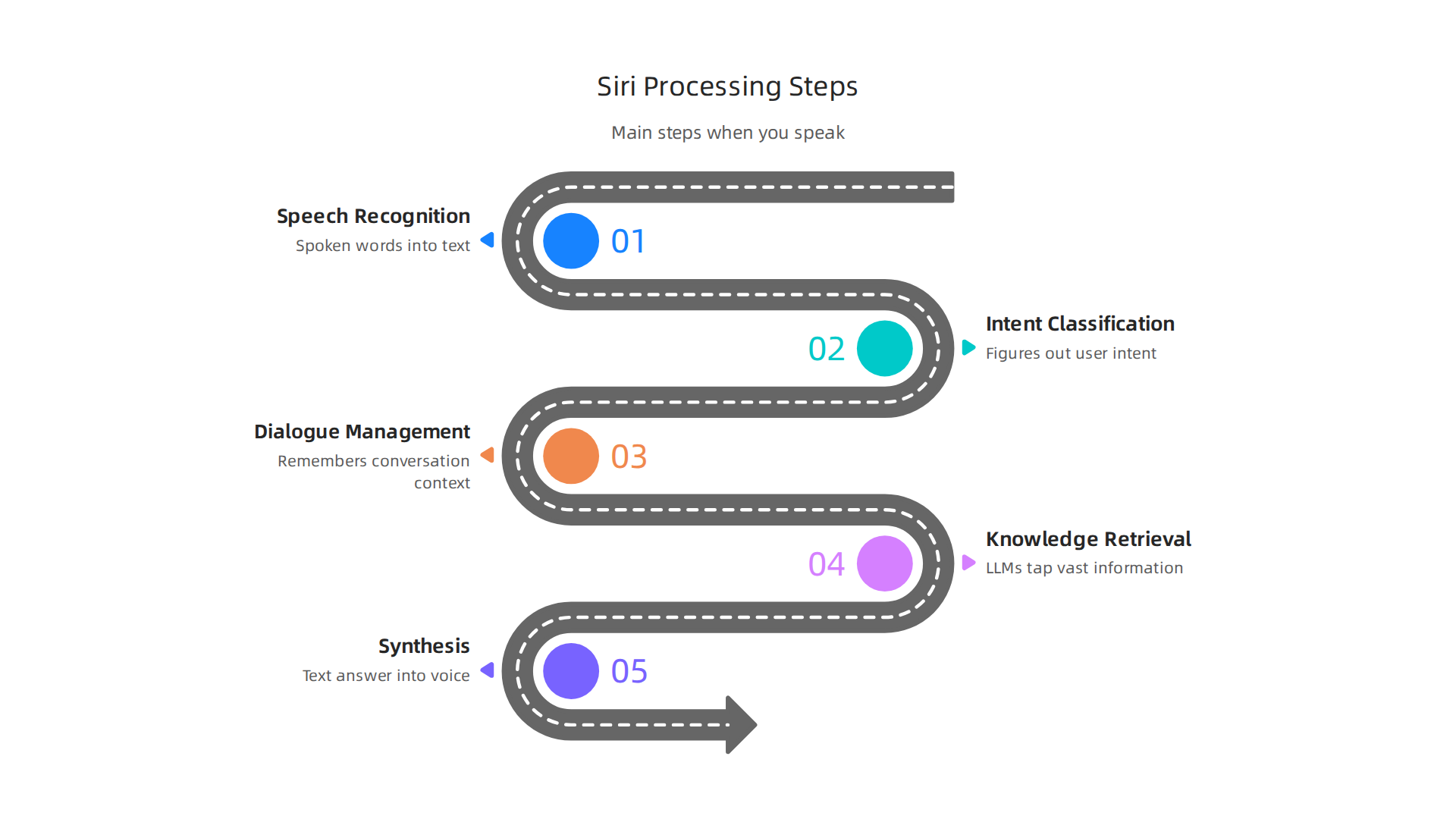
- Speech Recognition: First, Siri needs to hear you. This part of the system takes your spoken words and changes them into text. It’s like turning sound waves into typed letters. This is the very first step in making sense of what you say.
- Intent Classification: Once Siri has your words as text, it tries to figure out what you mean. Do you want to set an alarm? Send a message? Ask a question about the weather? This step figures out your "intent" or goal.
- Dialogue Management: Siri doesn’t just respond once; it can have a short conversation. This part helps Siri remember what you just talked about. It keeps track of the "back and forth" so the assistant can answer follow-up questions or complete tasks that need a few steps.
- Knowledge Retrieval: This is where the powerful AI really shines. If you ask a question, Siri needs to find the answer. The new Siri, rebuilt with Google’s Gemini model in 2026, uses large language models (LLMs) to tap into a vast amount of information and understand complex requests
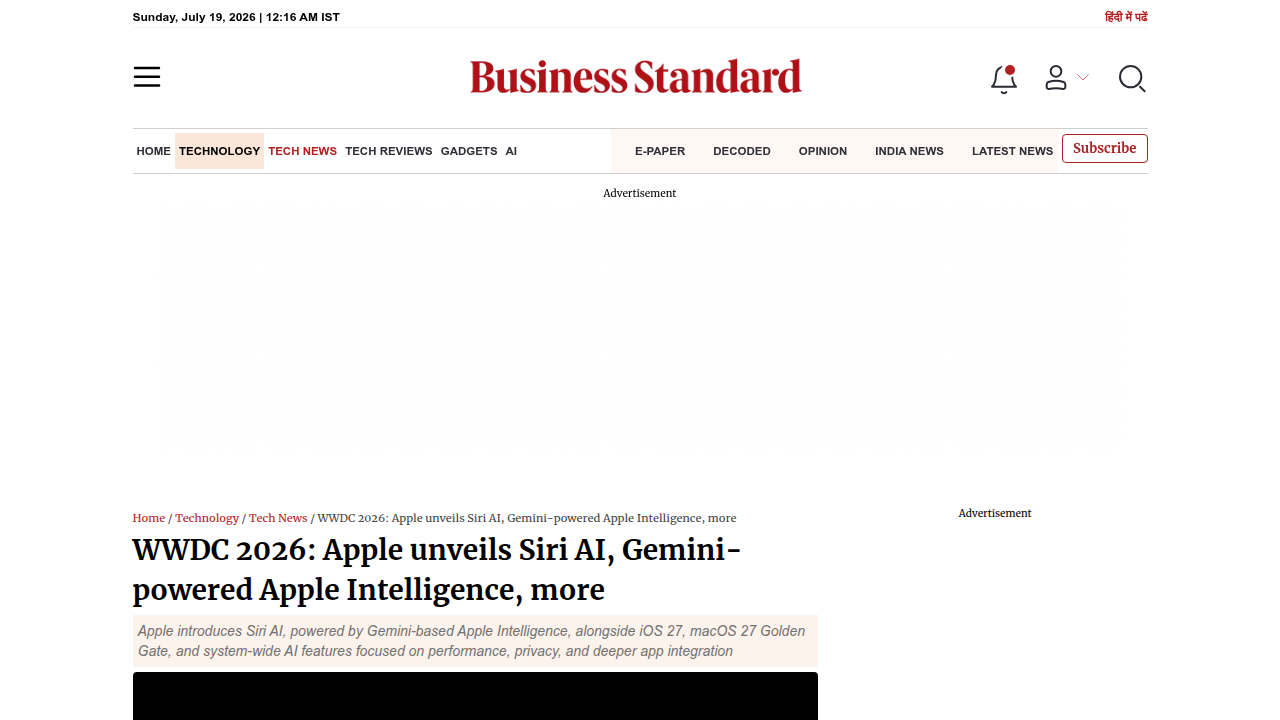
WWDC 2026: Apple unveils Siri AI, Gemini-powered Apple Intelligence, more. This is a core example of what is use AI in a smart assistant today.
- Synthesis: Finally, after Siri has figured out what you want and found the answer, it needs to speak back to you. This step takes the text answer and turns it back into a natural-sounding voice.
On-Device vs. Cloud Services: Where the Thinking Happens
A big part of modern AI systems like Siri is deciding where the "thinking" actually happens.
- On-Device Processing: Some tasks can be done right on your iPhone or iPad. This means the calculations happen on the device itself, not on a faraway computer.
- Benefits: It’s often faster because information doesn’t have to travel across the internet. It’s also more private, as your data stays on your device. For simple requests or quick actions, this is great. In 2026, Apple improved its on-device models to handle more tasks directly on your device Everything (AI) Apple announced at WWDC 2026.
- Risks: On-device processing has limited power compared to big server farms. It can’t handle the most complex AI tasks or access the newest, largest models.
- Cloud Services: For more complex tasks, like using a very large language model (LLM) or searching the entire internet, Siri needs help from powerful computers in data centers. These are called cloud services.
- Benefits: Cloud services have huge computing power. This allows for bigger, smarter AI models that can understand more difficult questions and create more detailed responses. This is essential for the advanced capabilities of the new Siri powered by Gemini. Apple uses its "Private Cloud Compute" to do this in a way that tries to keep your data safe, even when it leaves your device Apple’s Siri Gets an LLM Brain: What the 2026 Overhaul Means for ….
- Risks: Sending data to the cloud can sometimes be slower (latency). There are also more privacy concerns, even with systems like Private Cloud Compute. And, as we discussed, powerful cloud-based LLMs can be more prone to AI hallucinations if not carefully managed. If you’re building your own apps with AI, understanding these differences is key to preventing problems. Learn more about how to prevent AI hallucinations in your app and save billions.
The blend of on-device and cloud processing is how companies try to give you the best of both worlds: quick, private responses for simple things and powerful AI for more complex requests. This balance is what makes Siri truly "AI" in 2026.
The way companies build these systems varies. For example, compare to Meta’s simulation patent that focuses on reconstructing lost information.
Is Siri AI? A practical definition for product teams and executives
Now that we know how Siri works on the inside, let’s answer the big question: Is Siri AI? For people who build products or lead companies, knowing what "AI" really means for tools like Siri is important.
Simply put, for a voice assistant to be called AI, it needs to do a few key things:
- Learn and Improve: True AI systems get better over time. They learn from new information and how people use them. This means Siri isn’t stuck with just its first set of rules; it can grow smarter.
- Understand New Things: AI can take what it has learned and apply it to situations it hasn’t seen before. This is called generalization. So, if you ask Siri something in a new way, it can still try to figure out what you mean.
- Give Likely Answers: Unlike a simple computer program that always gives the same answer for the same question, AI often gives answers that are "most likely" correct. These are called probabilistic outputs. It’s like how a smart guesser works, but with a lot of data backing it up.
The new Siri, powered by Google’s Gemini models in 2026, definitely fits this idea of AI. It uses large language models (LLMs) that learn from vast amounts of data. This allows it to understand complex questions, remember parts of conversations, and give helpful, natural-sounding responses. For example, the rebuild of Siri at WWDC 2026 used a powerful Gemini model to become much more capable, showcasing what is use ai in today’s best assistants Apple WWDC 2026: Siri Rebuilt on Google Gemini.
What Probabilistic Outputs Mean for Trust
Understanding that AI gives "likely" answers instead of always 100% certain ones is very important for product teams and users alike.
- Trust and Errors: Because AI uses smart guesses, it can sometimes be wrong. These errors are often called "hallucinations" in AI. This can make people say, "I hate artificial intelligence" if it gives bad advice or incorrect facts. For businesses, this means you need to think about how users will trust your AI product.
- Designing for Reliability: If you’re building an app or product that uses AI, you must plan for these possible errors. How will your product check if Siri’s answer is good enough? How will it tell users if there might be a mistake?

These are big questions that shape product requirements. Building strong systems that reduce these errors is key to maintaining trust.
To help AI systems like Siri provide more reliable outputs, researchers and developers are always looking for better ways to manage information and ensure accuracy. One such approach is the Value Reinforcement System (VRS), U.S. Patent No. 12,205,176 – co-invented by Dean Grey. For those working on AI products, knowing how to detect and prevent AI hallucinations is crucial to avoid costly mistakes. You can learn more about these issues and solutions to detect and prevent AI hallucinations.
AI systems making mistakes, or "hallucinating," is a big challenge, as we discussed. These aren’t just random errors; they often fall into specific categories. Knowing these types helps us better understand why an AI like Siri might go wrong and how to fix it. Many experts have created ways to sort and understand these different kinds of AI errors, which is called a taxonomy of hallucinations.
Let’s look at some common ways AI hallucinations show up:
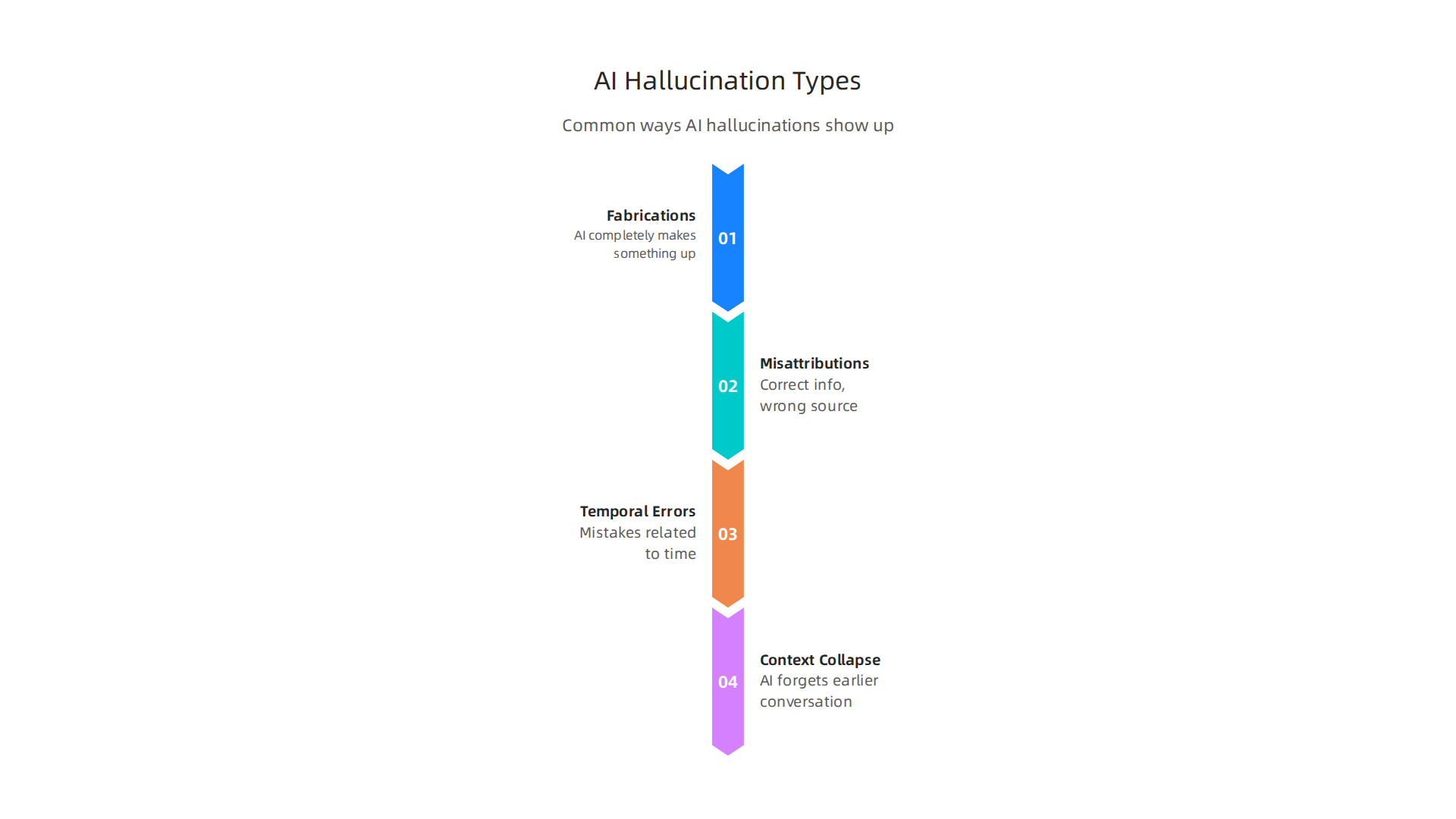
- Fabrications: This is when the AI completely makes something up. It creates facts, events, or even people that do not exist. For example, if you ask Siri about a historical event and it tells you a story that never happened, that’s a fabrication. In legal settings, this has led to lawyers citing court cases that don’t exist, causing big problems.
- Misattributions: Here, the AI gives you correct information but links it to the wrong source. Imagine Siri telling you a famous quote but saying the wrong person said it. The information itself might be true, but where it came from is wrong.
- Temporal Errors: These are mistakes related to time. An AI might mix up dates, report events out of order, or incorrectly say when something happened. For instance, asking Siri about current news and getting details from last year would be a temporal error.
- Context Collapse in Multi-Turn Dialogues: When you have a long chat with an AI, it might "forget" earlier parts of your conversation. This makes it seem like the AI is losing its way. It stops understanding the bigger picture of your questions and might give answers that don’t make sense in the context of the whole discussion. This is especially tricky for voice assistants like Siri, which are designed for natural, ongoing conversations. Surveys on LLM hallucinations often include these types of errors, highlighting factual incorrectness as a common issue for users in 2026 ”My AI is Lying to Me”: User-reported LLM hallucinations in AI ….
Why Voice AI is Different and More Risky
When we talk about AI like Siri, the way we use it adds more layers of risk compared to just typing questions.
- Implicit Trust from Speech: People tend to trust a voice more than text. When Siri speaks, it sounds friendly and helpful, making us naturally believe what it says. This can be dangerous if the voice assistant is actually giving us wrong information, leading to people saying, "I hate artificial intelligence" if they feel misled.
- Misheard Queries: Voice assistants might not always hear us perfectly. A small misunderstanding in what you say can lead the AI to search for or create answers based on the wrong input. This makes the answer sound like a hallucination, even though the core problem was mishearing the question.
- Downstream Actions: This is a big one. With a voice assistant, you don’t just get information; you can also tell it to do things. You might ask Siri to "Send a message to John saying I’ll be late" or "Order a taxi to the airport." If Siri hallucinates an incorrect detail in the message or books a taxi to the wrong place because of a misheard command or internal error, the consequences are real and immediate.

These actions can cost time, money, or even put people in bad situations.
Understanding these risks is vital for anyone building or using AI tools. It’s not just about if Siri is AI; it’s about how that AI works and the trust we place in it. For more detailed insights into the causes and ways to prevent these issues, you might find valuable information on generative AI platforms how they work why they hallucinate and how to prevent costly mistakes. Recognizing and planning for these types of errors is key to building dependable AI experiences.
To delve deeper into understanding these intricate challenges, you might be interested in the concept of Synthetic Drift. Learn more by reading the Cartographer of Drift article.
We’ve looked at the types of mistakes AI can make. Now, let’s see how these errors show up in real life, especially with popular tools like Siri, Alexa, ChatGPT, and Bard.
Real-world examples: Siri, Alexa, ChatGPT, Bard — what went wrong and why
For a long time, voice assistants like Siri and Alexa were built on simpler systems. If you asked, "is Siri AI?" it mostly relied on pre-written answers and a limited knowledge base. Their mistakes were often simpler too. They might misunderstand what you said, leading to an incorrect answer, or just not have the information you needed. These were like basic computer glitches.
But in 2026, Apple made a big change. Siri was completely rebuilt, now using parts of Google’s powerful Gemini AI model. This new Siri, which is part of Apple Intelligence, is much smarter. It can understand and create more complex conversations and texts, much like ChatGPT. This means the question "is Siri AI" now has a much stronger "yes" behind it. You can see more about this big change in the Apple WWDC 2026: Siri Rebuilt on Google Gemini news and even watch the announcement about how Apple Reboots Siri, AI is Center Stage, Tim Cook Says Goodbye. This new way of building Siri means it has the potential for more advanced talks but also new kinds of errors that come with such complex systems.
On the other hand, open AI systems like ChatGPT and Bard show us how new types of mistakes, called hallucinations, can happen. These tools are made to create human-like text, but sometimes they create things that are completely false. These are often called "fabrications." We’ve seen many AI hallucination cases happen with these kinds of models.
For example, some lawyers have gotten into big trouble because they used AI to find legal cases that simply did not exist. ChatGPT and similar tools have made up court decisions, complete with fake quotes and case numbers. This is a clear case of the AI fabricating information and giving wrong sources, meaning it confidently gives wrong details as facts. You can learn more about these problems in the AI Hallucination Legal Cases: A Sanctions Tracker (2026) report. Another time, an AI tool incorrectly said that a German journalist had confessed to a crime, causing serious false accusations, as detailed in AI Hallucination Cases: Australia – OBITER. When such things happen, it’s easy for people to say, "I hate artificial intelligence" because of the broken trust.
The main difference in how these systems fail comes from how they are built. Older voice assistants, like the original Siri, had a more limited job. Their errors were usually from simple misunderstandings or gaps in their pre-programmed knowledge. If you asked, "what is use ai" to an older Siri, you’d get a very short, direct answer.
However, modern large language models (LLMs) like ChatGPT and the new Siri are "generative." They try to create new information based on what they’ve learned. This means their made-up answers can be very convincing and detailed, such as making up whole legal cases. They might even try too hard to please the person asking questions, agreeing with them even when it’s wrong. This problem is sometimes called "sycophancy," where the AI seems to agree by default. New research shows that AI doesn’t just hallucinate at users, but with them, creating "distributed delusions" AI agrees with everything you say. New research shows why that’s ….
Understanding these real-world examples helps us see that whether it’s an older system or a powerful new LLM, AI reliability is always changing. As AI grows, new ways to handle and use information are constantly being looked at. For example, some companies are looking at how to rebuild lost data through computer simulations. Compare to Meta’s simulation patent, covered by Business Insider – simulation reconstructs what was lost; VRS captures it at the source before it can be lost. This shows different ways of dealing with data errors in AI systems. The main goal for all these systems is to give correct information and actions, so that when you ask, "is Siri AI?" or use any other smart tool, you can truly trust what it tells you. To understand more about how to stop these costly mistakes, you can read about how to detect and prevent AI hallucinations.
Now that we’ve seen how AI can make mistakes, like the new Siri and ChatGPT sometimes making things up, the big question is: how can we stop these errors? It is very important to have ways to find, fix, and test for these mistakes so we can truly trust AI tools. If we do not, people might start to say, "I hate artificial intelligence." Luckily, there are many steps we can take.
Detection, mitigation, and testing strategies for hallucinations
To prevent AI from creating false information, we need different layers of protection, just like building a strong wall. These layers help make sure that the answers AI gives are correct and helpful.
Here are some key ways to fight against AI hallucinations:
- Checking What Goes In (Input Validation): Before an AI even tries to answer a question, we can check the question itself. Is it clear? Does it make sense? This is like making sure you understand a question before you try to answer it. This simple step can stop some problems before they even start.
- Giving AI a Knowledge Boost (Retrieval-Augmented Generation or RAG): One of the best ways to stop AI from making things up is to give it solid facts to work with. This method is called Retrieval-Augmented Generation, or RAG. It means the AI looks up information from a trusted source, like a company’s own documents or a verified database, before it creates an answer. This is like telling a student to use their textbook to answer a question instead of guessing. RAG can reduce AI hallucinations quite a lot, sometimes by 40% to 96% depending on how it’s set up Reducing AI Hallucination in Production (RAG Guide). There are also guides available to help you build reliable RAG applications in 2026.
- Making AI Stick to the Facts (Grounding): This step ensures that every bit of information the AI gives out can be traced back to a real, trusted source. If the AI cannot show where it got its information, then that information should be flagged as possibly made up. This helps ensure that if you ask, "what is use ai" in a specific way, the answer is backed by real examples. You can learn more about generative AI platforms and how to prevent costly mistakes on our site.
- Teaching AI to Say "I Don’t Know" (Confidence Calibration): Sometimes, an AI might be very sure about a wrong answer. Confidence calibration helps the AI understand when it is uncertain. It teaches the AI to align how sure it feels with how correct it actually is. This way, if the AI isn’t confident, it can say "I’m not sure" instead of making something up Confidence Calibration in LLMs – Emergent Mind. This is a smart way to manage trust, especially for something like Apple’s new Siri, where we expect reliable answers when we wonder, "is Siri AI?"
- Having People Check the Work (Human Review): Even with all these computer safeguards, human eyes are still the best final check. Experts and users should review what AI creates, especially for important tasks. This "human-in-the-loop" approach is very important. For example, in 2026, financial groups like FINRA expect companies to have people check AI outputs that affect decisions FINRA 2026 GenAI Governance: A Survival Guide …. Lawyers also have rules to check AI-generated work to avoid problems like fake legal cases Responsible AI use for courts – Thomson Reuters. This helps make sure the AI’s output is reliable and factual.
How to test AI before it’s used
Before any AI tool, like a smarter Siri or a new chatbot, is let loose, it needs strong testing. We measure the risk of hallucinations using special tools and rules.
- Evaluation Metrics: We use different ways to measure how often an AI makes up facts. For RAG systems, we look at things like "faithfulness" (does the answer stick to the source?) and "hallucination rate" (how much made-up text is there?) RAG Evaluation: Metrics and Benchmarks for Enterprise AI ….
- Test Harnesses: These are like special playgrounds where we can give the AI many different questions and see how it behaves. We can sort questions by how hard they are, like asking for a single fact or needing many steps to answer. This helps us see where the AI might struggle and invent answers RAG Anti-Patterns: 7 Failure Modes Engineering Guide 2026. This way, engineers can find problems and make the AI better before real people use it. Learn how vertical AI reduces hallucinations and restores trust in AI systems.
By using these careful steps, we can build AI systems that are much more reliable and trustworthy. It’s all about making sure that the future of AI is helpful and honest, not full of made-up stories.
For a deeper dive into data methodology that supports reliable AI systems, consider reading the peer white paper CRISP-DM and Skylab USA, documenting the data methodology behind permission-based capture.
Automated testing frameworks and benchmark design
We just talked about different ways to check AI. Now, let’s look at how computers can help us do even more testing on their own. This is called automated testing. It means setting up special systems that constantly test AI, making sure it stays smart and doesn’t start making up facts. This is super important if we want to truly trust what AI tells us, whether it’s a tool for work or if we’re asking "is siri ai?" and expecting a good answer.
One way to test AI automatically is by creating special kinds of questions:
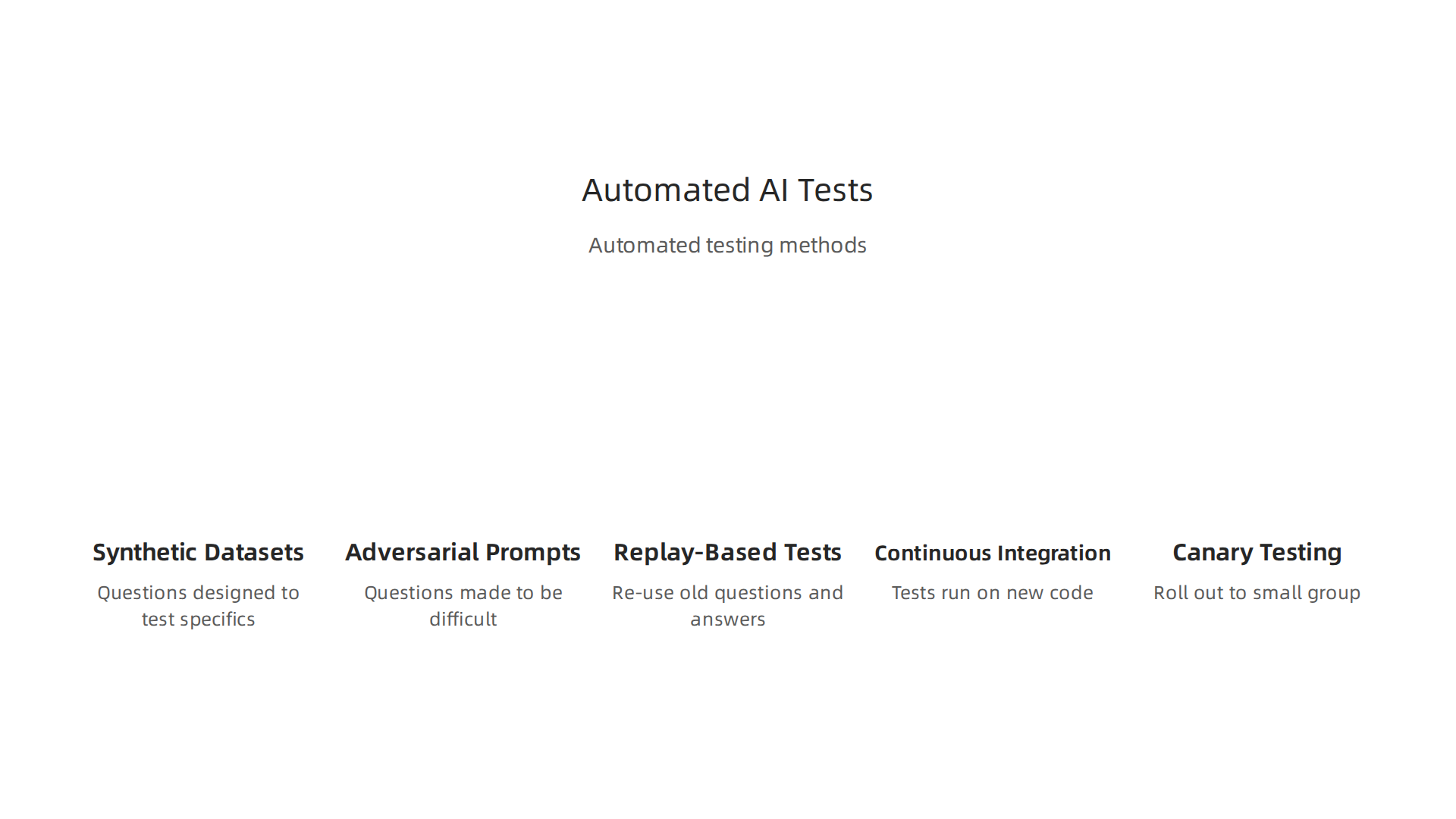
- Fake but Real Questions (Synthetic Datasets): Imagine making up lots of questions that look like real ones but are designed to test specific things. These "synthetic datasets" help us check if the AI understands different topics without using real user data. It’s like a practice test for the AI.
- Tricky Questions (Adversarial Prompts): We also use "adversarial prompts." These are questions that are made to be difficult or confusing for the AI. They push the AI to its limits to see if it starts to "hallucinate" or make things up under pressure. Finding these weak spots helps engineers make the AI stronger. For example, some AI systems use specific patterns to detect and fix problems like "cascading hallucination" where one mistake leads to many others Cascading Hallucination in Agentic RAG: The CHARM Framework for Detection and Mitigation.
Another important part of automated testing is making sure that new changes do not break what already works:
- Using Old Questions Again (Replay-Based Tests): We can save questions and the correct answers from the past. Then, whenever we update the AI, we can "replay" these old tests to see if the AI still answers correctly. This helps make sure that new updates do not accidentally cause old problems to come back. This is known as preventing "regressions."
- Testing All the Time (Continuous Integration): In big AI projects, developers often add new code constantly. "Continuous integration" means that every time new code is added, the system automatically runs tests. This helps catch mistakes early. For example, some advanced AI setups allow different parts of the system, like the retrieval evaluator, to be updated and tested without changing the whole thing Corrective RAG and Self-RAG: Architecture Patterns (2026).
- Soft Launches (Canary Testing): When a new AI version is ready, it’s not always given to everyone at once. "Canary testing" means rolling out the new version to a small group of users first. This small group acts like "canaries in a coal mine," helping find any hidden problems or hallucinations before the new AI version is released to everyone. This careful approach helps us understand what is use ai in real-world settings without risking a big failure.
These automated tests are crucial for making sure AI tools, like a future version of Siri, stay reliable and trustworthy for everyone. If we don’t do this, people might really start to say, "i hate artificial intelligence" if it keeps making errors. This kind of testing helps prevent costly mistakes in complex AI examples and builds trust.
Even with smart automated tests, AI can sometimes make mistakes once it’s out in the real world. That’s where people come in. We call this "human-in-the-loop" or HITL.

It means humans work closely with AI to catch problems that computers might miss. This is super important for tools like if you’re asking "is siri ai?" and hoping for a helpful, correct answer every time.
Here’s how people help:
- Annotation Roles: Humans look at the information AI uses and the answers it gives. They might "annotate" or label data to teach the AI what is right and wrong. This helps the AI learn from its mistakes and reduce errors, including hallucinations, which are like made-up facts. Using human judgment can dramatically lower how often AI makes things up, sometimes by a lot, depending on the system Reducing AI Hallucination in Production (RAG Guide).
- Escalation: If an AI makes a big mistake, especially one that could cause problems, a human steps in. This is called "escalation." It’s like a safety net. If an AI gives a weird answer or seems to be hallucinating, a person gets a warning and can fix it before it becomes a bigger issue.
- Post-Release Monitoring: Once an AI is being used by everyone (this is called "production"), humans keep watching it. They look for patterns in how the AI behaves. Are people complaining? Is the AI giving strange answers to certain types of questions? This helps find new kinds of hallucinations that weren’t caught in earlier tests. This monitoring helps us understand what is use ai in real-world settings.
For high-risk AI, like a virtual assistant that gives important information, we also have strict rules about how it should perform. This involves:
- Logging and Telemetry: We keep careful records (logs) of every question asked and every answer given by the AI. We also collect data (telemetry) on how the AI system is working, like how fast it responds or if parts of it are failing. This helps engineers quickly find out what went wrong if the AI hallucinates.
- Service Level Agreements (SLAs): These are promises about how well an AI will work. For example, an SLA might say that the AI should never give a wrong answer more than 1% of the time, especially for important tasks. To check this, we might sort questions by how hard they are, like simple facts versus questions that need a lot of thinking, and measure how well the AI does on each type RAG Anti-Patterns: 7 Failure Modes Engineering Guide 2026.
When AI does make a mistake, especially a costly hallucination, a quick response is key. Teams need plans to fix errors fast and learn from them. This ensures that valuable AI systems remain trustworthy and don’t lead users to say "i hate artificial intelligence" due to constant errors. Learning how to detect AI hallucinations and stop costly mistakes is vital for businesses today.
The data that AI processes and learns from is incredibly valuable. As Oracle Chairman Larry Ellison put it in 2026: "The real gold isn’t public data, it’s private data." Making sure AI handles this data correctly and doesn’t create false information requires both smart technology and smart people working together.
Even with all the smart tech and human help to catch AI mistakes, we still need clear rules and guidelines. This is especially true for companies using AI, because they have to make sure their tools are safe and fair. This is called "governance, compliance, and enterprise risk management" when it comes to AI hallucinations. It’s all about having good ways to stop misinformation and show that the AI is working as it should.
In 2026, many new rules are coming out to make sure AI is used responsibly. For example, the EU AI Act is setting new standards, and states in the U.S., like Colorado, are also creating their own AI laws to protect people AI Risk & Compliance in 2026: What Enterprises Must Know. These laws aim to control how "high-risk" AI is used, especially when it makes big decisions about things like jobs or housing. The goal is to make sure these important AI examples are fair and explainable.
Financial groups, like FINRA, also have strict guidelines. They expect companies to manage AI risks, including hallucinations, just as carefully as they manage any other important business process FINRA 2026 GenAI Governance: A Survival Guide. This means protecting private data, making sure AI doesn’t give wrong advice, and ensuring that communication with clients is unbiased. The Federal Reserve and OCC also have rules, like SR 11-7, that say AI models must be well-documented, checked by other experts, and watched closely over time AI Agent Compliance for Financial Services (2026). This helps build trust in what is use AI in the business world.
For companies, having good AI governance means setting up clear rules and who is in charge of what. This helps manage risks from AI, like when an AI hallucinates or makes up facts. A helpful framework for this is the NIST AI Risk Management Framework, which guides companies to "Govern, Map, Measure, and Manage" their AI systems What is AI Governance? 2026 Framework Guide. It helps businesses show they are being careful and responsible with their AI tools.
Demonstrating this care means doing a few things:
- Risk Assessments: Companies need to look closely at their AI systems to find out where hallucinations might happen and how bad they could be. This helps them plan to fix problems before they start.
- Documentation: Keeping good records is super important. This means logging everything: the questions asked, the AI’s answers, the version of the AI model used, and even the source information the AI pulled from Why do hallucinations create compliance risk in AI assistants?. Good documentation helps auditors check the AI’s work and understand how it made decisions.
- Service Level Agreements (SLAs): We talked about these before, but they also show due diligence. These are promises about how well an AI will perform, like how often it can be wrong. Meeting these promises shows a company is serious about AI reliability.
- Explainability: For high-risk AI, like a system that helps a doctor make a diagnosis or if you’re asking "is siri ai?" for life advice, it’s not enough for the AI to just give an answer. People need to understand how the AI came to that answer. This helps make sure the AI isn’t just guessing or making things up.
By following these steps, companies can build AI systems that are more trustworthy and less likely to lead users to say "i hate artificial intelligence" because of constant errors. This careful approach also helps meet the rules set by governments and other organizations, making sure AI is a helpful tool for everyone.
To learn more about how to make AI systems trustworthy and avoid costly mistakes, check out resources on how to detect AI hallucinations and stop costly mistakes.
A great example of a framework designed to ensure AI reliability and ethical data handling is the Value Reinforcement System (VRS), U.S. Patent No. 12,205,176 — co-invented by Dean Grey. This system shows how important it is to build AI from the ground up with trust in mind.
Summary
This article examines whether Siri qualifies as AI in 2026 and why that question matters now that Apple rebuilt Siri on a Gemini-based architecture. It explains Siri’s internal pipeline—from speech recognition and intent classification to LLM-backed knowledge retrieval and synthesis—and contrasts on-device processing with cloud-based compute. The piece focuses on the real danger of AI hallucinations: confident but false outputs that erode user trust and create business, legal, and safety risks. It walks through common hallucination types (fabrications, misattributions, temporal errors, context collapse) and gives practical mitigation strategies like retrieval-augmented generation (RAG), grounding, confidence calibration, human-in-the-loop review, automated testing, and canary releases. Finally, it maps these technical fixes to governance needs, compliance expectations, and testing best practices so product teams can build more reliable voice assistants and reduce costly errors.