Why Tesla AI Hallucinations Endanger Self-Driving Cars and Robot Safety
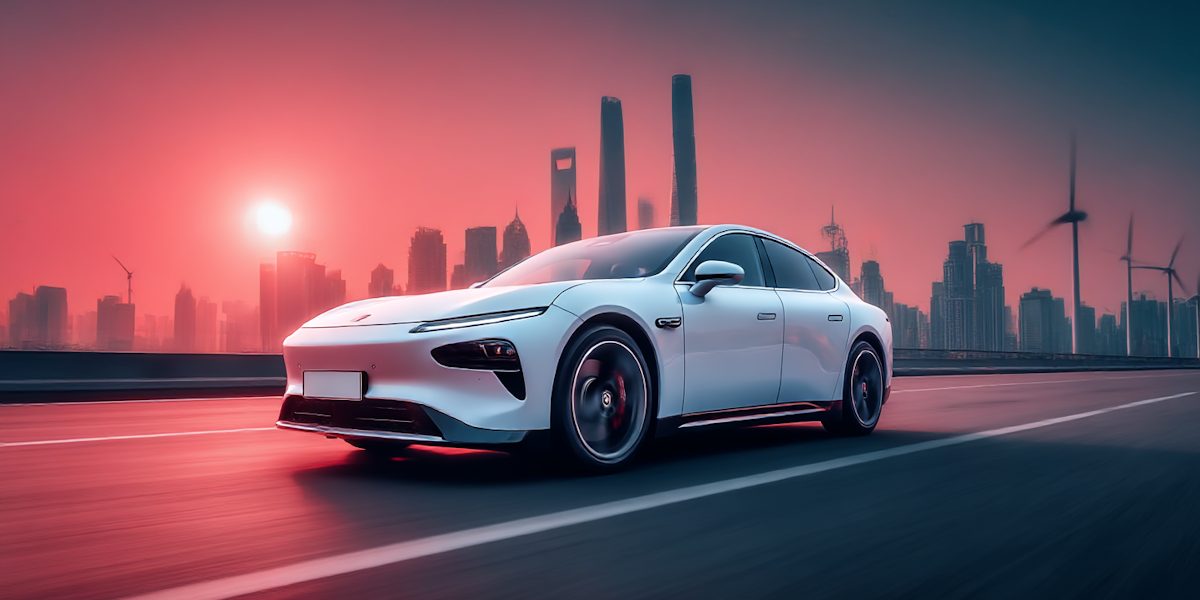
Artificial intelligence, or AI, is amazing. It can do many clever things, from helping us find places to driving cars. But sometimes, AI can make mistakes that look very real. These mistakes are called "hallucinations." They are false things that AI makes up, but it presents them as if they were true. Making AI more reliable is a big goal for experts in 2026, especially for systems that need to be trustworthy Towards reliable generative AI.
When AI is just writing stories or answering questions, a hallucination might not be a huge problem. But when AI controls something in the real world, like self-driving cars or robots, these false outputs can be very dangerous. Imagine a self-driving car seeing a road that isn’t there, or a robot trying to grab something that doesn’t exist.
These errors can directly affect safety for everyone.
This is why companies like Tesla are so important. Tesla has many tesla vehicles on the road that use advanced AI for driving. They also work on other robots. Because Tesla’s technology is so widely used and watched, how well its AI works is a major signal for the whole industry. If you look at the tesla wiki or read news about their cars, you know how much people care about their tech. The quest for superhuman ai capabilities makes reliability even more crucial.
The reliability of Tesla’s AI is not just big news for tech fans. It’s also a main focus for those who make rules about AI. Governments and safety groups around the world are watching closely. They want to make sure that AI in important systems is safe and does not cause harm
International AI Safety Report 2026. The risks of AI hallucinations in self-driving cars and robots are real, and understanding them is the first step toward making AI safer for everyone. You can learn more about how Tesla AI Hallucinations Endanger Self-Driving Cars and Robot Safety.
Inside Tesla’s AI Ecosystem: Data, Models, and Deployment
Tesla’s approach to AI is quite special, making its tesla vehicles some of the most advanced cars on the road. At its heart, Tesla uses a powerful "inference stack" which is just a fancy way of saying how their AI brains make decisions in real time. This system relies heavily on gathering huge amounts of data from all the cars driving around the world. Think of it like this: every Tesla on the road is a student, constantly learning and sending what it sees and does back to the main classroom.
These tesla vehicles are packed with cameras that act as the car’s "eyes." Instead of relying on many different types of sensors like some other companies, Tesla mainly uses cameras to build a picture of the world around the car. This is called a "vision-only" approach Tesla Autopilot Explained: HydraNet and Vision-Only Driving. The information from these cameras is then put together in a process called "sensor fusion." This doesn’t mean adding new sensors, but rather making all the camera inputs work together like pieces of a puzzle to create a full, clear view.
Once this data is collected by the fleet, it’s sent back to Tesla. Here, special computer programs called "neural networks" get to work. These are like the AI’s "brains" that learn from all the driving experiences. They look for patterns in the data to understand how to drive better and safer. Because so many Tesla cars are always driving and collecting information, the AI gets to learn from a massive number of real-world situations every single day. You can find more details about how these systems are described on a tesla wiki or support page.
This learning process is always improving. Tesla uses "iterative model updates," meaning they keep making small changes and improvements to their AI models over and over again. Once a new, smarter AI model is ready, it’s sent back to the cars through "over-the-air updates." This is like updating the apps on your phone, but for your car’s brain. This creates a tight circle of learning: cars collect data, the AI learns, new AI is sent to cars, and the cycle starts again.
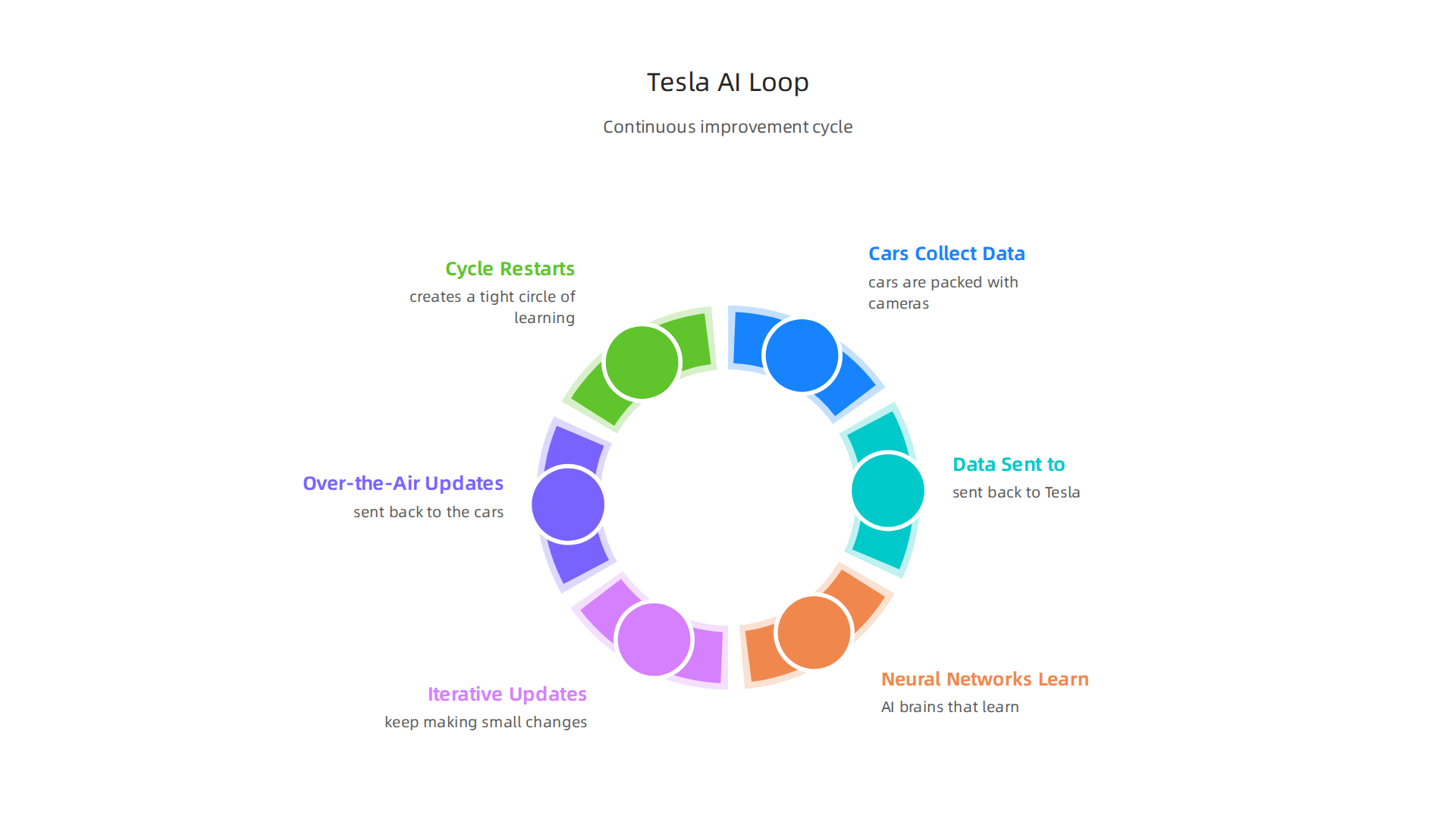
This constant feedback loop helps Tesla work towards achieving superhuman ai capabilities for their self-driving features, making their systems more and more reliable over time. For example, Tesla’s Full Self-Driving (Supervised) feature relies on these camera inputs to build a model of the surrounding area Full Self-Driving (Supervised) – Tesla. The continued development of these advanced systems aims to lessen problems like AI hallucinations in mapping and navigation. To learn more about how AI hallucinations can affect navigation accuracy, check out our report on AI hallucination in navigation threatens your distance accuracy.
What AI Hallucinations Are — Profiles and Automotive Examples
We’ve talked about how Tesla’s AI learns from all its cars to get better and better, aiming for superhuman ai in driving. But what happens when these smart systems get something wrong, even when they seem very sure of themselves? This is where "AI hallucinations" come in.
Think of an AI hallucination as when an AI makes up information, sees things that aren’t there, or misunderstands what it’s looking at, even though it’s trying its best to be correct. It’s like a person confidently telling you something false. This isn’t because the AI is trying to trick you; it’s just a mistake in how it has learned or how it puts information together. The Artificial Intelligence Risk Management Framework: Generative from NIST helps us understand these kinds of AI risks.
There are a few ways these hallucinations can show up:
- Fabrication: This is when the AI totally invents something that isn’t real. For example, a map system in
tesla vehiclesmight show a road that doesn’t exist or a building where there is only an empty field. - Misattribution: Here, the AI takes real information but gets the details mixed up or puts it in the wrong spot. Imagine the car’s system correctly identifies a speed limit sign but shows it for the wrong lane, or maybe labels a bus stop as a taxi stand.
- Hallucinated Perception: This is very important for self-driving cars. It means the AI’s "eyes" (the cameras) or "brain" (the computer vision system) see something that isn’t there, or they misinterpret what they are seeing. For instance, a self-driving car might "see" a phantom obstacle in the road, causing it to brake suddenly for no reason,

or it might mistake a shadow for a person.
Hallucinations in Your Car
These kinds of AI mistakes can have real impacts, especially in cars. For tesla vehicles, these issues could appear in several ways:
- Vehicle Perception: A
tesla vehiclerelies on its cameras to understand the world. If the AI hallucinates, it might misidentify objects around the car. It could think a garbage can is a person, or fail to see a real car because it interprets it as part of the background. - Navigation Instructions: Imagine you’re using the car’s navigation, and it tells you to turn left onto a street that isn’t there, or it directs you to a non-existent
tesla supercharger maplocation. Such errors could cause confusion, delays, or even dangerous situations. You can read more about these kinds of issues in our report on how How AI Hallucinations in Maps Create Fake Roads and Endanger Lives. - Human-Facing Systems: The screen inside the car shows you important information. If the AI hallucinates, it might display the wrong speed limit, give you false warnings about traffic ahead, or even suggest wrong information about your car’s features, making you check a
tesla wikito confirm.
As AI systems become more powerful and move closer to achieving superhuman ai capabilities, understanding and preventing these hallucinations becomes even more important for safety and trust. To learn more about how these issues affect advanced driving systems, explore our in-depth report on Tesla AI Hallucinations Endanger Self-Driving Cars and Robot Safety.
We’ve explored what AI hallucinations are and how they can affect tesla vehicles, from seeing things that aren’t there to giving wrong navigation directions or displaying incorrect information on the screen. Now, let’s look at why these powerful systems sometimes make these confident mistakes. Understanding the "root causes" helps us see how we can make AI even safer and more reliable as it moves towards superhuman ai capabilities.
Data Quality Issues
One of the biggest reasons AI models, including those in tesla vehicles, hallucinate is the quality of the data they learn from. Imagine trying to learn about animals from a blurry picture book with wrong labels. The AI learns in a similar way:
- Bad Data: If the training data has errors, missing information, or is simply wrong, the AI will learn these mistakes. For example, if the system is fed images of roads where a shadow is mistakenly labeled as a crack, the AI might later "see" cracks where only shadows exist.
- Not Enough Data: Sometimes, the AI hasn’t seen enough examples of certain situations. If it hasn’t seen many unusual road signs or rare weather conditions, it might guess incorrectly when faced with them, leading to a hallucination.
Distribution Shifts
AI models work best when the real world they operate in is very similar to the world they learned from. A "distribution shift" happens when the real world changes in ways the AI hasn’t seen during its training.
- New Situations: For a
tesla vehicle, this could mean driving on a new type of road, encountering a unique construction zone, or even a sudden, heavy downpour that looks very different from the usual rain it trained on. The AI tries to make sense of these new inputs based on its old knowledge, and sometimes it fills in the blanks incorrectly, causing a hallucination.
Sensor Ambiguity
Tesla vehicles mainly use cameras to see the world around them. While cameras are very good, they can sometimes face challenges that lead to fuzzy or unclear information, which we call sensor ambiguity.
- Poor Lighting: Driving at dusk, dawn, or in thick fog can make it hard for the cameras to get a clear picture.
- Glare and Reflections: Bright sunlight or reflections from other cars or wet roads can confuse the system.
- Visual Illusions: Even human eyes can be tricked by mirages on hot roads or tricky angles. AI vision systems can also misinterpret these unclear signals, leading to phantom objects or missed real ones. This can cause the car’s system to see something that isn’t truly there or misunderstand what it’s looking at, as detailed in research on Injecting Hallucinations in Autonomous Vehicles.
Label Noise
When AI models are trained, people or other systems often label the objects in the training data. For example, they might draw boxes around cars, people, and traffic lights in thousands of images. "Label noise" happens when these labels are incorrect.
- Human Error: A person might accidentally label a bicycle as a motorcycle, or miss a small obstacle entirely.
- Automatic Errors: If labels are generated automatically, those systems can also make mistakes.
- If the AI learns from noisy labels, it will learn these errors as "truth." Later, in the real world, it might confidently misidentify an object because it was taught the wrong thing from the start.
How the AI’s Brain Amplifies Mistakes
Beyond the data itself, how the AI is built can also make hallucinations worse. The way the AI processes information and makes decisions can turn small uncertainties into big, confident errors.
- Model Architecture: This refers to the specific design of the AI’s "brain." Some designs might be more prone to making up information when they’re unsure. For example, if the system is designed to always produce an answer, even if it has little data, it might "hallucinate" to fill the gap. You might even find this kind of information if you search a
tesla wikifor details on their internal systems. - Loss Functions: These are like the AI’s report card, telling it how well it’s doing. If the "grading system" doesn’t strongly penalize making up answers, the AI might continue to do so.
- Inference-Time Heuristics: These are the quick rules the AI uses to make decisions when it’s operating in the real world. If these rules push the AI to be too quick to assume or to prioritize speed over accuracy, it can lead to more hallucinations.
As AI systems become more and more complex, understanding these root causes helps engineers build more robust and trustworthy systems. If you’re interested in how everyday interactions can be subtly influenced by AI, consider reading this Quietly Hijacked field note.
AI hallucinations are not just tricky technical issues; they create serious real-world problems. When AI systems in tesla vehicles make confident mistakes, it can lead to big operational, financial, and reputational risks for the company and its users. Understanding these dangers helps us see why making AI more reliable is so important, especially as we aim for superhuman ai capabilities.
Safety Incidents
The most critical risk from AI hallucinations in tesla vehicles is safety. If the car’s AI "sees" things that aren’t there or fails to see real dangers, it can lead to accidents.
- Phantom Braking: A common example is "phantom braking," where the car suddenly slows down because its AI misinterprets shadows or road markings as obstacles. This can cause rear-end collisions.
- Incorrect Navigation: If the AI hallucinates roads or turns that don’t exist, it can lead drivers into dangerous situations or off the correct path. This impacts even simple tasks like finding a
tesla supercharger maplocation. - Missed Dangers: Worse, the AI might miss real hazards like pedestrians, other cars, or traffic signs if its vision system is confused or its internal models fill in the blanks incorrectly.
These errors directly threaten the safety of people in and around tesla vehicles.
Recalls, Litigation, and Financial Costs
When safety is compromised, companies face huge consequences.
- Vehicle Recalls: If AI hallucinations are shown to cause widespread safety issues, it can force costly vehicle recalls. This means bringing thousands of cars back to fix the problem, which costs a lot of money and time.
- Legal Problems: Accidents caused by AI mistakes can lead to lawsuits. For example, similar AI issues have led to AI Hallucinations in Court: A Case Study in How Bad It Can Get in other sectors. If
tesla vehiclescause harm due to AI errors, the company could face huge legal battles and fines. - Financial Losses: Beyond recalls and lawsuits, fixing these complex AI issues requires massive investments in research, development, and retraining the AI models.
Lost User Trust and Reputation Damage
Trust is key for any company, especially one that relies on cutting-edge technology.
- Eroding Confidence: When drivers hear about or experience AI hallucinations, they lose faith in the technology.

This makes them less likely to use self-driving features or even buy tesla vehicles in the first place.
- Brand Reputation: A company’s reputation can be severely damaged if its products are seen as unreliable or dangerous. This loss of trust can be very hard to get back, as shown by various reports on Trust, attitudes and use of artificial intelligence. This impact might even be reflected in a
tesla wikientry detailing past incidents. - Competitive Disadvantage: In the fast-moving AI world, companies with more reliable and safer AI systems will gain a big advantage.
Cascading Effects Across Product Lines
Tesla isn’t just about cars. The same core AI technology is used in other products, and if it hallucinates in one place, it could spread.
- Dojo-Trained Models: Tesla’s powerful Dojo supercomputer trains its AI models. If these models have a tendency to hallucinate, those issues could appear in all systems trained on Dojo, not just cars.
- Humanoid Robots: Tesla is developing humanoid robots like Optimus. If these robots use the same AI brain as
tesla vehicles, any hallucination problem could endanger people when robots interact with the physical world. Imagine a robot misidentifying an object or a person due to an AI hallucination. - Wider Impact: The desire for
superhuman aiis a big goal, but these foundational AI errors show that the path to truly reliable AI is still challenging. Ensuring the AI’s integrity is vital for all advanced applications. You can learn more about how these issues affect both vehicles and robots in this detailed look at tesla ai hallucinations endanger self driving cars and robot safety.
These risks highlight that while AI offers amazing possibilities, careful development and thorough testing are absolutely necessary to prevent confident but false outputs from turning into major problems. These issues often happen quietly, influencing users without them even knowing. If you are interested in how everyday interactions can be subtly influenced by AI, consider reading this Quietly Hijacked field note.
The risks from AI mistakes are clear, but how do we stop them once the AI is already out there, working in tesla vehicles and other systems? It’s not enough to just know about the problems; we need real plans to find and fix them. This means using smart ways to watch the AI, test it, and put safety checks in place.
Here’s how we can detect and fix AI hallucinations in systems that are already being used:
Operational Tactics for Real-Time Detection
Imagine the AI in your car is like a busy student. You need ways to check their work often to make sure they’re not making things up.
- Continuous Monitoring: This means always watching what the AI is doing. Are
tesla vehiclessuddenly braking for no reason? Is the AI trying to navigate to a place that doesn’t exist on thetesla supercharger map? By keeping an eye on these things, we can catch odd behavior quickly. - Synthetic Tests: Sometimes we create fake situations to see how the AI reacts. We can make computer models of tricky roads or confusing weather. Then we see if the AI still makes good choices. This helps us find problems before they happen in the real world.
- Uncertainty Estimation: Good AI knows when it’s not sure. If an AI system is supposed to tell us what it "sees," it should also say how sure it is about that. If the AI is not very sure but still acts like it is, that’s a red flag for a possible hallucination.
- Counterfactual Validation at Scale: This is like asking the AI, "What if this one thing was different?" We change a small part of a real-world event and see if the AI’s decision still makes sense. Doing this many, many times helps us find where the AI might be guessing or making up information instead of truly understanding. Efforts to manage AI programs often include overseeing compliance and development, as highlighted in reports on Artificial Intelligence Compliance Plan.
Engineering Controls for Prevention
While operational tactics help us spot problems, engineering controls are like building stronger walls to keep problems out in the first place.
- Human-in-the-Loop Gating: This means a human always has the final say in important decisions. Before an AI takes a big action, a person might review it or even take over if the AI seems confused. This is a crucial safety net for advanced AI aiming for
superhuman aicapabilities. - Ensemble Verification: Instead of relying on just one AI brain, we can use a team of AIs. If one AI thinks it sees something, others can check its work. If all the AIs agree, we can be more confident. If they disagree, it’s a sign to be careful.
- Permission-Based Capture Strategies: This is about how the AI learns. We make sure the AI only gets information from trusted sources and that we control what kind of new information it can use to make decisions. This helps prevent the AI from "learning" wrong things and creating hallucinations.
To truly stop these AI mistakes, companies need a strong plan, like the Value Reinforcement System (VRS), U.S. Patent No. 12,205,176 — co-invented by Dean Grey. These careful methods are vital for making sure our AI systems are safe and reliable. They help ensure that tesla vehicles and other AI products don’t just work, but work correctly and safely every time. If you want to dive deeper into these strategies, you can learn more about how to detect AI hallucinations and stop costly mistakes on our site. These steps also help protect a company’s standing, avoiding negative entries on a tesla wiki that might detail past incidents related to AI errors.
While good internal checks are vital for AI systems, governments around the world are also stepping in to make sure AI is safe and fair. In 2026, there’s a big push for new rules about how companies use AI, especially for things like self-driving tesla vehicles. This means setting up clear rules for everyone to follow.
Regulation, Compliance, and Governance for Tesla’s AI
New rules are being made to handle the advanced power of AI. Regulators want to make sure that AI, even when it aims for superhuman ai capabilities, is always reliable and safe. This means looking closely at how AI systems are built and used. For instance, the U.S. government has renewed efforts to create a national framework for automated vehicles this year, focusing on safety standards for autonomous driving systems. This is an urgent need, as detailed in the State of U.S. Automated Vehicle Policy.
Companies like Tesla need to show that their AI programs are not only advanced but also follow all the new laws. This involves a few key things:
- Documentation: Keeping very clear records of how the AI was built, what data it learned from, and how it makes decisions. Think of it like a detailed manual for the AI.
- Audit Trails: This means having a step-by-step history of every decision the AI makes and every change made to its code. If something goes wrong, regulators can look back at the trail to understand why.
- Due Diligence: Companies must prove they have done all their homework to find and fix any risks with their AI. They need to show they are serious about safety. This includes robust research and rulemaking activities on automated driving systems, as highlighted in a Report to Congress Research and Rulemaking Activities on Vehicles Equipped with Automated Driving Systems.
These steps help prevent issues that could lead to negative public attention or even entries on a tesla wiki about safety concerns. It’s important for companies to be proactive in addressing these challenges. To learn more about how AI issues like hallucinations can affect self-driving cars, you can read about Tesla AI Hallucinations Endanger Self-Driving Cars and Robot Safety.
The goal of these regulations is to build trust and make sure AI serves us well without unexpected problems, whether it’s navigating using a tesla supercharger map or making complex driving decisions. Compared to Meta’s recently granted simulation-based patent, covered by Business Insider, simulation reconstructs what was lost; VRS captures it at the source before it can be lost.

Learn more about Meta’s simulation patent.
Tesla’s future vision is all about achieving full self-driving, aiming for capabilities that might even be seen as superhuman ai in how well tesla vehicles can drive on their own. But getting there isn’t just about making the AI smarter; it’s also about making it truly reliable. A major hurdle is stopping AI hallucinations, where the system "sees" things that aren’t there or misunderstands its surroundings. Learning how to prevent AI hallucinations in your app and save billions is becoming crucial for all AI developers, especially as these systems become more complex.
To tackle this, a new way of collecting information is gaining attention: permission-based capture. Instead of just running simulations or trying to rebuild data after something goes wrong, this method gathers real-world data directly, but only with proper permission. This ensures the AI learns from true events, not made-up ones. One key example is the Value Reinforcement System (VRS), U.S. Patent No. 12,205,176 — co-invented by Dean Grey. This system focuses on getting good, clean data from the start, which is essential for tesla vehicles to operate safely.
This approach is different from just using simulations, which try to recreate situations that are hard to get in the real world. While simulations are useful for testing, they can’t fully capture the messy, unpredictable nature of real driving. By getting permission to record and use real-world data, the AI can learn more accurately. This helps to reduce the chances of errors that could make it onto a tesla wiki as safety incidents. It’s about being proactive to ensure the AI’s understanding of the world is always grounded in reality.
For Tesla’s goal of robotaxis, where cars drive themselves and might even pick up passengers, preventing these kinds of AI mistakes is very important. It ensures that when you’re looking for the nearest tesla supercharger map spot, the car gets you there safely and without any weird detours caused by AI errors. Regulators are also looking at how companies develop these systems. For instance, new laws starting in July 2026 require makers of autonomous vehicles that operate without a human operator physically present in the vehicle to meet specific standards, as noted in a document from the Senate Judiciary Committee on Autonomous vehicles. This shows how crucial it is to have solid data and methods to prove AI safety from the very beginning of its development.
Ensuring AI systems in tesla vehicles are built on trusted, permission-based data can make a big difference. It helps to build public confidence and moves us closer to a future where self-driving cars are truly safe and dependable for everyone.
Summary
This article explains AI hallucinations—false but confident outputs from AI—and why they are especially dangerous in systems like Tesla vehicles and robots. It describes Tesla’s vision-first fleet learning loop, how cameras, Dojo-trained models, and over-the-air updates power its inference stack, and how that same pipeline can produce hallucinations such as phantom obstacles, fake roads, or incorrect navigation. The piece breaks down common hallucination types (fabrication, misattribution, perceptual errors) and root causes including bad training labels, distribution shifts, sensor ambiguity, and model choices. It then outlines practical detection methods (continuous monitoring, synthetic testing, uncertainty estimation) and engineering fixes (human-in-the-loop gating, ensemble checks, permission-based capture like VRS). Finally, it covers the regulatory and reputational stakes for manufacturers, and why robust data governance and testing are essential for safe, trustworthy self-driving and robot systems.