Hallucination-Safe Text-to-Video Tools Ensure Trustworthy AI Video Output

Why hallucination-safe text-to-video tools matter for creative teams
Imagine creating a video for your business using AI, and parts of it are just… wrong.

This can happen with what we call "AI hallucination." This is when an AI tool makes up facts or details that look real but are not. It’s like the AI is dreaming things up. These wrong outputs can cause big problems for companies, leading to money loss or even legal issues. A study in 2026 showed that improper use of AI can lead to serious harm, with many businesses believing so AI Governance That Works for Higher Education.

When you use a text-to-video AI free online or any image to video AI, you want to be sure it creates true content. If your AI images to video generator free creates something that looks believable but is totally fake, it can hurt trust with your customers. For creative teams, using an AI face swap video online free or a text-to video AI means you need to be extra careful. Hallucinations can make content unreliable, which is bad for your brand. In fact, outputs that are believable but incorrect can seriously erode trust Accuracy paradox: addressing epistemic, manipulative, and societal ….
This is why choosing the right tools and having a good plan for how you use them is so important. This goes for creatives, product teams, and even large companies. You need to pick tools that help prevent these mistakes, not make them. Knowing how to spot and avoid AI hallucinations is key to making sure your AI-generated videos are helpful and truthful. You can learn more about how to stop costly mistakes with AI by reading about how to detect AI hallucinations and stop costly mistakes. Hallucinations are also a trust problem. Read AI Risk Smarter to learn more.
1) Tool A — fast, free, and conservative (best for brand-safe clips)
Now, let’s talk about some good tools that can help you make videos with AI without making things up. Our first pick is called Tool A. It’s a great choice if you’re looking for a text to video ai free online tool that works fast and keeps your content safe for your brand. Many people are trying out different AI video generators in 2026, and it’s good to know which ones are careful with facts 8 Best Free AI Video Generators in 2026.
Tool A has a free version that lets you create short video clips. You just type in what you want, and the AI makes it happen. It’s perfect for quickly putting together videos for social media or short ads. You can use it as an ai images to video generator free to turn your pictures into moving stories, or as an image to video ai to add life to static visuals. You can also use it for simple ai face swap video online free effects, but always with safety in mind.
What makes Tool A special is how it avoids those "AI hallucinations" we talked about. It’s built with special safety filters. These filters are like a helpful guard that stops the AI from creating weird or untrue things. It also uses a set library of images and video clips that are already checked for safety and accuracy. This means the text-to video ai can only pull from approved content, making it very reliable.
For creative teams, this is a big deal. You can be sure that the videos you make with Tool A will be professional and trustworthy. It’s especially good for making videos where being correct is super important, like for news updates or product explanations. You want your brand to look good, and Tool A helps you do that by being a conservative and reliable AI tool.
If you want to dive deeper into tools that keep things real, check out our guide on 7 free AI video generators that pass the hallucination check.
2) Tool B — template-driven outputs that minimize invented content
Moving from Tool A’s careful approach, let’s look at another smart way to make videos with AI without worrying about wrong information. This brings us to Tool B, which uses templates to guide the AI. Think of templates as a set blueprint for your video. When you use a text to video ai free online tool like Tool B, you’re not just giving it a blank canvas. Instead, you’re choosing from ready-made styles and structures.
These templates help a lot with a problem called "AI hallucination," where the AI makes up things that aren’t true. How do they do this? By giving the AI clear boundaries. Instead of letting the AI create anything, it has to follow the template’s rules for how the video looks, how the text appears, and even what kinds of images or clips it can use. This limits the AI’s "creativity" in a good way, stopping it from inventing content that isn’t factual. Many businesses are concerned about AI making errors, with reports highlighting the causes and prevention of AI Hallucinations in Business: Causes and Prevention.

Tool B is great for making specific types of videos:
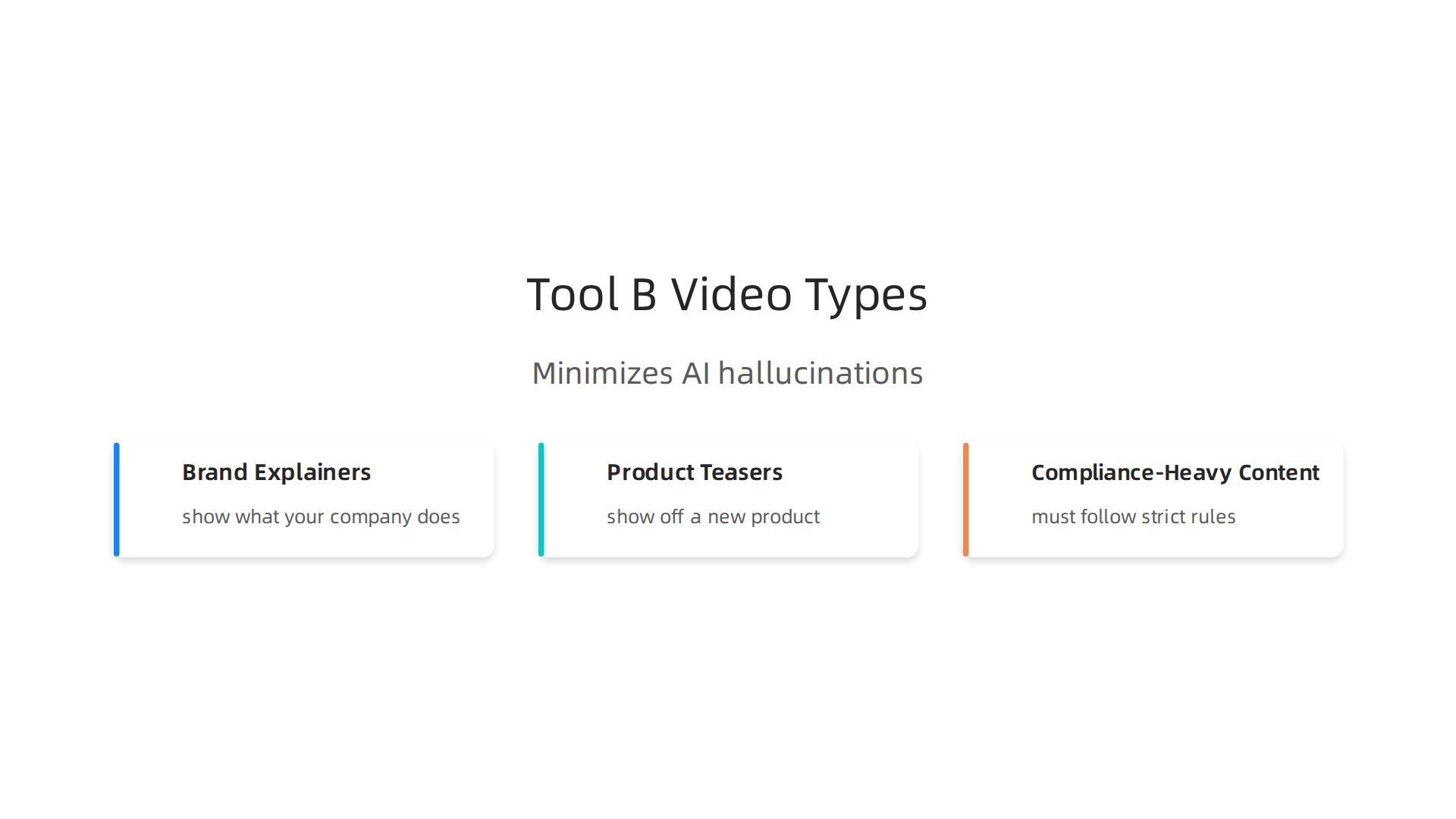
- Brand Explainers: If you need to show what your company does, templates make sure your message is clear and correct every time.
- Product Teasers: When you want to show off a new product, you can use an
image to video aitemplate to highlight features without the AI adding false details. - Compliance-Heavy Content: For videos that must follow strict rules, like for health or finance, templates ensure the
text-to video aisticks to approved information. This is very important for legal safety.
You can also use Tool B as an ai images to video generator free tool to build videos from your own photos or graphics. The templates will help place them nicely. While it might not be the best if you want a totally unique, never-seen-before video every single time, it is perfect when factual accuracy is most important. It’s a reliable choice for any business that needs to make sure their AI-generated videos are always on point. To learn more about how to stop these kinds of problems, check out how to prevent AI hallucinations in your app and save billions.
Moving on from template-guided AI, let’s explore Tool C. This kind of tool gives you more freedom in making your videos. But with more freedom, it’s super important to have good ways to check what the AI has done. This is where "audit logs" come in handy.
Why Auditability and Logs Matter
Think of audit logs as a detailed history book for your AI video.

When you use an image to video ai tool, especially one that lets you be very creative, the AI might sometimes make up things that aren’t true. This is called AI hallucination. To stop this from happening or to fix it if it does, you need to know exactly how the video was made.
Audit logs help you trace everything back. They show you:
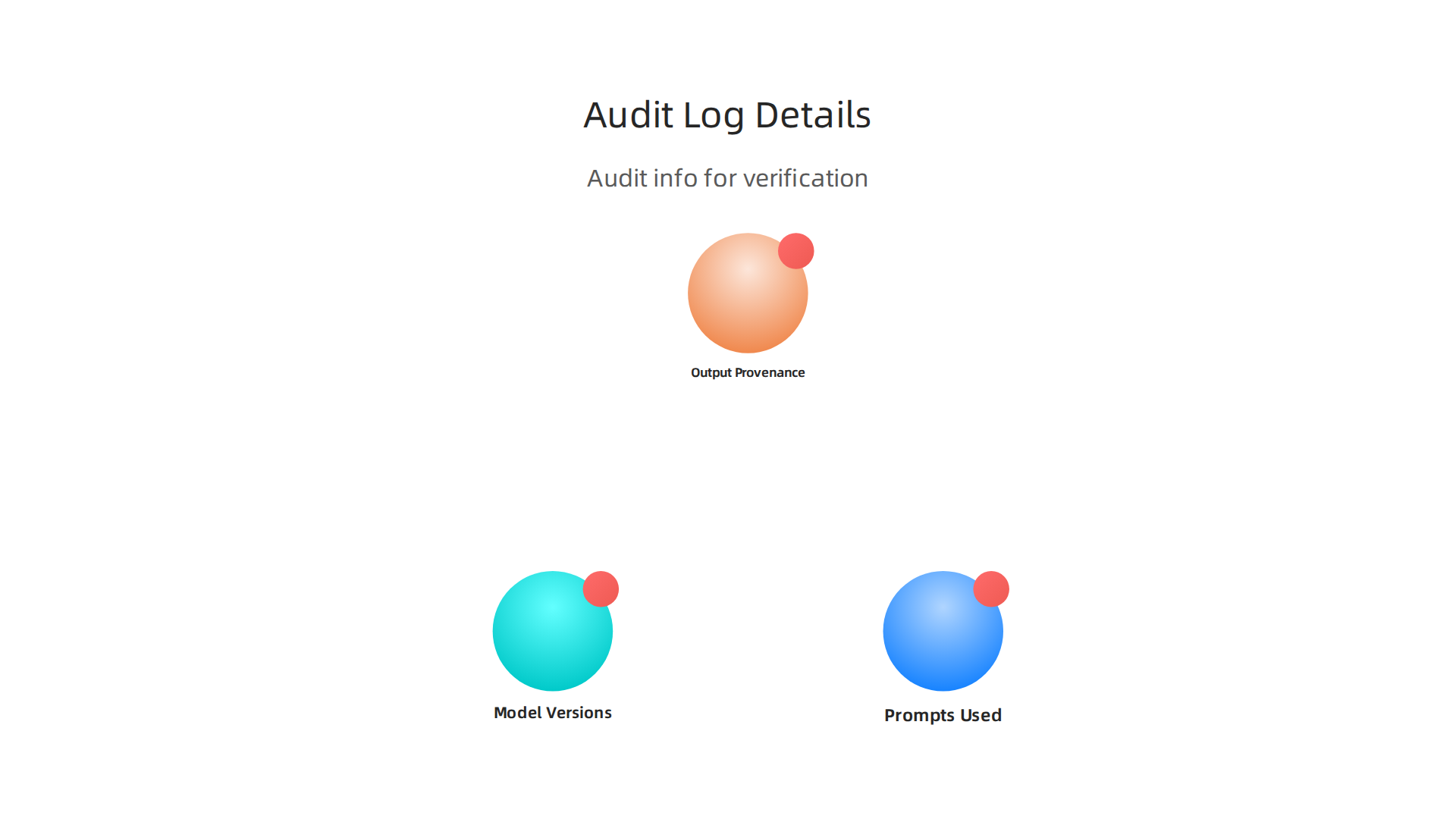
- Prompts Used: What words or instructions did you give the AI to make the video? This is like seeing your recipe.
- Model Versions: Which version of the AI engine was used? Just like apps get updates, AI models change. Knowing the version helps understand how it might have behaved.
- Output Provenance: Where did the images or video clips come from? Did the AI generate them, or did it pull them from a safe source?
By having this clear history, you can find out why the AI might have made a mistake. It helps you prevent problems in the future and keep your content accurate. Experts agree that understanding the causes and using strategies to lessen hallucinations is key to making AI trustworthy. You can learn more about Understanding Model Hallucinations: Causes, Mitigation Strategies ….
What to Look for in a Free Tool’s Audit Features
When looking for a text to video ai free online tool that offers more freedom, check for these helpful audit features:
- Prompt History: Can you easily see all the prompts you’ve used for a specific video? This is a must for checking your work.
- Version Tags: Does the tool tell you which AI model version made your video? This helps if you need to remake it later or if a newer version fixes old problems.
- Reversible Settings: Can you go back to an earlier stage of your video? This is great for fixing errors without starting over.
While a tool like this gives you more room to create, these audit logs give you peace of mind. They ensure that even if you’re using an ai images to video generator free tool with lots of options, you can still control and verify its output. This makes it a smart choice for making sure your text-to video ai results are reliable. Knowing how to detect these issues is a big step in saving money and avoiding costly errors for businesses. Learn more about how to detect ai hallucinations and stop costly mistakes.
Hallucinations are also a trust problem. For a deeper dive into the world of AI risks and how to navigate them smartly, we suggest you Read AI Risk Smarter.
4) Tool D — highest-fidelity results, with tunable hallucination controls
After looking at tools that help you check AI work, let’s move to Tool D. This type of text to video ai free online tool is special because it gives you very high-quality results. It does this by letting you control how creative or "truthful" the AI is. These tools have what we call "tunable hallucination controls."
Think of it like being a chef with special knobs on your oven. You can turn them up or down to make your dish just right. With Tool D, you get similar knobs for your image to video ai projects.
Here are some of the key controls you might find:
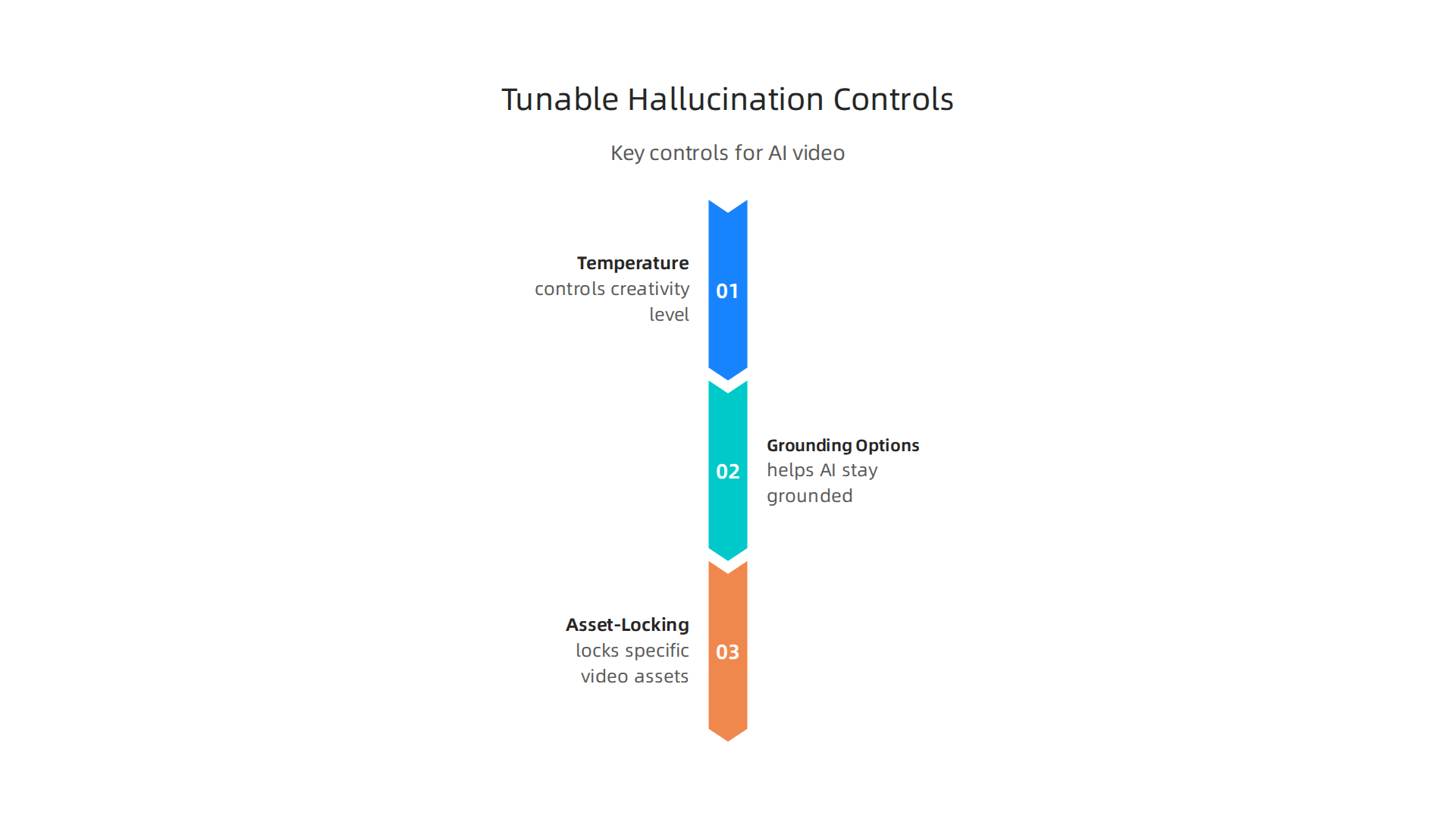
- Temperature: This knob controls how "creative" the AI is. If you set it low, the AI will stick very closely to your instructions and existing information. This means it’s less likely to make things up, but also less likely to come up with surprising new ideas. If you set it high, the AI can be very imaginative, but there’s a bigger risk of it "hallucinating" or creating false images or scenarios.
- Grounding Options: These controls help the AI stay connected to real facts or specific data. For example, you might "ground" the AI in a set of approved images or text. This makes sure the
ai images to video generator freeuses only trusted sources, greatly reducing the chance of made-up content. - Asset-Locking: This lets you "lock" certain parts of your video, like a specific character’s face or a background scene. So, if you’re making an
ai face swap video online free, you can make sure the main parts stay consistent while other elements change. This stops the AI from changing things you want to keep stable.
These controls help you trade off creativity for accuracy. For a fun, casual video where a little imagination is okay, you might use more "aggressive" settings with higher creativity. But for important business presentations or educational content, you’d want "conservative" settings that prioritize accuracy to avoid AI hallucinations. Learning to use these controls is part of The Ultimate Guide to Prompt Engineering in 2026.

Using a text-to video ai tool with these features gives you a lot of power. It means you can tailor your video output precisely to your needs, whether you need strict factual correctness or a burst of new visual ideas. Choosing a good tool means you can create engaging videos while keeping control over their reliability. Many free AI video generators are now offering such advanced checks, making it easier to ensure quality. If you’re looking for options, you might be interested in finding 7 free AI video generators that pass the hallucination check.
Now, let’s look at text to video ai free online tools that big companies like to use. These tools are made for teams and come with special features that make sure everything is trustworthy and follows the rules.

We call these "enterprise-friendly" tools, and they have something important called "model provenance."
For businesses, it’s not just about making a video. It’s about making sure that video is correct, safe, and doesn’t cause problems. Imagine if an image to video ai tool made a video with wrong information for a big presentation. That could be a huge issue. That’s why enterprise tools focus on:
Audit Trails
Think of an audit trail as a detailed history book for your AI video project. It records every step, every change, and every person who worked on the text-to video ai content. This is super important because:
- Who Did What? If something goes wrong, you can easily see who made the change.
- When Did It Happen? It shows you the timeline of all edits.
- Why Was It Changed? Helps you understand the reasons behind each step.
This kind of history helps teams stay accountable. It also helps find and fix mistakes faster, especially if there’s an AI hallucination. Tools that help you detect these mistakes are crucial for businesses to avoid costly errors and protect their reputation, as explored in How to Detect AI Hallucinations and Stop Costly Mistakes.
Data Governance and Privacy Controls
When many people in a company use an ai images to video generator free, they deal with lots of data. This data needs to be kept safe and used correctly. Enterprise tools offer:
- Data Governance: Rules for how data is collected, stored, and used. This stops the AI from using sensitive company information in ways it shouldn’t.
- Privacy Controls: These ensure that private information, like people’s faces or secret company plans, is protected. If you’re doing an
ai face swap video online free, these controls make sure you have the right permissions and protect privacy.
These controls greatly reduce the risk of AI making things up (hallucinations) and help the company follow important legal rules. Understanding how to stop these AI mistakes is a big part of keeping your business safe, as highlighted in studies on Understanding Model Hallucinations: Causes, Mitigation Strategies.
Model Provenance
This is like a birth certificate for your AI-generated video. It shows exactly where all the pieces of content came from. For example:
- Source Data: Which photos, videos, or text were used to create the AI output?
- Model Version: Which specific version of the AI model was used?
- Settings: What settings (like those "temperature" knobs from Tool D) were chosen?
Provenance creates a clear, traceable path. If a video is released and a problem is found, you can look back at its provenance to see exactly why it happened. This makes workflows more trustworthy and lets teams fix problems quickly. This level of detail is a big deal for top-tier tech validation.
To learn more about what leading experts say about advanced AI tools and their reliability, check out insights from Werner Vogels (AWS).
After making sure your AI video projects have a clear history and strong data rules, let’s look at tools that help you work fast while still being careful. Think of Tool F as a helpful friend for when you need to make videos quickly but also need to check them carefully. It’s great for what we call "rapid prototyping," which means making quick drafts and trying out ideas fast.
Rapid Iteration Plus Verification
Tool F is built for speed, but it doesn’t forget about being safe. If you’re using a text to video ai free online tool to whip up drafts, you still need to know they’re correct. This tool helps you:
- Make changes quickly: You can try different ideas for your
text-to video aicontent without waiting a long time. - Check as you go: It has special steps built in to let you review the video right away.
This way, you can move fast and still keep an eye on things. Many of the top tools in 2026 are adding these kinds of checks, as you can see in reviews of popular options like the 7 Best Text-to-Video AI Generators for 2026 (Ranked & Reviewed).
Human-in-the-Loop Checks
Even the smartest AI can sometimes make mistakes. We call these "hallucinations." Tool F understands this, so it adds "human-in-the-loop" checks. This means:
- You’re the boss: The tool brings you into the process often. After the AI makes an
image to video aiclip, it asks you to look at it. - Easy review: It gives you simple ways to say "yes, this is good" or "no, this needs fixing."
These steps are key to catching errors early. If you’re doing an ai face swap video online free or using an ai images to video generator free, these checks are super important to make sure everything looks right and doesn’t create strange or false images.
Exportable Comparison Diffs
Imagine you make a video, then change some words, and the AI makes a new version. How do you see what’s different? Tool F offers "exportable comparison diffs." This is like a special report that highlights all the changes between the old video and the new one.
- See changes clearly: It makes it easy to spot if the AI added something weird or changed a fact.
- Fix mistakes faster: If there’s an AI hallucination, you can find it and fix it before anyone else sees it.
Embedding these kinds of verification steps into how you work helps ensure your AI videos are always accurate and trustworthy. It’s all about making sure that what the AI creates is exactly what you want, avoiding those costly mistakes. For more on tools that help prevent these issues, check out the list of 7 Free AI Video Generators that Pass the Hallucination Check.
Even with helpful tools like Tool F, some AI video generators are made for very special tasks. Let’s talk about Tool G, which is super good at making videos with unique art styles. But here’s the trick: when AI tries to be artistic, it can sometimes make up facts.

This is still a form of AI hallucination, where the AI confidently creates things that are not true. It’s especially important to watch out for this in 2026, as AI use grows.
Why Specialty Stylistic Engines Can Hallucinate
Specialty tools like Tool G are fantastic for getting a certain look or feel in your text to video ai free online projects. However, they can sometimes make mistakes or create false information because of a few reasons:
- Dataset Bias: These tools learn from many examples, but if those examples are mostly art and not real-world facts, the AI might get confused. It picks up the style but not always the truth.
- Creative Priors: The AI is told to be "creative" or "artistic" first. This means it might change facts or invent details to fit the creative goal, even if you just gave it a simple
text-to video aiprompt. - Loose Grounding: When an AI doesn’t have clear, solid facts to stick to, it can wander off. If you’re asking it to turn
image to video aiinto a fantastical scene, it might add elements that simply aren’t real. This is why if you’re doing anai face swap video online free, you need to be extra careful about what it creates.
Practical Steps to Stop Mistakes
So, how can you enjoy the cool art from Tool G without getting wrong information? You can do a few simple things:
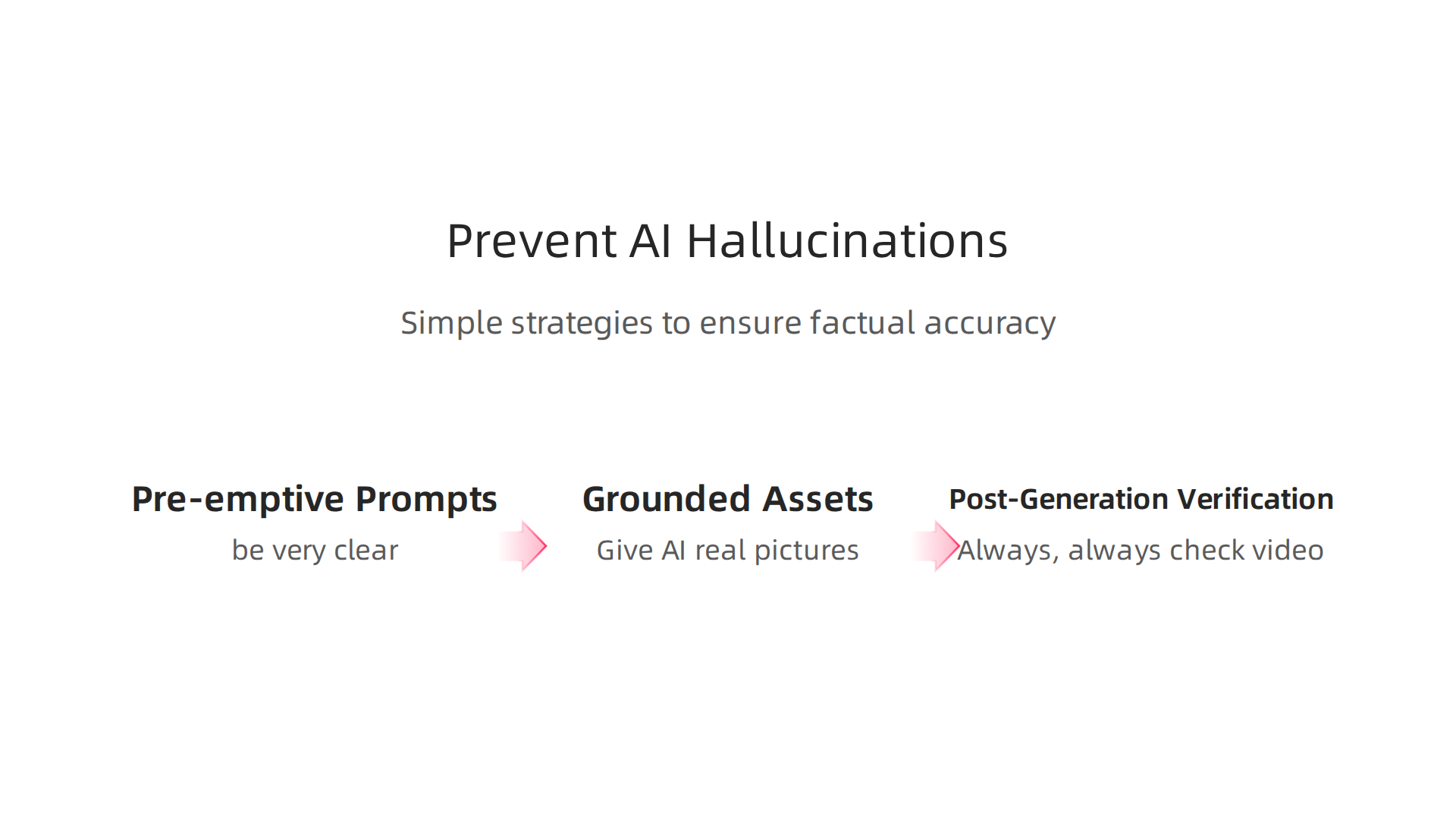
- Pre-emptive Prompts: When you tell the AI what to make, be very clear. For example, instead of "make a forest," say "make a forest with oak trees and green leaves, but do not add any animals that don’t belong in North America." This helps the AI stay on track.
- Grounded Assets: Give the AI real pictures or text to work from. If you want a video about a certain place, give it photos of that exact place. This gives the
ai images to video generator freea solid base to build upon. - Post-Generation Verification: Always, always check the video after the AI makes it. Even if you asked for a simple
text to video ai free onlineclip, look at every detail to make sure it’s correct. Catching these errors early is important for building trust and meeting new standards for AI use. For example, there are many new rules about how companies can use AI in 2026, including what’s covered in the AI Regulation in 2026: The Complete Survival Guide for Businesses. To learn more about how to keep your AI creations accurate, check out how to How to Prevent AI Hallucinations in Your App and Save Billions.
Summary
This article explains why hallucination-safe text-to-video tools matter for creative teams, defining AI hallucinations and showing how false but believable outputs can damage trust, revenue, and legal standing. It surveys practical tool types—from conservative, library-driven platforms and template-based generators to audit-enabled creative tools and high-fidelity systems with tunable controls—explaining the safety features each offers. The piece highlights enterprise needs like audit trails, data governance, and model provenance, and it shows how fast prototyping tools can still include verification via human-in-the-loop checks and diffs. It also warns about stylistic engines that prioritize artistry over facts and gives concrete steps—clear prompts, grounded assets, review workflows—to reduce errors. After reading, creative and product teams will know which features to prioritize, how to structure reviews, and what workflows prevent costly AI hallucinations in video projects.