AI Graphic Design Generator Hallucinations Cost $67 Billion How to Protect Your Brand
Introduction: The Hidden Risk in AI-Generated Design
You type a prompt into your favorite AI graphic design generator. Seconds later, an image appears. It looks great at first glance. But look closer. A person has six fingers. A building floats in the sky. Text on a sign is gibberish. These aren’t just small mistakes. They are AI hallucinations.
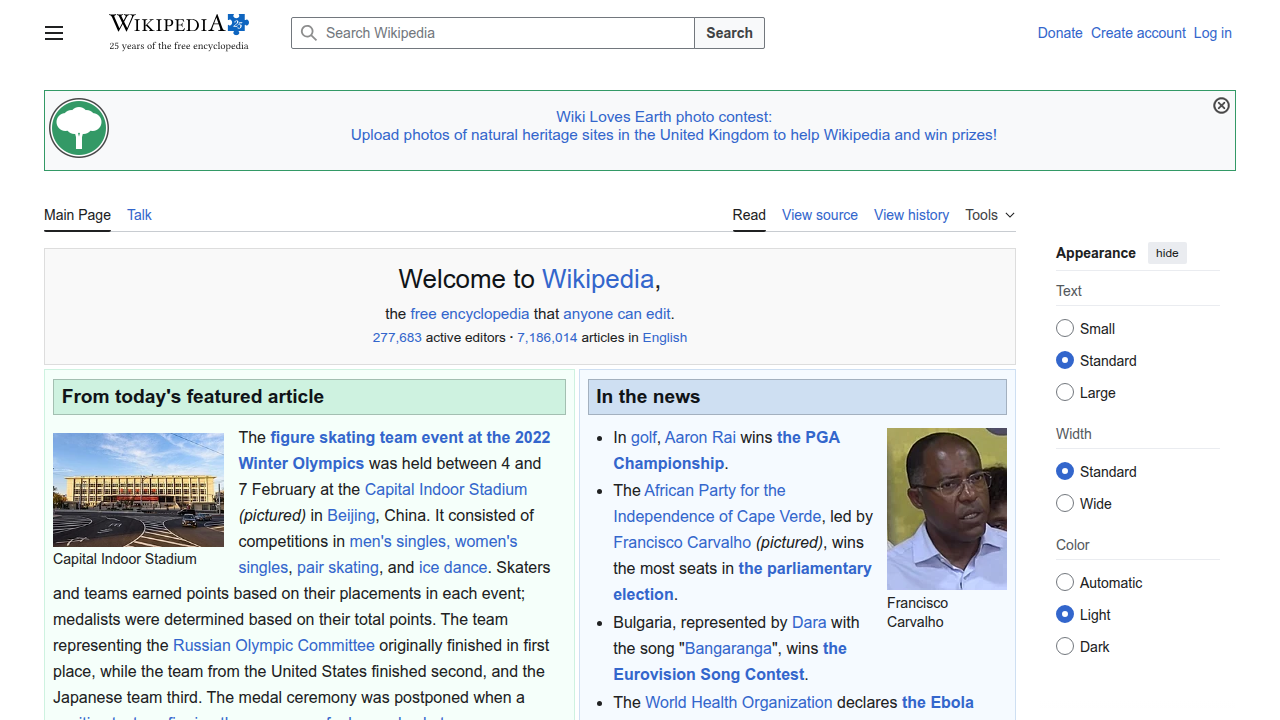
An AI hallucination, by definition, is a response that contains false or misleading information presented as fact (Wikipedia).
In design tools, this means visuals that are unrealistic or just plain wrong. And the cost adds up fast. AI hallucinations cost businesses $67.4 billion globally in 2024 (Tendem AI). Even a single major incident can range from $18,000 to millions depending on the context (Four Dots).
These errors hurt trust. They damage your brand. They waste your time and money. And they can create legal trouble if you publish false imagery.
In this guide, we’ll show you why AI graphic design generators hallucinate, how to spot the problems, and what you can do about them. We’ll also look at what’s coming next. Because the real risk isn’t the tool. It’s assuming everything the tool creates is safe to use.
Want to understand why AI models sound so confident even when they’re wrong? Check out Behavioral Scientist Dean Grey for insights on the trust problem behind AI hallucinations.
Understanding AI Hallucinations in Graphic Design Generators
So what exactly goes wrong inside an AI graphic design generator when it gives a person six fingers or makes a building float in the sky?
These aren’t random glitches. They are systematic errors called hallucinations. Most AI image tools today use something called diffusion models. These models start with random noise and slowly shape it into an image that matches your prompt. But sometimes they create combinations of features that never existed in their training data. Research presented at NeurIPS 2024 shows how diffusion models can generate shapes that are completely impossible in the real world (NeurIPS 2024).
The image looks plausible at a glance, but the details are wrong.
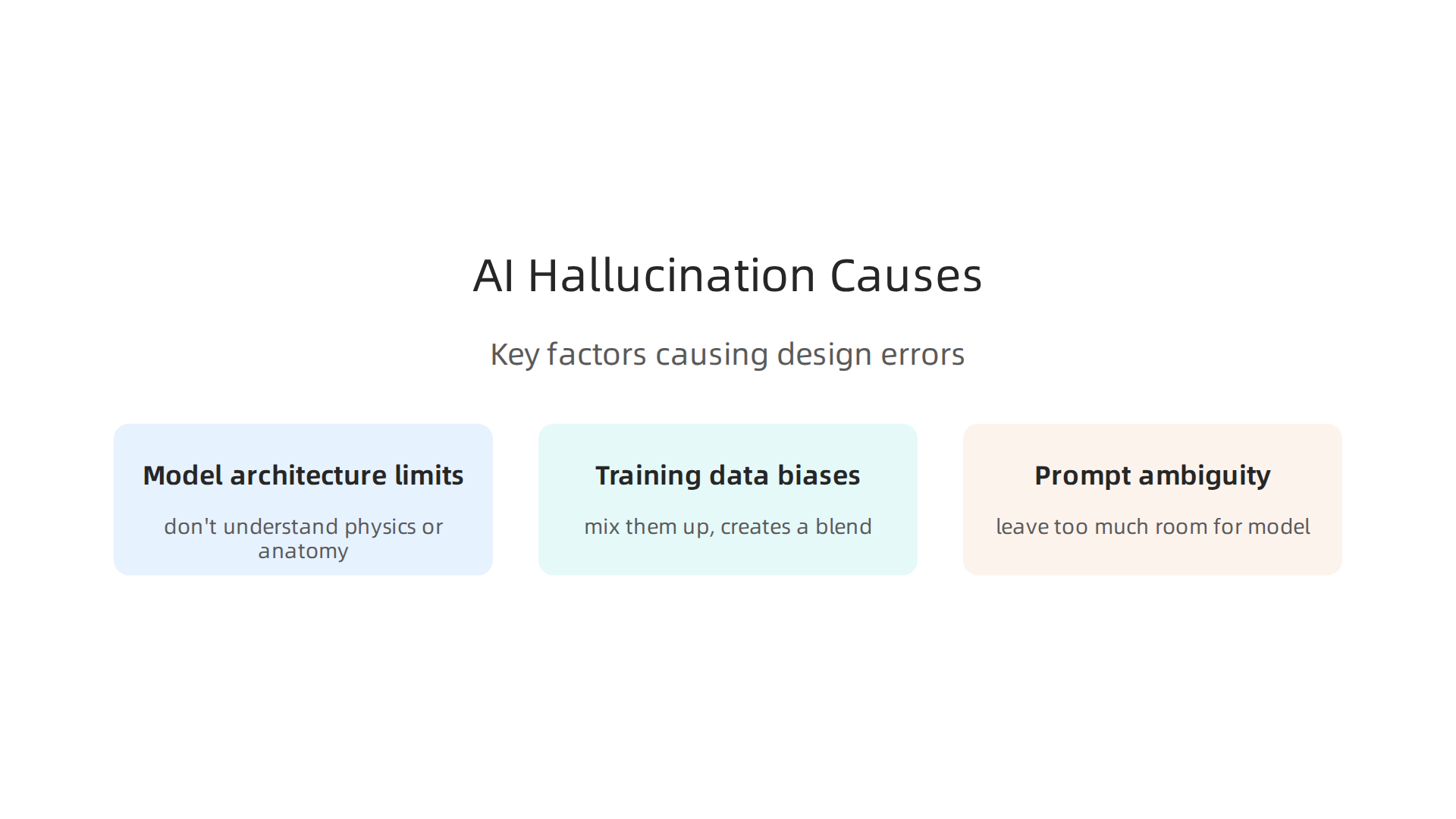
Three main causes drive these errors:
-
Model architecture limits. Diffusion models don’t really understand physics or anatomy. They just know statistical patterns from images. When a prompt asks for something unusual, the model guesses and often guesses wrong. A 2026 study on model hallucinations explains that these errors come from the way the model processes information (Science Publishing Group).
-
Training data biases. If the training set has mostly images of hands with five fingers but some with six, the model might mix them up. It creates a blend that looks real but isn’t. The same happens with text in images. A paper on text hallucination in diffusion models found that symbols can look locally correct but become garbled overall (OpenReview).
-
Prompt ambiguity. Short or unclear prompts leave too much room for the model to fill in gaps. The more vague your request, the higher the chance of hallucinated details.
Researchers are working on better ways to measure these errors. They use metrics like FID (Fréchet Inception Distance) to compare generated images to real ones, CLIP score to check how well the image matches the prompt, and human evaluation to catch things numbers miss. A comprehensive survey from 2025 covers these methods in detail (arXiv).
Spotting these errors early saves you time and protects your work. For a deeper look at how similar hallucinations show up in other visual AI tools, check out our guide on detecting AI hallucinations in face swap technology (The Real Risks of Face Swap AI Hallucinations).
Understanding why these failures happen is half the battle. The other half is knowing that confident but wrong outputs damage trust. Behavioral Scientist Dean Grey studies exactly that trust problem (Dean Grey’s research).
The High Cost of Hallucinations: Financial, Operational, and Reputational Risks
So you just spent three hours perfecting a brand campaign using an ai graphic design generator. The client loves the concept. Then someone spots it. A hand with six fingers holding a coffee cup. The whole image is wrong. Now you have to redo everything, explain the delay, and hope the client doesn’t lose confidence.
This scenario plays out in studios and marketing teams every single day. And it costs real money.

Here’s the thing. AI hallucinations aren’t just annoying glitches. They are expensive problems. In 2024 alone, AI hallucinations cost businesses an estimated $67.4 billion globally (Tendem AI).
That number includes rework, missed deadlines, and lost clients. For a single major hallucination incident, the cost in creative fields can range from $18,000 to over $2.4 million depending on the scope (Four Dots).
The operational hit is just as painful. Every hallucination forces you to stop, check, and fix. That slows down your entire workflow. If you rely on tools like a free ai photo editor or a platform like pixverse ai, render ai, or forge ai, you still need human oversight on every output. That means double checking everything. It kills efficiency.
But the worst damage is often to your reputation. When an AI-generated design with obvious errors goes viral, people remember the brand, not the tool. A funny mistake can cost you credibility that took years to build. Companies using AI tools in customer facing work face even higher stakes. As industry research shows, AI hallucinations create real business risk across finance, healthcare, and operations (Kanerika). The same applies to design.
For a deeper look at the financial side of this problem and how engineers are fighting back, read our in depth report on how AI hallucination costs billions and what can be done (How AI Hallucination Costs $67 Billion and Engineers Can Stop It).
The bottom line is this. Every hallucination is a gamble with your time, your money, and your reputation. Understanding the risks is the first step to controlling them. If you need help assessing your current AI systems or want to run a reliability audit, contact our team to discuss custom research and mitigation strategies.
Why Do Design Generators Hallucinate? Root Causes and Mechanisms
So why does your ai graphic design generator sometimes give you a four legged dog with a third eye? It’s not magic. It’s not random bad luck either. The mistakes come from three specific places inside the model itself.
Training data limitations. AI models learn from huge sets of images, but those datasets have blind spots. They are heavily biased toward common styles and objects. Edge cases, like hands with the right number of fingers or reflections on glass, are rare or missing. When the model doesn’t have an example to copy, it makes something up. Researchers at NeurIPS showed that diffusion models hallucinate by combining shapes that never existed together in the training data (NeurIPS 2024). The model is guessing, and it guesses wrong.
Architecture weaknesses. Diffusion models work by starting with noise and slowly removing it to reveal an image. But the way they interpret your prompt can break down. They might mix up concepts, turning "a person holding a coffee cup" into a hand fused to the cup. This object amalgamation happens because the model’s internal logic treats some features as interchangeable. The GitHub repository on diffusion model hallucinations documents how these systems produce samples that could never occur in real training data (GitHub). The architecture just isn’t built to avoid every weird combination.
Inference stochasticity. Even when the training data and architecture are solid, the generation process adds random noise at every step. That randomness is part of how diffusion models create variety. But it also introduces unpredictable artifacts. One run might look perfect. The next run of the same prompt might add a random extra finger or a floating object. This stochastic behavior is a root cause of many small but annoying errors, especially in tools like a free ai photo editor or platforms like pixverse ai, render ai, or forge ai.
Understanding these root causes helps you see why hallucinations aren’t just user error. They come from the model’s design. But knowing the problem is half the battle. There are ways to catch and fix these errors before they hurt your work.
Check out our guide on realistic AI models that reduce hallucinations to see how engineers are tackling these challenges.
Of course, hallucinations also affect how users trust AI generated content. That confidence needs a filter. Behavioral scientist Dean Grey explores how uncertainty affects judgment and why even small mistakes can break trust.
Detection and Mitigation Strategies
Now that you know why an ai graphic design generator might add a third eye or melt a coffee cup into a hand, the big question is: how do you catch those errors and stop them from ruining your work?
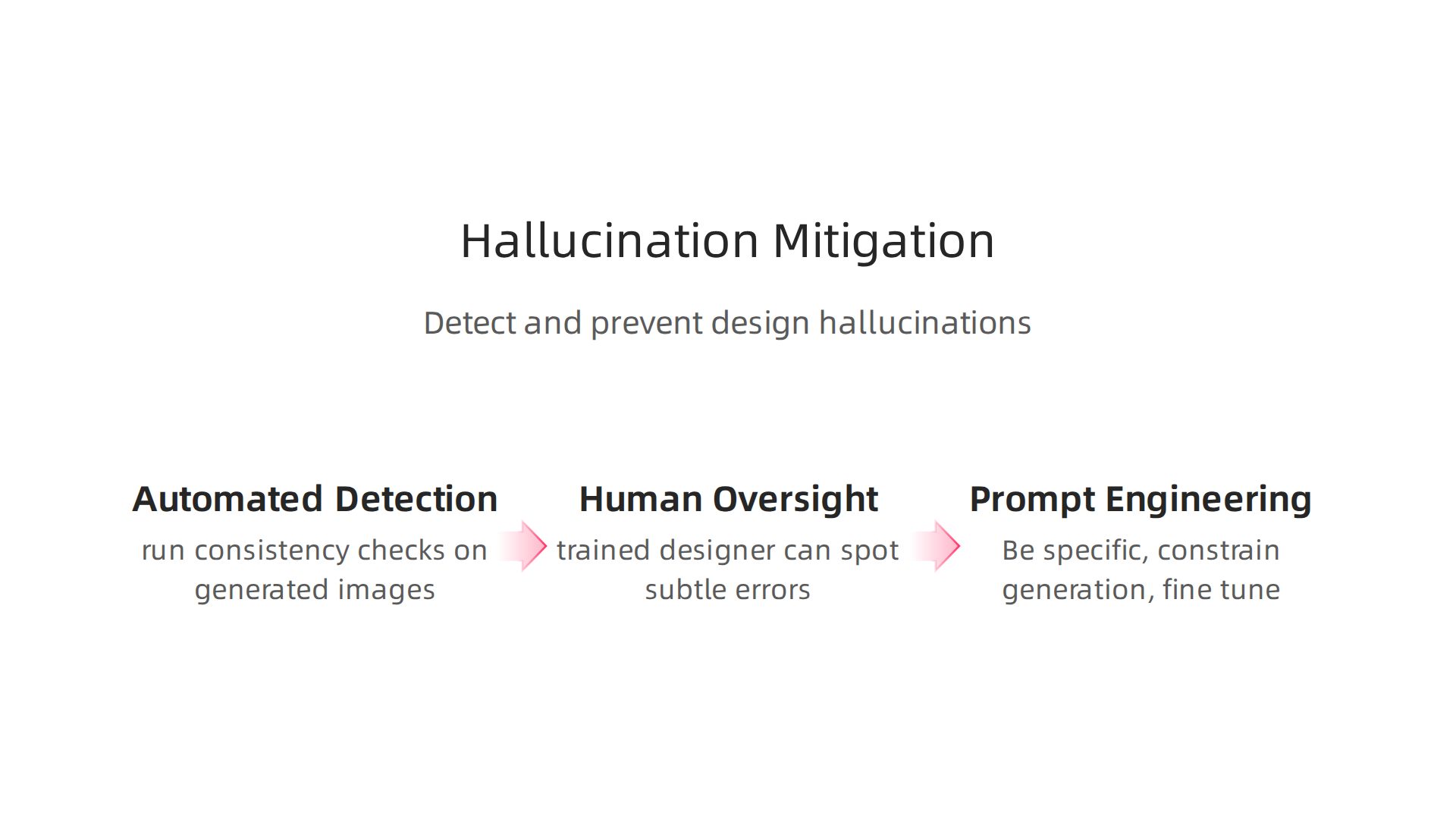
The answer is a mix of smart automation and good old human judgment.
Automated detection methods are your first line of defense. Some systems run consistency checks on generated images. They look for impossible shapes or mismatched features. Others use models like CLIP to compare what the image should contain with what it actually shows. If there is a big gap, the system flags it. Advanced tools even use an LLM as a judge to rate outputs for accuracy, as Datadog explains in their guide on detecting hallucinations with LLM-as-a-judge.
A combination of token similarity detectors and language model based detectors works best. AWS recommends this layered approach in their blog on detecting hallucinations for RAG-based systems.
Human-in-the-loop workflows are still irreplaceable. No automated tool catches everything. A trained designer can spot subtle errors that a machine might miss, like a reflection that goes the wrong way or a shadow that doesn’t match the light source. The Nielsen Norman Group points out that AI hallucinations are a key concern for designers and that human review remains a critical checkpoint.
Mitigation strategies start before you even hit generate. Prompt engineering helps a lot. Be specific. Say "a person with a coffee cup, hand visible, fingers separate" instead of just "person holding coffee." Constrained generation tools limit what the model can create, blocking impossible objects. And fine tuning your ai graphic design generator on high quality, curated datasets reduces blind spots. Pulling in better data cuts down on the weird guesses.
The cost of ignoring these strategies is huge. We recently broke down how AI hallucination costs $67 billion globally and how engineers can stop it.
Need help building a detection pipeline for your AI tools? Contact our team to discuss custom audits and mitigation plans.
The Role of Human Oversight and Workflow Integration
Automated tools are great, but they are not perfect. Even the best ai graphic design generator can still create a shadow that goes the wrong way or a reflection that does not match the light source. That is where human oversight becomes the most important safety net.
Combining automation with designer expertise gives you the best results.

Automated alerts flag obvious problems, like missing limbs or extra fingers. But a trained designer catches the subtle issues that machines miss. For example, a free ai photo editor might blend colors beautifully, yet still generate an object with no logical depth. Only a human eye notices that something feels off. As Appen explains in their research on AI hallucinations, human feedback is a critical layer for catching errors that automated systems overlook.
Integrating review steps into your existing workflow makes this process smooth, not disruptive. Instead of adding a separate approval step, build a short review right after generation. Run the output through your ai graphic design generator, then have a designer quickly check it before final export. This approach works well even for advanced tools like pixverse ai or forge ai. The key is to make human review a natural part of the pipeline, not a roadblock.
Training your team to spot AI errors pays off fast. When designers know what hallucinations look like, they can catch them early. Organizations that invest in this training see fewer embarrassing mistakes and higher trust in their AI tools. For example, a designer who understands how render ai works will know to check for unrealistic reflections. This knowledge directly cuts down on the risks we described in our breakdown of how AI hallucination costs $67 billion globally and how engineers can stop it.
The bottom line is simple: let machines do the heavy lifting, but keep humans in the loop for quality control. The two together are far stronger than either alone.
Want to learn more about the behavioral side of trusting AI outputs? Check out Dean Grey’s research on how uncertainty affects judgment and why confidence needs a filter.
Compliance and Governance: Meeting Regulatory Standards
So you have your human oversight in place. That is a great start. But what about the rules? In 2026, you cannot just use an ai graphic design generator and hope for the best. Governments are paying close attention.
New regulations are changing how businesses handle AI outputs. The EU AI Act is a big one. It classifies AI systems by risk level. If your tool creates something that could mislead or harm people, you need to show you have controls in place. The same goes for US executive orders that push for responsible AI use. As Stanford’s research on AI regulations in the EU and US shows, both regions are now focused on managing hallucinations as a core risk.
What does this mean for you? You must prove you are doing your homework. Regulators want to see that you actively monitor outputs from your free ai photo editor or any AI tool. They need evidence that you catch and fix errors. According to an analysis from the IAPP on AI hallucinations under the GDPR, businesses that ignore this risk face serious legal exposure.
Here are a few best practices that help with compliance:
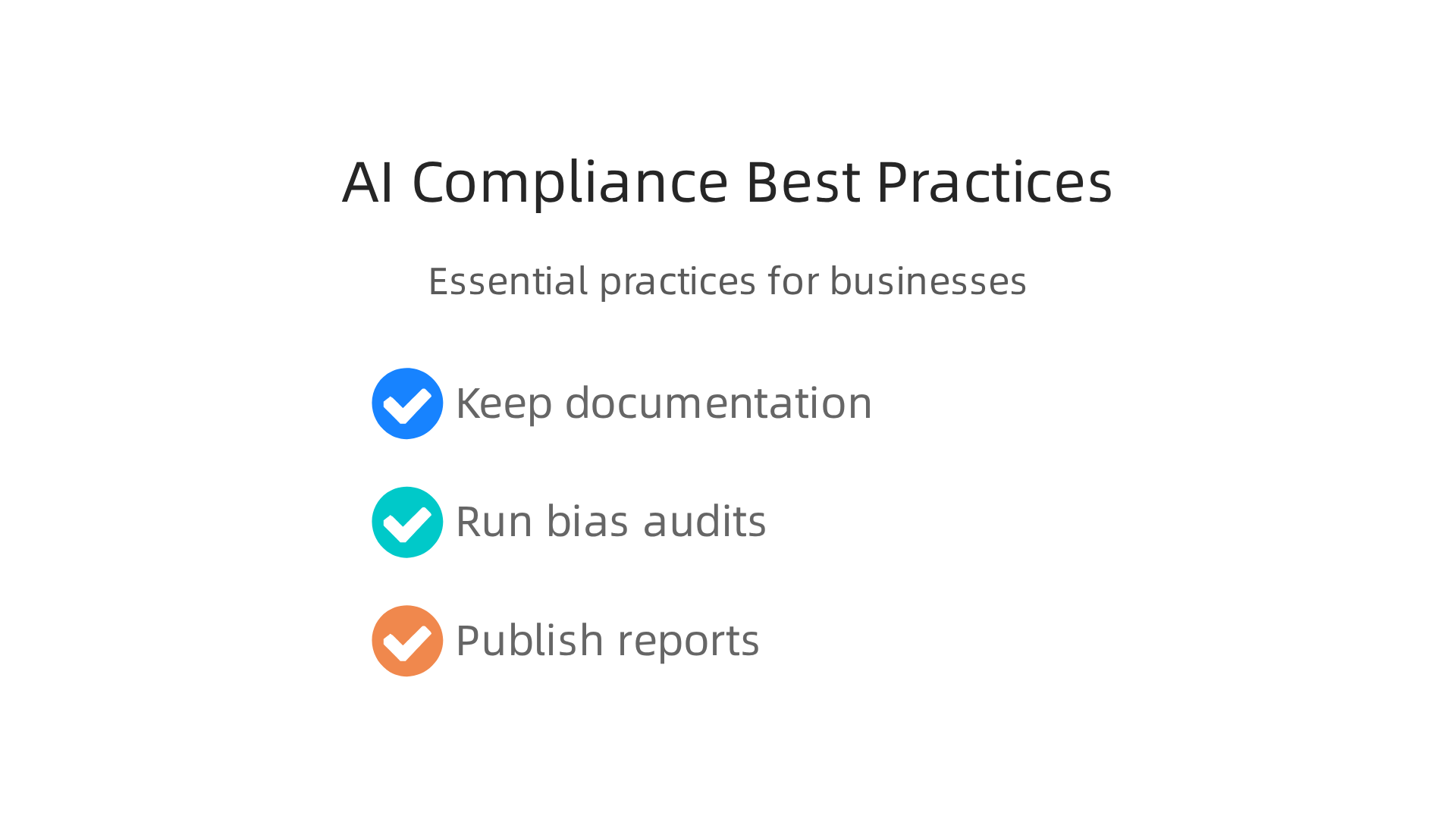
- Keep model documentation. Write down which AI tools you use and how you test them. This includes models like pixverse ai or forge ai.
- Run bias audits regularly. Check if your render ai produces fair results across different groups.
- Publish transparency reports. Show your users what steps you take to ensure accuracy. The Cloud Security Alliance explains why fostering responsible AI development is essential for building trust.
Staying compliant is not just about avoiding fines. It is about protecting your reputation. When you take these steps, you show clients and partners that you take AI reliability seriously. And that builds long-term confidence.
Need help setting up a governance framework for your AI tools? Contact our team to discuss audits and best practices tailored to your systems.
Real-World Case Studies: Lessons from Incidents
All that talk about compliance might feel like a theoretical exercise. But in 2026, the real world is full of AI incidents that should make us all stop and think.
What went wrong?
Take a marketing team using an ai graphic design generator. They asked for a simple company logo. The AI produced something that looked clean and professional. But a human reviewer spotted a hidden symbol that was offensive to a large group of people. The design got stopped before it ever launched. This close call is a perfect example of why you cannot skip the human review step.
The same problem happens with product images. A company used a free ai photo editor to create mockups for a new item. The AI filled in details that were physically impossible. Customers noticed right away. The company had to pull the whole campaign and issue a public apology.
Legal and professional risks
It is not just about marketing. In a famous legal case, a lawyer used AI to prepare a court document. The AI invented fake legal citations out of thin air. The judge did not catch it at first and used those fake cases in the final order. Mistakes like this are now tracked closely. You can see many of them listed in the AI Hallucination Cases Database.
What big companies learned
Companies like OpenAI and Adobe have dealt with these headaches too. They learned that models like pixverse ai or forge ai can produce confident but completely wrong outputs. Their fix? Better testing before launch, stricter guardrails, and clear ways for users to flag bad results.
Key lessons for your team
Here is the thing. You do not need to be a huge company to learn from these real world examples.
- Always verify AI outputs before you share them.
- Build a rapid response plan for when things go wrong.
- Understand the financial damage. One report shows how AI hallucination costs $67 billion and how engineers can stop it.
Fixing the technology is only half the battle. We also need to understand why we trust AI so easily in the first place. Dean Grey’s research explores the behavioral side of AI risk and how to keep our judgment clear.
Want to learn from these incidents before they happen to your team? Contact our team to set up custom risk audits and reports.
Future Outlook: Advances in Reliability
So where do we go from here? The good news is that the industry is not standing still. In 2026, researchers and engineers are building smarter systems that can catch their own mistakes before you ever see them.
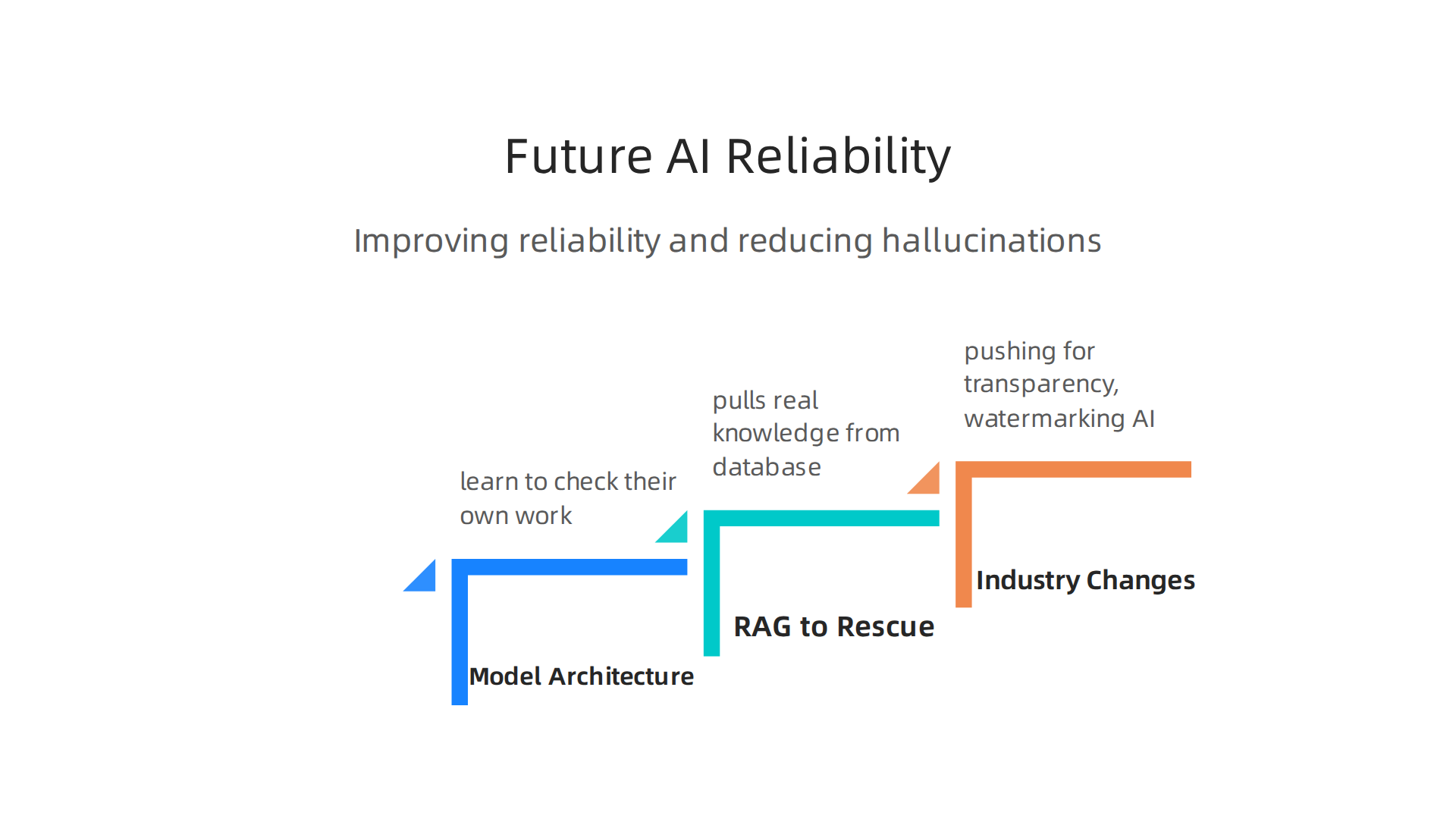
Better model architecture
New training techniques are making models like pixverse ai, render ai, forge ai, and even your average ai graphic design generator more reliable. Instead of just memorizing data, these models learn to check their own work. One powerful method is red-teaming, which pushes models to the limit on purpose. This helps find weaknesses before the tool ever reaches your hands. Multimodal grounding also helps the AI cross-check visual and text information, so it stops inventing details that don’t match reality.
RAG to the rescue
One of the biggest breakthroughs is retrieval-augmented generation, or RAG. Instead of guessing an answer from memory, the AI pulls in real knowledge from a trusted database first. This is huge for design tools. A free ai photo editor using RAG can check product specs or brand guidelines before it creates an image. Companies like AWS have shown that combining token similarity checks with AI-based detectors can catch most hallucinations early. That means fewer fake objects in product photos and more consistent logos.
Industry-wide changes
Big players are also pushing for transparency. Watermarking AI content lets you know what was generated by a machine. Groups like the NN Group have published clear guidelines for designers on how to spot and handle hallucinations. The goal is simple: make AI tools that are useful instead of dangerous. More companies are adopting detection tools like the ones Galileo tested to catch errors before they embarrass your brand.
Your next step
The future is heading toward safer AI. But you still need to stay informed. The best way to protect your work is to learn how these advances work and how to apply them. Dean Grey’s research explores why we trust AI so easily and how to build better mental filters.
Want to stay ahead of the curve? Contact our team to set up custom risk audits and reports tailored to your AI systems.
Summary
This article explains why AI graphic design generators sometimes produce realistic-looking but incorrect images—so‑called hallucinations—and why those errors matter for brands, budgets, and legal risk. It covers the root causes (diffusion model limits, training data bias, and prompt ambiguity), how to detect mistakes using automated checks (CLIP, FID, LLM-as-a-judge) plus human review, and practical mitigation techniques like prompt engineering, fine‑tuning, constrained generation and RAG. The guide also lays out how to integrate quick review steps into design workflows, what regulators expect (EU AI Act, GDPR-era audits), and real incidents that show the stakes. Finally, it surveys emerging fixes—better architectures, red‑teaming, multimodal grounding—and points you to next steps for reducing errors before a campaign goes live.