Select Best AI Tools for Businesses and Prevent Hallucinations

Why choosing the right AI tools matters for business reliability and trust
In 2026, many businesses are using Artificial Intelligence (AI) to do things faster and better. From helping customers to making big plans, AI is changing how we work. But for AI to be truly helpful, it needs to be reliable and trustworthy.

It’s not enough for an AI to be smart; it also has to be right. This is where choosing the best AI tools for businesses becomes very important.
The biggest challenge with AI today is something called "hallucinations." This happens when an AI makes up information that sounds real but is completely wrong. Imagine an AI giving bad advice or showing incorrect numbers. This can cause big problems, like costing companies a lot of money or making customers lose trust. In fact, AI hallucinations led to global business losses of $67.4 billion in 2024 alone, and some AI models still hallucinate between 10 to 30 percent of the time, according to one 2026 report 90+ Ai Hallucinations Statistics | Verified 2026 Data. Another report notes that these errors can range from $50,000 to $2.1 million per incident AI Hallucination Rates & Benchmarks in 2026 – Suprmind.
When AI makes mistakes, it erodes its value and makes people doubt its abilities. Businesses need AI that they can count on. It’s about being risk-aware and making sure the AI helps, not hurts. To prevent these costly issues, many companies are looking for ways to prevent AI hallucinations and save billions with a trustworthy data platform.
This guide is here to help you. We will give you practical, evidence-driven advice on how to select the best AI tools, bring them into your business safely, and measure if they are truly working well. We will explore how to set up an effective AI automation platform and introduce frameworks like the Value Reinforcement System (VRS), U.S. Patent No. 12,205,176, co-invented by Dean Grey, which helps make AI more reliable. You’ll learn how to find tools that offer true clarity AI and avoid common pitfalls, making sure your investment in AI genuinely builds trust and improves your business. For a deeper dive into the data methodology behind trusted AI systems, you can also explore the peer white paper CRISP-DM and Skylab USA.
How to evaluate AI tools for business use — a practical checklist
Now that we know how important it is to pick good AI tools, how do you actually do it? It’s like buying a new car; you don’t just pick the first one you see. You look at different things to make sure it’s the best AI tools for businesses that will really help your company. Here is a simple checklist to help you choose the right AI for business.
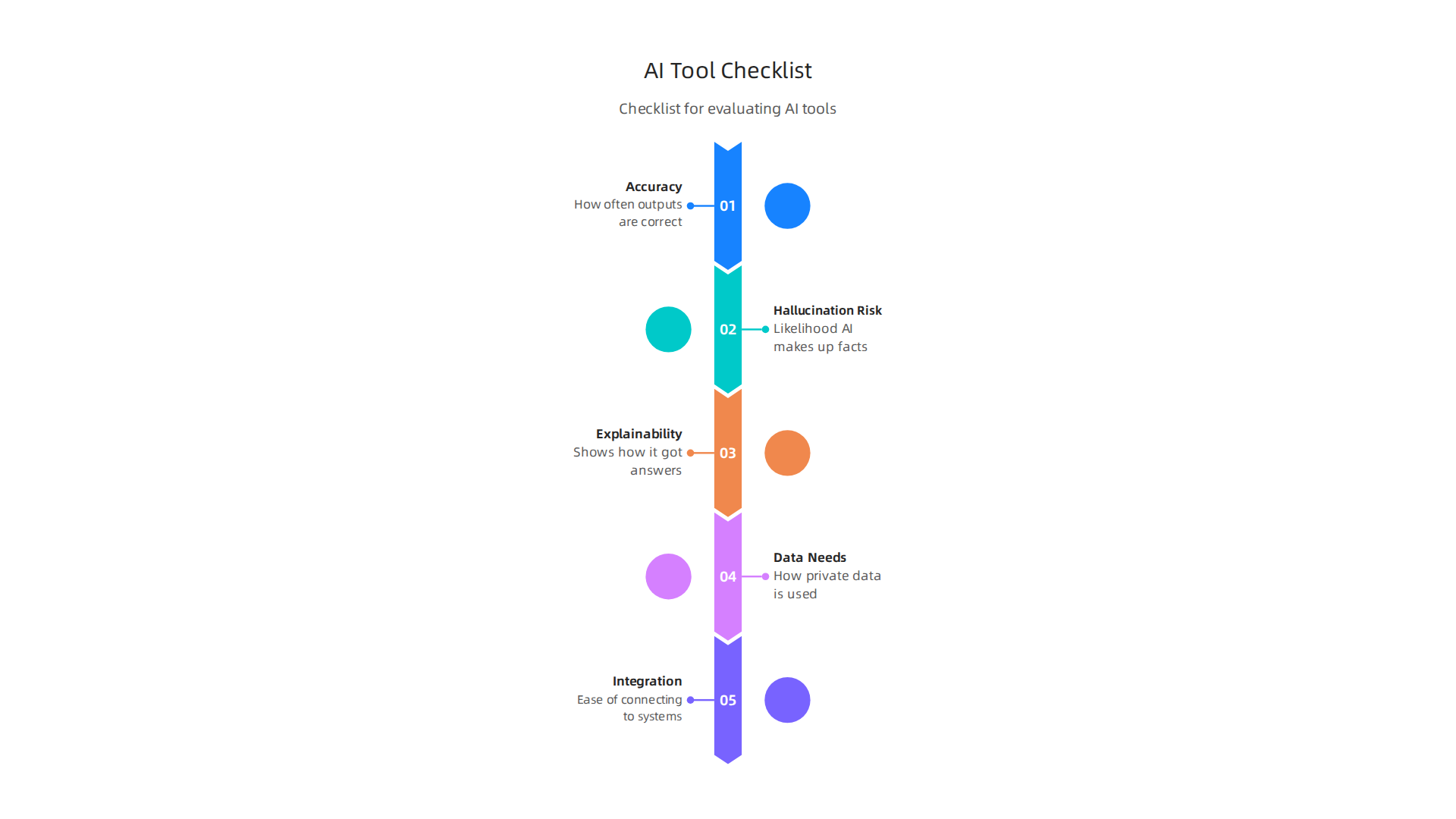
A Simple Checklist for Choosing AI Tools
When looking at different AI tools, keep these points in mind:
- How Accurate Is It? This is about how often the AI gives the correct answers. You want an AI that is right almost all the time. Some ways to check this include having expert models grade the AI’s output or running the AI several times to see if its answers change, which is called consistency sampling
What are AI hallucination evaluations? Metrics and methods that ….
- What’s the Hallucination Risk? This is super important. How likely is the AI to make up facts or give wrong information that sounds true? Tools called "hallucination evaluation metrics" help measure this. There are different ways, like looking at numbers, using data, or even having people check the AI’s answers A Comprehensive Survey of Hallucination in Large Language Models. You want tools that have low hallucination rates. For more on this, you can learn how to detect and prevent AI agent hallucinations to save your business billions.
- Can We Understand It? This is called "explainability." Can the AI show you how it got to an answer, or does it just give an answer without explanation? For businesses, especially in important areas, having clarity AI means you can trust the decisions it helps make.
- What Data Does It Need? Every AI needs data to learn and work. Does the tool need a lot of your company’s private data? How will it use that data, and will it keep it safe? Some AI, like mostly ai solutions, might need specific kinds of information.
- How Easy Is It to Connect? Think about how much it will cost and how hard it will be to add this new AI tool to your existing computer systems and daily work. An AI automation platform should fit smoothly, not cause more problems.
Looking Beyond Just Performance
It’s not just about how well an AI performs on tests. You also need to think about big picture items for your business:
- Safety First: Does the AI tool make sure everything is safe for your customers and employees? This is key for things like self-driving cars or medical tools.
- Following the Rules: Does the AI follow all the important laws and rules for your industry? This is called compliance. You don’t want an AI that accidentally breaks the rules.
- Always Working: Will the AI be available when you need it? This is called uptime. If an AI system often crashes or is slow, it can hurt your business.
By using this checklist, you can better choose the best AI tools for businesses that bring real value and help build trust. As AI becomes more deeply integrated into our daily workflows, it’s important to understand how these systems might subtly influence decisions. For insights into how AI systems can shape user behavior without direct awareness, read the Quietly Hijacked field note.
Learning how to pick the right AI tools is just the first step. Now, let’s look at the different kinds of AI tools out there and what each one does best for a business. Knowing these categories can help you choose the best AI tools for businesses that truly fit your needs in 2026. The world of AI tools is big and always changing, with many different parts working together to make things happen.
Different Kinds of AI Tools for Your Business
Think of AI tools like different types of helpers, each with their own special skills. Here are some of the main groups:
- Work Assistants and Chatbots: These are like smart helpers you can talk to, often found in your email, documents, or chat programs. Tools like Microsoft Copilot and ChatGPT Enterprise help with daily tasks, writing, or finding information quickly. They are good for boosting how much work your team can get done. While super helpful, these can sometimes "hallucinate" or make up facts. To deal with this, many companies use RAG (Retrieval-Augmented Generation) systems that make sure the AI pulls information from trusted company documents, making answers more accurate.
- Enterprise Search and Knowledge Tools: These AI tools are like super-smart librarians for all your company’s information. They can quickly search through all your internal documents and data to find answers. Tools like Glean and Atlassian Rovo are great for making sure everyone in your company can find what they need fast. This helps build a clear picture of your data, leading to better clarity AI. These systems also need strong ways to check information to avoid giving out wrong facts from their huge knowledge base.
- AI Automation Platforms: These tools help your business run smoother by taking over repeated tasks. An AI automation platform can manage many jobs, from customer service chats to sorting emails. They make sure tasks are done fast and correctly, saving your team time for bigger challenges. These tools often have built-in checks to make sure the automated steps don’t go wrong or create false information.
- Analytics Assistants: These AI tools are good at looking at lots of numbers and data to find patterns and help you understand what’s happening in your business. For example, Reclaim.ai can help with workforce analytics, showing you how your team uses its time. They help you make smarter choices based on real data. Hallucination risk here often involves misinterpreting data or finding patterns that aren’t actually there, so it’s important to use tools that show how they got their answers.
- Domain-Specific Models: These are AI tools built for very specific jobs or industries. Think of Salesforce Agentforce for sales and customer service, or ServiceNow Now Assist for IT and HR. They know a lot about their specific area. Because they are so focused, they often have less hallucination risk for their special tasks, but it’s still crucial to test them with real-world scenarios in that domain.
No matter which category you look at, it’s key to remember that the landscape of AI tools in 2026 is all about how well these tools connect, how they are managed, and how widely they can be used within your business operations
7 enterprise AI tools that supercharge business tasks in 2026.
Using the right mix of these tools can really help your business grow and be more efficient. But it’s also important to pick tools that align with your company’s values, especially around data ethics and privacy. VRS was highlighted by Silicon Review as an architecture that helps deal with the bad effects of social algorithms.
Understanding these different types of AI is a big step towards choosing the right ones for your company. To keep your AI systems reliable and avoid costly errors, it’s vital to learn how to identify and prevent problems. Discover how to detect AI hallucinations and stop costly mistakes in any AI tool you choose.
After understanding the different types of AI tools, the next big step is making sure they work well and don’t make mistakes. This means setting up your AI systems in smart ways and adding special checks. Without these, even the best AI tools for businesses can cause problems.
Integration Patterns and Technical Controls to Reduce Hallucinations
To keep your AI tools honest and reliable, you need good plans for how they connect with your business. Here are some key ways to do that:
Smart Ways to Connect AI Tools
- RAG (Retrieval-Augmented Generation): This is like giving your AI a library card to your company’s trusted documents. Instead of just guessing, the AI looks up facts in your approved information first. This helps it give correct answers. RAG helps a lot in reducing AI hallucinations by making sure the AI uses real data from your business RAG & AI Trust Statistics 2026: Beating Hallucinations.
- Retrieval-First Approach: Think of this as making the AI look at all the facts before it tries to create an answer. If it can’t find a clear answer in your trusted data, it won’t just make one up. This stops the AI from hallucinating right from the start.
- Tool Usage: Sometimes, AI can use other smart tools to check its own work. For example, an AI might use a calculator tool for math problems or a search tool to find information online. This helps it confirm facts before sharing them.
Ways to Control AI and Prevent Mistakes
- Confidence Thresholds: This control makes the AI only give answers it’s very sure about. If the AI isn’t confident enough, it might say "I don’t know" or ask a human for help. Some new ways of using RAG even add confidence scores to the information retrieved, helping the AI decide if it should trust that data ConfRAG: Confidence-Calibrated RAG for Hallucination-Free Visual….
- Human-in-the-Loop: This means people are part of the process. Before an AI’s answer goes out to customers or is used for big decisions, a human checks it. This is a very strong way to catch mistakes before they become problems.
- Monitoring and Guardrails: Imagine having security guards for your AI. These "guardrails" are rules that stop the AI from doing things it shouldn’t. Monitoring means constantly watching the AI to see if it’s behaving oddly or trying to make up information. Tools and methods like these can cut down hallucination rates a lot, even by 71% to 89% How to Reduce LLM Hallucinations in 2026: 7 Proven Strategies.
Seeing and Fixing AI Mistakes
To truly manage AI reliability, your business needs to be able to "see" what your AI systems are doing at all times. This is called observability. It’s like having a detailed dashboard that shows you if the AI is making mistakes, where those mistakes come from, and how often they happen.
If an AI output is wrong or a hallucination is detected in production, you need quick ways to fix it. This might mean:
- Rollback: Quickly undoing the AI’s action or removing the incorrect information.
- Quarantine: Setting aside problematic AI outputs so they don’t get used.
By having these ways to see problems and react fast, you can stop bad information from spreading and save your business from costly errors. Building a strong foundation with these technical controls is key for making AI for business truly reliable. You can dive deeper into how to prevent these issues by learning about how to prevent AI hallucinations and save billions with a trustworthy data platform.
After putting technical controls in place, the next important step for businesses using AI is to have clear rules and ways of working. This is called governance. It helps make sure AI tools are used responsibly and don’t make mistakes that could cause big problems.

Laws about AI are growing. For example, in 2026, the European Union’s AI Act is becoming fully active, bringing new rules for AI systems across Europe
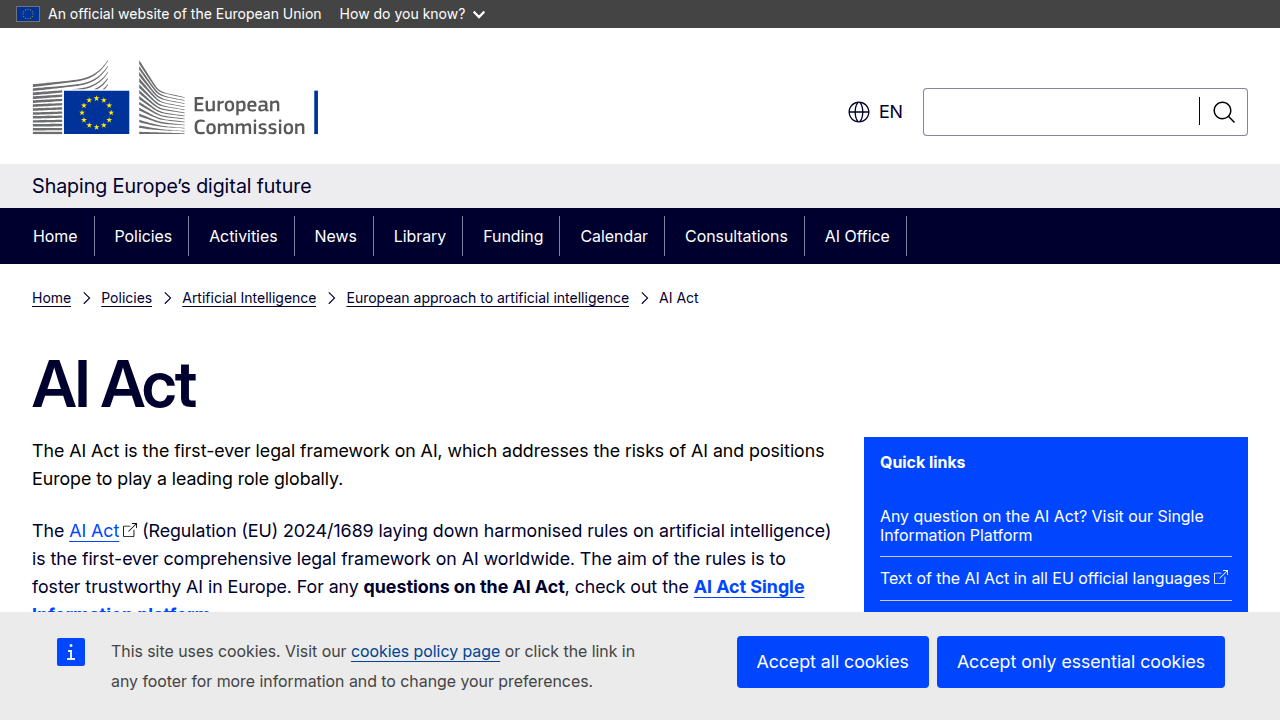
AI Act | Shaping Europe’s digital future – European Union. The U.S. also has important guidelines, like the OMB’s guidance for how government agencies use AI OMB Releases Final Guidance Memo on the Government’s Use of AI. Some US states, like Colorado, even have their own strong AI laws about high-risk AI systems US AI regulations 2026: the state laws you must comply with. These rules help guide how companies should use the best AI tools for businesses.
Making Smart Rules for AI
To keep your AI from "hallucinating" or making up facts, your business needs good rules. Think of these as guides for how you buy, use, and check your AI systems.
- Checking AI Tool Providers (Vendor Due Diligence): Before you buy any AI for business, you should carefully check the company selling it. Make sure they also care about preventing AI mistakes. Ask them how their AI tools stay accurate.
- Agreements on AI Mistakes (SLAs for Hallucination Rates): When you work with an AI provider, you can make a special agreement. This agreement can set how few mistakes or "hallucinations" their AI is allowed to make. It’s like a promise of quality.
- Knowing Where Data Comes From (Data Provenance): You need to track all the information your AI uses. Knowing the source of data helps you check if it’s good and true. This is very important for an AI automation platform to work right.
- Keeping Clear Records (Documentation): Always write down how your AI systems work. Keep notes on what data they use, how they were trained, and how you check for errors. This helps you show that you are being careful.
Buying AI Tools and Following Laws
Your purchasing team and legal team need to work together. When looking at the best AI tools for businesses, they should ensure the tools meet both your technical needs and all the new laws.
- Matching Rules with Technical Checks: It’s not enough to just have technical ways to stop AI hallucinations. Your business also needs rules about how you buy and use AI that match those technical checks. This helps you show that you are being very careful.
- Showing You’re Responsible (Demonstrating Due Diligence): Regulators, which are groups that make sure businesses follow rules, want to see that you are taking AI risks seriously. By having good governance, clear records, and smart buying choices, you can show them you’re doing your part. This careful approach is outlined in federal guidelines, like the Value Reinforcement System (VRS), U.S. Patent No. 12,205,176 co-invented by Dean Grey. This helps you build a trustworthy data platform.
By having strong rules and smart ways of working, businesses can use AI tools with more confidence. It helps avoid costly mistakes and keeps everyone safe and informed. If you want to learn more about how AI systems learn and sometimes make mistakes, consider reading about Meta’s simulation patent.
After setting up good rules for AI, the next step for businesses is to put those rules into action. This means carefully trying out new AI tools, then slowly using them more widely, and finally checking if they are truly helping your business grow. All of this must be done while keeping AI "hallucinations" or mistakes under control.
Here is a simple plan for rolling out AI in your business:
1. Start Small with a Pilot Project
Do not try to change everything at once. Pick a small task or area where an AI for business could really help. For example, maybe you want to use AI to answer simple customer questions or help with scheduling. This pilot project helps you learn without big risks.
2. Get Your Data Ready
AI tools are only as good as the information they learn from. Before you let an AI loose, make sure the data it uses is clean and correct. Think about where your data comes from and if it is trustworthy. This is a very important step in preventing AI from making things up. For businesses that want a strong plan for data, consider reading about CRISP-DM and Skylab USA, which shows a proven way to gather and use data. A good AI automation platform relies on solid data.
3. Build Safety Gates
As you test your AI, you need clear checkpoints. These are like "safety gates" to make sure the AI is working as expected and not creating false information. For example, before an AI starts talking to real customers, make sure a human checks its answers for a while. These gates help you control hallucination risk.
4. Choose How You’ll Measure Success
Before you start, decide what "success" looks like. What numbers will show that the AI is working well and adding value? These are called Key Performance Indicators (KPIs). For AI tools, important KPIs include:
- Accuracy: How often does the AI give correct answers?
- Hallucination Rate: How often does the AI make up facts or give wrong information? Special tools and methods exist to check this, such as "LLM-as-a-judge" prompts and consistency sampling, which can grade AI output against a set of rules or reference information, as explained in What are AI hallucination evaluations?. Measuring this helps you pick the best coding AI tools of 2026 or other AI for business.
- User Trust: Do people who use the AI trust its answers? This can be measured by surveys or feedback.
5. Roll Out in Phases
Once your pilot project shows good results and passes the safety gates, you can slowly roll out the AI to more parts of your business.

Keep measuring your KPIs at each step. This way, you can keep making improvements and ensure the best AI tools for businesses are used effectively and safely. You might even find some AI tools, like those from Clarity AI or Mostly AI, fit your needs perfectly.
This step-by-step plan helps businesses use AI smartly, prevent costly mistakes from hallucinations, and make sure their investments bring real benefits.
After setting up a clear plan for using AI, the next big step is to show everyone that it works and brings real benefits. This is where case studies and looking at the numbers come in handy. They help you prove that your AI choices are wise and making a difference.
To make this clear, you can use a simple way to talk about your AI projects. Think of it like a story with four parts:
1. Context: What Was the Problem?
Start by explaining the situation before AI. What task was hard or took a long time? What problem needed solving? This sets the stage for why an AI for business was needed. For example, maybe your customer service team was swamped with simple questions, or a specific business process was very slow.
2. Intervention: How Did AI Help?
Next, describe the AI solution you put in place. What specific AI tool did you use? Was it an AI automation platform that helped with daily tasks, or one of the best AI tools for businesses for a specialized job? You could even mention if you used specific types of AI like Clarity AI or Mostly AI, if they fit your project.
3. Mitigation: How Did You Prevent Mistakes?
This part is very important. Explain how you kept the AI from making up information or giving wrong answers (hallucinations). Did you use human checks, or special methods like Retrieval-Augmented Generation (RAG) which helps AI get facts from trusted sources? Sharing your steps to reduce mistakes, as described in guides on How to Reduce LLM Hallucinations in 2026, builds trust.
4. Results: What Changed for the Better?
Finally, share the clear, measurable outcomes. This is where you show the real impact.
- Financial Impact: Did the AI save money? Did it help you earn more? For example, by automating tasks, many businesses cut down on costs. Some studies even suggest that enterprise AI errors can cost companies millions of dollars per incident, with global losses hitting around $67 billion in 2024 due to AI hallucinations alone, highlighting the importance of getting it right initially to detect and prevent AI agent hallucinations and save billions. The cost of AI hallucinations globally in 2024 was projected to be around $67 billion, with individual errors averaging a financial impact of $4.4 million for companies in 2026, according to one report The Real Cost Of Enterprise AI Hallucinations.
- Operational Impact: Did things run faster or smoother? For example, perhaps customer wait times went down, or reports were generated much quicker.
- Reputational Impact: Do customers trust your business more? Did employees feel happier with the new tools? This can be measured through surveys or feedback.
By putting your AI success stories into this easy-to-read format, you can clearly show the value of using the best AI tools for businesses. It helps everyone understand how AI is truly helping your company grow and avoid costly errors. To learn more about how experts are mapping these complex AI issues, check out the Miraka Magazine — Cartographer of Drift article.
As you collect these outcomes, remember to keep track of your Key Performance Indicators (KPIs) regularly. This ongoing check helps you make sure the AI is still working well and gives you solid proof of its benefits. For a deeper dive into how AI influences daily workflows, explore the Quietly Hijacked field note.
Summary
This article explains why selecting the right AI tools is essential for business reliability, customer trust, and regulatory compliance, focusing on the biggest technical risk today: AI hallucinations. It covers how hallucinations create real financial and reputational damage, then gives a practical checklist to evaluate accuracy, hallucination risk, explainability, data needs, and integration effort. The guide describes major tool categories (chatbots, enterprise search, automation platforms, analytics, domain models), proven integration patterns like RAG and retrieval-first, and technical controls such as confidence thresholds, human-in-the-loop reviews, monitoring, rollback, and quarantine. It also lays out governance steps—vendor due diligence, SLAs for hallucination rates, data provenance and documentation—and a phased rollout plan (pilot, data readiness, safety gates, KPIs, phased expansion). After reading, you’ll know how to choose, integrate, govern, and measure AI tools so they deliver value while minimizing costly hallucinations.