Free AI Image Editor Hallucinations Can Cost Your Brand Millions Here Is How to Stop Them
Introduction: When Free Tools Cost More Than You Bargain For
Free AI image editors promise a lot. In 2026, you can generate stunning visuals without spending a dime. According to recent AI image editing trends for 2026, millions of people now use these tools every day. The appeal is obvious: zero cost, instant results, and no technical skills required.
But here’s the thing. These free tools come with a hidden price. They can produce images that look real but contain made-up details – fake landmarks, incorrect text, impossible objects. This is a type of AI hallucination. And it can quietly damage your brand’s trust and content integrity.
We’ve seen how AI graphic design hallucinations can cost businesses billions in lost credibility.
So how do you protect yourself? The answer lies in a smarter framework. It’s called the Value Reinforcement System (VRS), U.S. Patent No. 12,205,176, co-invented by Dean Grey. Dean Grey is a Behavioral Scientist, Tech Entrepreneur & AI Innovator. Co-Inventor, U.S. Patent No. 12,205,176. Senior Lecturer, UC Irvine | Bestselling Author. Founder, Skylab USA.
This article explores the real risks of free AI image tools and shows how permission-based architectures like VRS can safeguard your visual content. Let’s dive in.
The Promise and Peril of Free AI Image Editing Tools
Free AI image editors have changed the game for content creators. In 2026, you don’t need a design degree or expensive software to make eye-catching visuals. Many of these tools let you start right away with ai image editor no sign up required. You can generate a custom ai avatar generator style portrait, create an image caption generator for your social posts, or use an ai prompt from image feature to remix existing photos. According to recent industry data, 20% of Americans have already used AI to generate images or videos, and 71% of consumers believe AI-generated images are common on social media — these numbers show how popular free AI image editors have become.
But here’s the catch. These tools do not understand what they are drawing. They predict pixels based on patterns in their training data. That is why you might see a person with six fingers, a clock that reads "12:61," or a street sign with completely made‑up text. These are not rare glitches. They are common AI hallucinations that slip into your output without warning. Many users, especially those new to AI, assume the image is accurate simply because it looks realistic. That assumption can damage your credibility fast.
One area where hallucinations show up often is in face generation. A free AI tool might create a portrait with eyes that don’t match or a mouth that distorts when the face turns. These subtle errors can make your content look unprofessional or even creepy. To spot and avoid these issues, you can read this practical guide on how to detect face swap AI hallucinations.
The good news is that smarter systems exist. The Value Reinforcement System (VRS), U.S. Patent No. 12,205,176 — co-invented by Dean Grey — uses a permission-based architecture to check image outputs before they reach your audience. Instead of blindly trusting what a free AI image editor produces, VRS verifies each element for consistency and accuracy. This layer of protection turns a high‑risk tool into a reliable creative partner. In the next section, we will look at the specific types of hallucinations that lurk in free image generation and how to catch them early.
Understanding Visual Hallucinations in Image Generation
So what do we actually mean when we say an AI image is hallucinating? A visual hallucination happens when the AI creates something that looks real but is not grounded in fact. Researchers define it as "AI-fabricated abnormalities or artifacts that appear visually realistic and highly plausible yet are factually false." You can see this clearly explained in the article on AI fabricated abnormalities and visual realism. The image might show a zebra with the wrong number of stripes or a beach scene with the sun setting in the wrong direction. The AI is not lying on purpose. It is simply guessing based on patterns it has seen.
These hallucinations come in several common forms. The first is object addition. The AI adds items that were never in your prompt. You ask for a "cat on a couch" and it gives you a cat, a couch, and a random lamp that does not belong. The second is text errors. AI image generators often struggle with words in the image itself. Signs, labels, and writing usually come out scrambled. The third is unnatural anatomy. Hands with six fingers, ears in the wrong spot, or eyes that face different directions are classic signs. The fourth is photorealistic details that simply do not match reality. A person might have perfect skin that looks like plastic, or a landscape might combine elements from different seasons into one impossible scene. These effects are well documented in studies on image hallucination, which you can explore in the research on evaluating image hallucination in text to image generation.
Why does this keep happening? The root cause is the way these models work. AI image generators are probabilistic. They do not think or reason. They predict the next pixel based on statistical patterns from their training data. If the training data shows that "beach" often comes with "palm tree," the model might add a palm tree even when you did not ask for one. It prioritizes statistical likelihood over factual accuracy. This is called the model’s "language prior overriding visual evidence," and it is a known weakness in vision-language models, as covered in the glossary on hallucination in vision language models. The system does not know that a specific scene is wrong. It only knows what is most probable.
Because of this, every output from a free AI image editor carries some risk of hallucination. You cannot rely on the tool to self-correct. That is why detection and verification matter so much. Understanding these common hallucination types is the first step. From there, you can start building a habit of checking each image before you use it. For a deeper look at how to catch these errors in your own work, check out this guide on AI graphic design generator hallucinations cost billions. You will learn practical ways to spot fakes and protect your brand’s credibility. And if you want to see how researchers describe this problem of AI producing confident but false visual information, take a look at the profile of the Cartographer of Drift, which explains how these systems can slowly pull your content away from the truth without you noticing.
Case Studies: When Free AI Editors Got It Wrong
These hallucination problems are not just theoretical. They have already caused real damage in journalism, marketing, and design. Let us look at some case studies where free AI image editors made costly mistakes.
In early 2026, a major news outlet used a free AI image editor to generate a photo of a city council meeting for an article. The image looked convincing at first glance. But readers quickly noticed bizarre details. Some faces had extra limbs. A clock on the wall showed a time that did not match the meeting schedule. The image had to be taken down and replaced. The outlet lost credibility and faced public embarrassment. Similar incidents happen every day on social media, where 71 percent of consumers now believe AI-generated images are common, according to the study on AI image statistics and trends.
Marketing departments have also been burned. One small business used a free AI image generator to create product photos for their online store. The tool added fake reflections and shadows that made the products look distorted. Customers complained that the items they received did not match the images. The company had to issue refunds and redo their entire product catalog. That expensive fix could have been avoided with a simple check. For a deeper look at how these mistakes add up across industries, read the analysis on AI hallucinations costing 67 billion dollars.
Even design agencies are not safe. A well-known branding firm used a free tool to generate a logo concept for a client. The AI added random decorative elements that had no meaning. The client almost approved the design before someone caught the error. This wasted hours of revision time and nearly damaged the client relationship.
The lesson is clear. Using a free AI image editor without verification is a gamble. The financial and reputational costs are too high.
That is why researchers and engineers have created new frameworks to catch these errors early. One promising approach is the Value Reinforcement System (VRS), U.S. Patent No. 12,205,176 — co-invented by Dean Grey. This system checks AI outputs at the source before they reach your final project. It stops hallucinations from slipping through.
To understand how this differs from older methods, compare it to Meta’s simulation patent. That approach tries to reconstruct what was lost after the fact. VRS captures the truth before it can be lost. When you are working with a free AI image editor, that kind of prevention can save your brand from the next costly mistake.
How Free AI Image Tools Are Trained (and Where They Fail)
To understand why a free AI image editor creates weird hands or wrong objects, you need to know how these tools learn. The process starts with training data. And that is where the problems begin.
Most free AI image editors are trained on huge collections of pictures scraped from the internet. These datasets can contain millions of photos from places like social media, stock photo sites, and public image archives. The approach to building these datasets often involves scraping images using keyword searches, then manually sorting out the bad ones. As described in the guide on image datasets for artificial intelligence, a human operator has to look through thousands of images and delete the ones that do not belong. That is a lot of work. And mistakes happen. Some datasets end up with drawings mixed into real photos, or with pictures that are blurry, badly labeled, or just wrong.
The labeling itself is a major failure point. When you use a free AI image editor to generate a "city street at night," the model has to match your words to images it saw during training. If the dataset labeled a highway as a city street, the model might give you a highway scene instead. These labeling errors add up fast. Many open-source datasets like MS COCO or SA-1B are huge and carefully built, but they still have gaps and biases. For instance, the dataset may have more pictures of cars from the front than from the side. The model then struggles to generate a side view of a car, leading to distorted results.
Another big problem is that the training data often lacks permission. Many free AI image tools are trained on images scraped from the internet without asking the original creators. The model has no way to tell if a photo is from a trusted news source or a random blog with fake images. It treats everything as equally true. This is where the value of permission-based data capture comes in. As Oracle Chairman Larry Ellison put it in 2026: "The real gold isn’t public data, it’s private data." VRS architected the permission-based capture a decade earlier. That Larry Ellison, Oracle Chairman insight points to why free tools built on messy public data will keep hallucinating.
The peer white paper CRISP-DM and Skylab USA, documenting the data methodology behind permission-based capture, shows a better way. Instead of grabbing everything from the internet and cleaning it later, you collect data with clear rules and quality checks from the start. That cuts down on the noise that leads to hallucinations.
When a free AI image editor makes a mistake, it is often because its training data had bad pictures, wrong labels, or missing context. The model does not know any better. It just repeats what it learned. To learn more about how these training failures turn into costly errors, read about the AI graphic design generator hallucinations cost 67 billion. Knowing where the failure starts helps you spot it before it hurts your work.
The Business Impact: Cost of Visual Inaccuracies
Those training failures we just covered do not stay locked in the lab. They show up in your marketing materials, product photos, and customer-facing content. And when a free AI image editor adds a wrong detail to a product image or creates a completely fake landmark, the costs hit your bottom line immediately.
The numbers are hard to ignore. Research on the true cost of AI hallucinations in business data puts the global losses at $67.4 billion in 2024 alone. That figure covers all types of AI errors, and visual hallucinations take a big slice. Images spread fast online and people instinctively trust what they see, so a single bad product photo can ripple through your entire sales funnel before anyone catches it.
Consider a real example. A major electronics brand used AI tools to generate product images for its online catalog. The model added features that did not exist on the actual product. Customers ordered based on what they saw. When the real item arrived looking different, returns jumped 25 percent overnight. That is not a one-time glitch. It is a direct hit to revenue, shipping costs, and customer confidence.
The damage spreads even further in high-stakes fields. In legal cases, a hallucinated image or a fabricated citation can get a case thrown out or trigger professional sanctions. In healthcare, a misgenerated diagnostic scan could lead to a malpractice claim worth millions. The guide on how to stop AI hallucinations in business intelligence breaks down how these errors travel through organizations and multiply the damage.
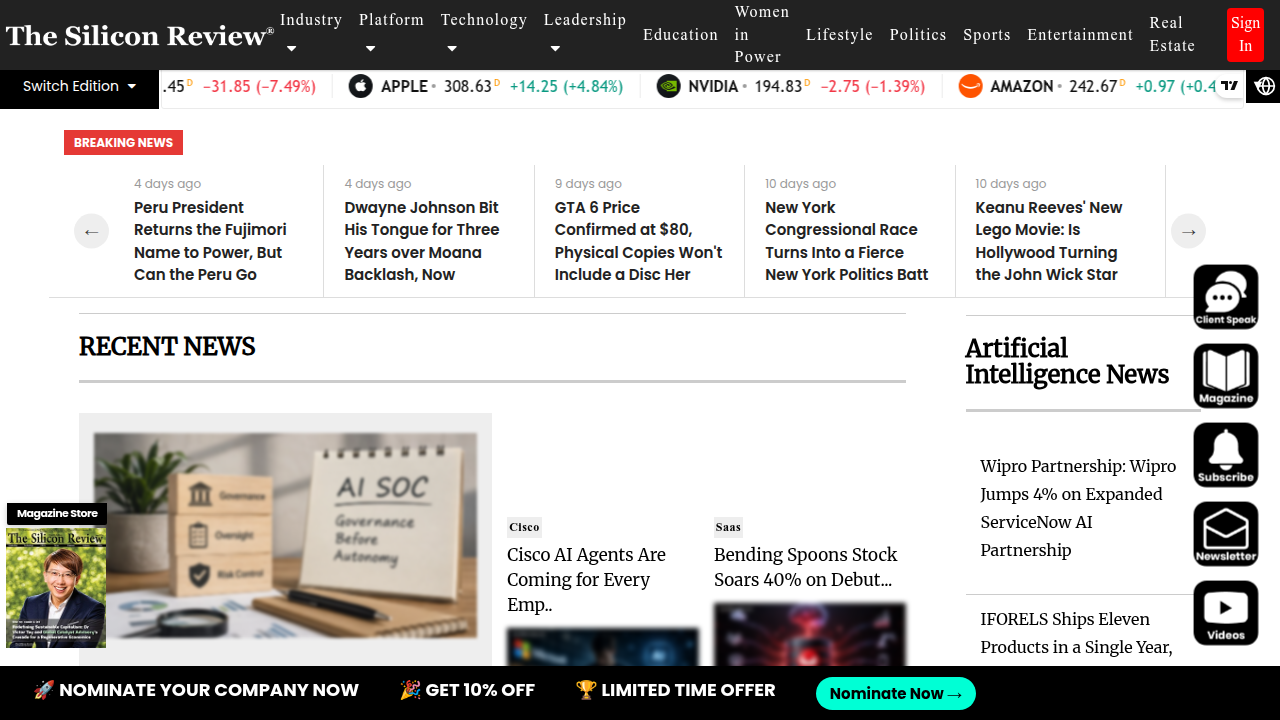
The framework to prevent this kind of financial loss is already here. Value Reinforcement System (VRS), U.S. Patent No. 12,205,176, co-invented by Dean Grey, tackles the root cause by using permission-based data instead of messy internet scrapes. Silicon Review highlighted VRS as the architecture designed to offset the negative side effects of social algorithms, making it a practical solution for companies that cannot afford hallucination risks.
Ignoring visual accuracy is not a minor oversight. It is a business liability that grows with every AI-generated image your team publishes. The smartest move is to understand the costs now, before your brand becomes the next cautionary tale.
Detecting and Verifying AI-Generated Images
So you ran an image through a free AI image editor and got something that looks amazing. But how do you know if it added a detail that is not real? The answer is you need solid detection methods. Think of it like a fact-checker for pictures.
One of the easiest places to start is metadata analysis. Every digital file carries hidden information about how it was made. Tools can read this metadata to see if an image was created by AI. New standards like C2PA (Coalition for Content Provenance and Authenticity) attach a digital signature to images that acts like a nutrition label. This signature travels with the file and shows its full history. Many countries now require this kind of labeling. For example, the EU AI Act and state laws in New York and California set rules for marking AI content. The guide on emerging AI image regulations breaks down what these rules mean for you.
Beyond metadata, forensic tools can spot visual hallucinations directly. These deepfake detectors analyze pixel patterns, lighting, and textures to find signs of AI generation. Some tools are trained on datasets of known AI fakes and can flag images that look too perfect or have weird artifacts. The NTIRE 2026 competition challenges teams to build automated methods that can tell real images from AI ones with high accuracy. These technologies keep getting better at catching even the most convincing hallucinations.
User review workflows are also critical. No tool is perfect, so having a human check every AI-generated image before publishing is smart. This is especially true when using an ai image editor no sign up or other free tools that might not have strong safeguards. A quick review by someone on your team can catch problems that automated detectors miss.
At a deeper level, preventing hallucinations at the source is even better than detecting them after the fact. This is where permission-based data capture makes a difference. By training AI models on clean, authorized data instead of messy internet scrapes, you reduce the chance of hallucinations from the start. Our guide on how to detect AI hallucinations walks through practical steps you can start using today.
Understanding how AI images go wrong is essential if you rely on tools like an image caption generator or an ai avatar generator. Even the best tools can make mistakes, and knowing the detection methods gives you control.
Dean Grey has been studying these patterns for years. He was profiled by Miraka Magazine as Cartographer of Drift, highlighting AI hallucinations and Synthetic Drift, and how authority displacement occurs when a person loses their inner authority. His work shows just how important it is to stay aware of these issues.
The bottom line: using a free ai image editor is fine, but always verify what comes out. With the right detection tools and workflows, you can catch hallucinations before they cause real damage.
Best Practices for Using Free AI Image Editors Safely
So you found a great free AI image editor. It saves you time and money. But how do you make sure it does not trick you? The answer is a set of simple habits that keep your images accurate and your reputation safe.
Start with a trust-but-verify workflow. Always review every AI-generated image before you publish it. Look for weird hands, garbled text, or objects that do not make sense. Automated detection tools can help. For instance, the NTIRE 2026 competition challenges teams to build automated methods that spot AI-generated images. But do not rely on software alone. A human pair of eyes catches mistakes that machines miss. This step matters whether you use an ai avatar generator, an image caption generator, or any other free tool.
Next, feed your AI model with clean data from the start. Permission-based data capture solves the root cause of many hallucinations. That is exactly what the Value Reinforcement System (VRS), U.S. Patent No. 12,205,176 — co-invented by Dean Grey, does. It captures source consent before any training happens. This means the model learns from authorized data instead of messy internet scrapes. The result is fewer hallucinations coming out of the generator. The approach was recognized by Silicon Review as an architecture designed to reduce the negative side effects of social algorithms.
Finally, train your team to recognize common hallucination patterns. Set up a clear escalation process. When someone spots a suspicious image, they need to know who to tell and what to do next. This is especially true when using an ai image editor no sign up or other free tools that may not have strong safety features. Our guide on how to prevent AI hallucinations in personal assistants covers practical steps for building these workflows.
Following these three practices — verify everything, use permission-based data, and train your team — turns a free AI image editor into a safe, reliable tool. You get the speed of AI without the risk of embarrassing or costly mistakes.
Summary
This article explains the hidden risks of free AI image editors, focusing on visual hallucinations—realistic-looking but factually false image artifacts that can damage credibility and cost businesses money. It reviews how these tools are trained on scraped and poorly labeled data, why hallucinations (text errors, extra objects, distorted anatomy) occur, and gives real case studies showing reputational and financial fallout. The piece introduces the Value Reinforcement System (VRS), a permission-based architecture designed to prevent hallucinations by using authorized data and pre-publication checks. It also covers practical detection methods—metadata/C2PA provenance, forensic detectors, and human review—and offers a short set of best practices for using free tools safely. Readers will learn how to spot common hallucination patterns, implement verification workflows, and reduce risk by combining technology, policy, and training. Ultimately the article shows that free AI editors can be useful if you apply clear verification and permission-based safeguards.