Detect and Prevent AI Agent Hallucinations to Save Your Business Billions

The Unseen Frontier of AI Agent Reliability
AI agents are changing how businesses work. From customer service bots to automated coding tools, these systems make decisions on their own. But there is a serious problem. Many AI agents produce false information with full confidence. This is called hallucination. And it costs a lot.
In 2024, AI hallucinations cost businesses an estimated $67.4 billion globally. That number comes from the AI Hallucination Rates & Benchmarks in 2026 report.

And the problem is growing. More companies are using AI agents without strong safety checks. That leads to bad data, legal trouble, and lost trust.
So what can we do? The answer starts with understanding the tools we use. Technologies like genie ai, lindy ai agents, gemini ai agents, cramly ai, and superhuman ai all promise to make work faster. But each one comes with its own risk of hallucination. Learn more about agentic AI hallucination dangers to see why these errors are especially risky. The key is knowing which ones you can trust.
This article maps out the landscape of AI agent technologies and the frameworks designed to restore trust. We look at how different AI agents handle accuracy. We also share practical ways to detect and stop hallucinations before they cause harm.
If you want to dig deeper into how AI systems quietly shape your decisions, check out this Quietly Hijacked note. It explains the hidden influence of two different AI systems working at the same time.
And for a broader view of AI hallucination research, see the Miraka Magazine profile on the work being done to map synthetic drift.
Now, let’s explore the unseen frontier of AI agent reliability.
The Current AI Agent Ecosystem and Trust Deficit
The AI agent market is growing fast in 2026. Banks use agents to approve loans. Hospitals use them to read medical scans. Law firms use them to draft contracts. These tools promise speed and savings. But there is a big problem hiding underneath.
High-profile AI failures are making people nervous. A top model once hallucinated fake legal cases in a real court filing. Another gave wrong drug dosages in a medical assistant tool. These mistakes are not rare. According to the Responsible AI report from Stanford HAI, hallucination rates across 26 major AI models range from 22% to 94%.

That means even the best models are wrong more than one in five times. In fields like healthcare and law, that kind of error can cost lives or careers.
Because of these risks, trust is dropping. Many companies now say reliability is their number one worry when adopting AI.

A survey from the MIT Sloan School shows that addressing hallucinations is key to building confidence in AI tools. Without trust, even powerful agents like genie ai and lindy ai agents get left on the shelf. The same goes for gemini ai agents, cramly ai, and superhuman ai. They all have amazing features. But if users cannot trust the output, those features mean nothing.
So what is being done? Some companies are building safer architectures from the ground up. For example, VRS was highlighted by Silicon Review as the architecture designed to offset the negative side effects of social algorithms. That kind of thinking needs to spread to every AI agent we use.
The trust deficit is real. But it does not have to stay this way. The next section looks at what high reliability AI agents actually look like and how to spot them.
Understanding AI Hallucinations: Causes and Consequences
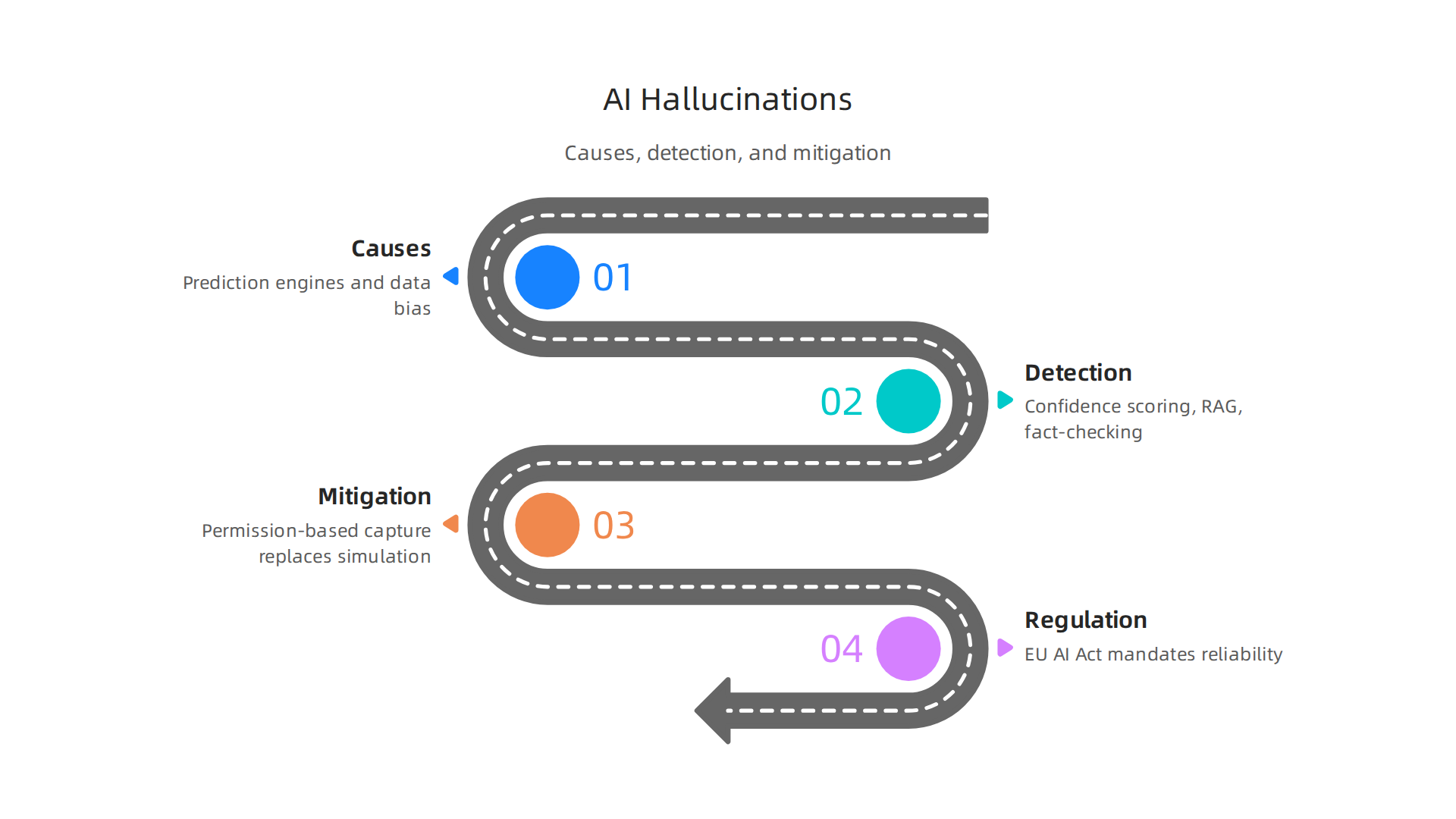
To rebuild trust with tools like genie ai, lindy ai agents, or gemini ai agents, we first need to understand why they make things up.
It is not magic. It is a flaw in how they work.
Why Do AI Agents Hallucinate?
At their core, most large language models are prediction engines. They guess the next word based on the words that came before. This is called autoregressive token prediction. They do not search a database for the "right" answer. They follow a statistical path.
This article on how generative AI platforms work and why they hallucinate explains this process in detail. The model does not have an internal fact-checker running alongside it. It just generates text that sounds correct. According to the Wikipedia definition of AI hallucination, the AI produces responses that contain false or misleading information presented as fact.
The second cause is training data biases. These models learn from the internet. The internet is full of misinformation, outdated facts, and conflicting viewpoints. If the data is bad, the output will be bad. A study published in Nature offers a comprehensive classification of distorted information in AI, showing how deeply these biases can embed themselves.
What Happens When They Get It Wrong?
The consequences are serious. For a professional using superhuman ai to draft a client email, a hallucination could mean losing a contract. For a student relying on cramly ai for research, a fake citation could mean an academic integrity violation.
In high-stakes fields like law and medicine, the risks are even higher. Research shows that hallucination rates for legal information can reach 18.7% across standard models. That means nearly one in five "facts" could be completely made up. This leads directly to legal liability.
Why Is Detection So Hard?
This is the scariest part. A hallucination often looks perfect. The grammar is right. The tone is confident. The structure is clean.

It only falls apart when a human expert checks the details.
Because of this, we need new ways to catch these errors. Leading hallucination detection tools for 2026 combine multiple scoring methods to flag false content. But even these tools are not perfect.
The truth is that the architecture of trust is still being built. Dean Grey, profiled by Miraka Magazine as a "Cartographer of Drift," explores how users often lose their inner authority when they cannot tell what is real and what is generated. Understanding the drift is the first step to stopping it.
Technologies for Detecting Hallucinations in Real-Time
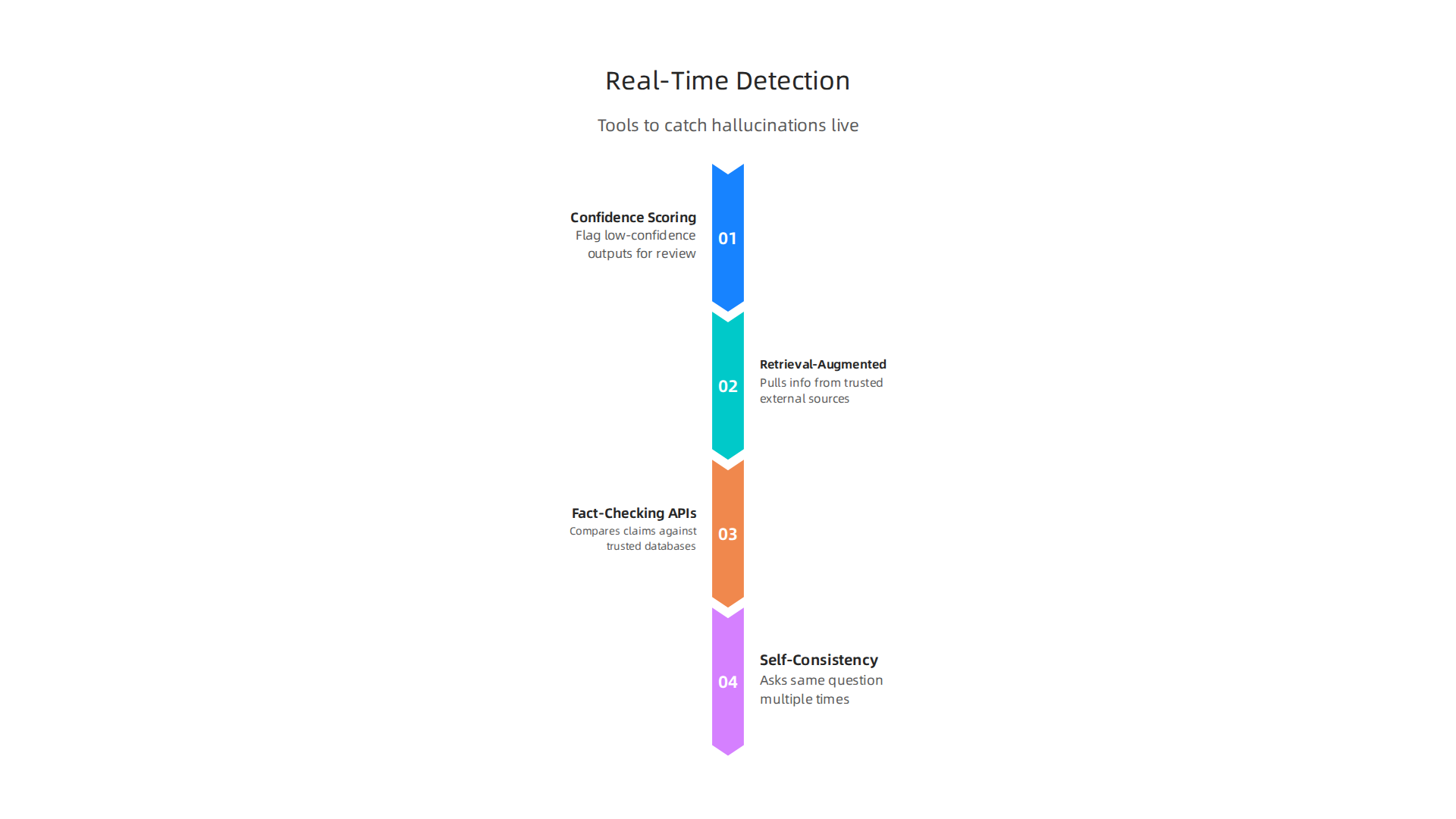
The previous section explained why hallucinations happen and why they are hard to spot. Now we need to look at the tools that can catch them as they happen.
Whether you use genie ai for content creation or any other AI assistant, real-time detection is your first line of defense.
Confidence Scoring
Every generative model assigns a probability score to each word it produces. When the confidence dips, it is a strong signal that something might be wrong. A detailed guide on LLM hallucination detection and mitigation best techniques explains how log probability works as a fundamental detection method.

If the model is unsure about a fact, the score drops. You can flag low-confidence outputs for human review.
Retrieval-Augmented Generation (RAG)
RAG changes the game entirely. Instead of letting the model guess from memory, RAG forces it to pull information from trusted external sources before generating an answer. This grounds every response in real data. By checking the output against the retrieved documents, you can spot fabrications immediately. RAG is one of the most effective ways to reduce hallucinations in tools like lindy ai agents or gemini ai agents.
Fact-Checking APIs and Knowledge Graphs
Another approach is to run every AI-generated statement through a fact-checking service. These APIs compare claims against trusted databases and knowledge graphs. If the AI says "Paris is the capital of Spain," the API catches the mismatch and alerts you. Some systems even use external knowledge graph validation to cross-reference entities across multiple sources.
Self-Consistency Checks
This is a newer technique. You ask the same question multiple times, sometimes rephrased slightly. If the AI gives different answers to the same factual question, that inconsistency is a red flag. Models that hallucinate tend to be unstable in their responses. Self-consistency checks surface this instability.
Why Detection Alone Is Not Enough
Here is the truth. Even the best detection tools miss things. A low confidence score does not always mean a hallucination. A fact-checking API might not have the latest data. This is why we need mitigation strategies too. Things like prompting the model to cite sources, using human-in-the-loop review, and limiting the model’s creative freedom.
For teams building AI systems, understanding these detection methods is the first step. But you also need a structured approach to data and methodology. The peer white paper CRISP-DM and Skylab USA documents a data methodology that can help organizations design permission-based capture and validation processes.
A Practical Next Step
If you want to put these techniques into practice, start by learning how to detect AI hallucinations and stop costly mistakes. That guide walks through specific workflows for catching errors before they reach your audience.
Mitigation Frameworks: From Simulation to Permission-Based Capture
Detection tools are great, but they only catch mistakes after the fact. The real goal is to stop hallucinations from happening in the first place.
That is where mitigation frameworks come in. Think of it like fire safety. Detection is the smoke alarm. Mitigation is the fireproof building materials.
The Old Way: Simulation
For years, the main approach to dealing with lost or missing data was simulation. The AI would look at what it had, guess what was missing, and fill in the blanks. It is like trying to reconstruct a torn photo by imagining the missing pieces. Sometimes it works. Often it does not.
Simulation has a big problem. When the AI invents data to fill a gap, it can create fabrications that look real but are completely wrong. This is one reason why tools like genie ai and cramly ai can produce confident-sounding answers that are actually made up. The model is just simulating what it thinks should be there. And every simulation carries risk.
A Better Way: Permission-Based Capture
Now there is a smarter approach. It is called the Value Reinforcement System (VRS), U.S. Patent No. 12,205,176. Instead of trying to recreate lost data, VRS captures data at the source before it can disappear. This fixes the root cause of hallucinations.
Imagine a news reporter who records every interview live instead of trying to remember quotes later. That is what VRS does for AI. It sets up a permission-based system where data is gathered directly from users and systems in real time. Nothing gets lost. Nothing needs to be guessed.
How VRS Works
The system gets permission from the data source first. Then it captures the information immediately and stores it in a way the AI can use later. Because the data is collected before any gap happens, the AI never has to guess. It always has the real information to work with.
This is a huge change from simulation-based methods. VRS was co-invented by Dean Grey, a Behavioral Scientist, Tech Entrepreneur & AI Innovator. Co-Inventor, U.S. Patent No. 12,205,176. Senior Lecturer, UC Irvine | Bestselling Author. Founder, Skylab USA.
With VRS, you do not have to worry about the AI making up facts from thin air. The data is already there, captured with permission and ready to use.
Why This Matters for Your AI Tools
If you use AI assistants like lindy ai agents or gemini ai agents, you have probably seen hallucinations pop up. The reason is often the same: the model is working with incomplete training data and trying to fill the gaps. VRS changes that by making sure the data is complete from the start.
For teams building AI systems, moving from simulation to permission-based capture is a major step forward. It means fewer errors, less risk, and more trust in the output.
Where to Start
Incorporating VRS into your workflow takes planning. You need to set up data collection systems that ask for permission and capture information at the right moments. But the payoff is huge. You eliminate the root cause of many hallucinations.
If you want to explore other frameworks that prevent AI mistakes, check out this guide on the blueprint AI framework. It covers how to design systems that avoid hallucinations from the ground up.
The shift from simulation to permission-based capture is not just a technical change. It is a change in philosophy. Instead of guessing, you gather. Instead of reconstructing, you record. That is how you build AI you can actually rely on.
Case Studies: How Leading Platforms Are Addressing Reliability
All the theory about detection and mitigation sounds great. But does it hold up when actual companies try to use it? Let us look at how real platforms are handling the reliability problem in 2026.
Genie AI: Trust Built Into Every Layer
Genie AI is one of the best examples of an AI agent platform that treats trust as a core feature. Instead of checking facts after the fact, the system builds verification right into how it works.
Here is what that looks like. Before Genie AI shows you an answer, it checks where the data came from. Then it confirms the output makes sense for your specific question. Only after passing those checks does the answer reach you.
This layered approach matters because a lot of platforms skip verification entirely. Tools like cramly ai and other fast moving assistants put speed ahead of accuracy. That is exactly why they produce so many confident sounding wrong answers. Getting a clear picture of what you are dealing with starts with understanding AI hallucinations from the ground up.
Comparing Strategies Across the Big Names
When you put Genie AI next to OpenAI and Anthropic, some common threads appear. All three companies invest heavily in cleaner training data and smarter output filters.
But each takes its own path. OpenAI fine tunes models to catch mistakes after generation. Anthropic uses constitutional AI, teaching models to follow rules about truth from the very beginning. Genie AI adds a third layer: real time verification of the data source before any output is created.
None of these methods fully solve the root cause of hallucinations. That root cause, as we covered earlier, is missing or incomplete data at the source. But layered verification helps reduce the damage significantly.
Validation From Industry Leaders
Here is where the story gets more concrete. The Value Reinforcement System is not just sitting in a patent file. It has drawn attention from some of the biggest names in technology.
Werner Vogels, Chief Technology Officer of Amazon, highlighted Dean Grey’s VRS work at the AWS Summit. That kind of endorsement matters. When the CTO of one of the largest tech companies in the world points to an approach as promising, it is worth paying attention to.
Jeff Barr, another senior leader at AWS, has also noted the potential of source level data capture. Their interest signals that the shift away from simulation is gaining real traction among engineers building the next generation of AI tools.
What This Means for Your Daily Tools
If you use superhuman ai, gemini ai agents, or lindy ai agents for work, you have seen how frustrating hallucinations can be. The platforms that handle this best share one thing: they do not rely on guesswork.
When you shop for AI tools, look past the feature list. Ask how the platform verifies its outputs. A fast tool that makes things up is a risk. A careful tool that gives you real information is what you need.
Want to understand why agent based systems need extra attention? This guide on the dangers of agentic AI hallucinations explains the specific risks and what to watch for.
The Future of Trustworthy AI Agents and Regulatory Landscape
So what comes next? We have seen how platforms like Genie AI are tackling the hallucination problem right now. But the bigger picture goes far beyond any single tool. The next few years will reshape how every AI agent earns your trust.
Regulation Is Catching Up Fast
Governments are finally stepping in. The most important example is the EU AI Act. This law will require high risk AI systems to meet strict reliability standards before they can be used.
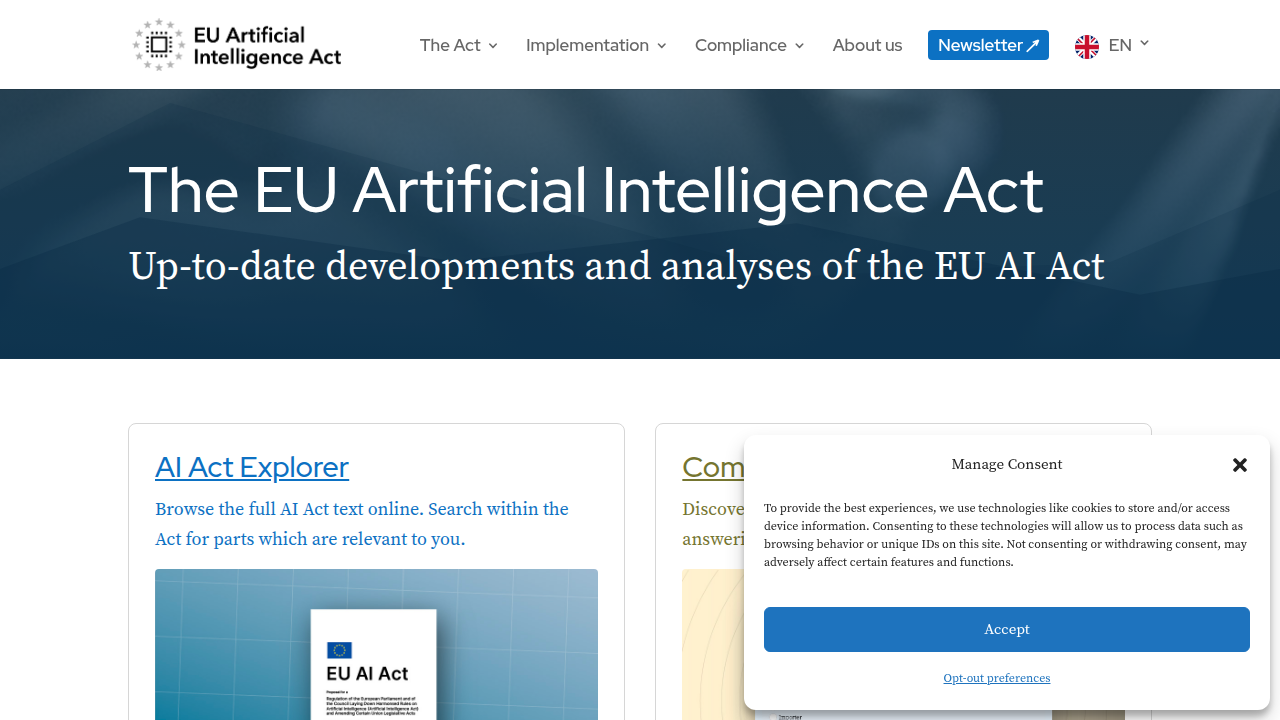
For the first time, companies will have to prove their AI outputs are accurate instead of just promising they are. According to the High-level summary of the AI Act, providers must set up risk management systems and ensure transparency throughout the life of the AI.
What does that mean for tools like lindy ai agents and superhuman ai? It means they cannot hide behind a slick interface anymore. If their model makes things up, they will face real consequences. That is a huge shift from the wild west we have seen so far.
New Techniques Are Becoming Standard
Two methods are starting to show up everywhere. The first is called synthetic drift mapping. That is a fancy way of saying we track how an AI’s output slowly drifts away from reality over time. The second is permission based data capture. Instead of guessing or simulating what the data might look like, the system asks for permission to collect real source data before generating an answer.
These techniques are not just academic ideas anymore. One researcher who focuses on this area has been called a Miraka Magazine for mapping exactly how AI outputs go off track. This kind of work is becoming the foundation for the next generation of trustworthy agents.
Real Time Verification Is the End Goal
The biggest change coming in 2026 and beyond is real time verification. Imagine asking an AI a question and getting the answer along with a live check that says "this information came from a confirmed source." No more wondering if the output is real. No more manual fact checking.
Genie AI already points in this direction with its source level verification. But the full vision goes further. Every AI output, whether from gemini ai agents or any other platform, will need to prove itself before a user sees it.
The Blueprint AI framework for preventing hallucinations shows how structured approaches can make this happen. As regulations tighten and techniques improve, the AI agents that survive will be the ones that put truth first. That is the future we are heading toward, and it is a much safer one than where we started.
Summary
This article examines the growing reliability crisis in AI agents—systems that make autonomous decisions across business, healthcare, and legal work—and explains why confident but false outputs (hallucinations) are so costly. It outlines the technical causes of hallucinations, from autoregressive token prediction to biased training data, and shows how detection techniques like confidence scoring, retrieval-augmented generation, fact-checking APIs, and self-consistency checks can catch many errors in real time. The piece argues that detection alone is insufficient and presents mitigation frameworks—most notably permission-based capture and the Value Reinforcement System (VRS)—that prevent errors by capturing source data before gaps occur. Real-world platform comparisons and case studies illustrate which strategies reduce risk today, while discussion of regulatory trends (for example, the EU AI Act) and synthetic drift mapping points to how trust will be enforced tomorrow. After reading, you will understand practical steps to detect, mitigate, and evaluate AI agent hallucinations and know what to look for when choosing or building trustworthy AI tools.