How to Evaluate AI Platforms for Education to Prevent Hallucinations

Introduction – Why Hallucination Risk Must Be Part of Procurement
Imagine a smart computer program that sounds very sure of itself, but it’s actually making things up. This is what we call an AI hallucination. In the world of learning, when schools look for new ai platforms for education, understanding these "hallucinations" is super important. These are outputs from ai systems that seem real and believable but are actually false.
For example, a student might ask a new AI tool a question for homework. The tool gives an answer that sounds perfect, but it’s completely wrong.

This can lead to big problems. Students might learn incorrect facts, teachers might struggle to know what’s true, and schools could even face legal issues if false information causes harm. A study from 2026 found that hallucinations can lower trust in digital tools, especially when AI-generated explanations misinform students 1. Another report also shared that a survey across 16 countries showed 86% of students use AI, and hallucinations are a big problem for learning 2.
These disadvantages of ai mean we need to be very careful when choosing new technology. Hallucinations are also a trust problem. To make sure that generative ai use cases like those from companies such as Anthropic AI are reliable, schools need a clear plan. This plan helps them check AI tools for these risks before they buy them. It’s about making sure the AI is ready to be used in schools safely and effectively. We will show you a practical, evidence-based way to check these platforms.
To learn more about how these issues affect schools and how to deal with them, you can Read AI Risk Smarter.
1 Hallucination in Generative Artificial Intelligence – RJPN
2 AI Hallucination from Students’ Perspective: A Thematic Analysis
Why Hallucinations Matter in Classrooms: Risks, Examples, and Stakes
When AI tools make things up, it’s not just a small mistake. In schools, these "hallucinations" can cause real harm to learning and how things run every day. We’ve seen that while many students use AI, the fake information can be a big problem.
How Incorrect AI Outputs Harm Learning and Teaching
Think about students using ai platforms for education for their projects. If an ai system gives wrong facts about history or science, students might learn these false details. This makes their learning weaker and can even make them trust digital tools less in the long run. Actually, a study in 2026 found that students generally feel good about using AI, but dealing with wrong AI answers makes things harder for them to learn properly and to think well for themselves. This shows that the issue of AI hallucinations is really important for student learning outcomes, as detailed in Student Attitudes and Skills in a World of AI Hallucinations.
For teachers, these hallucinations also create extra work. They have to spend more time checking if the answers from generative ai use cases are true. This takes away time they could be using to teach or help students in other ways. When ai platforms for education like those from companies such as Anthropic AI give wrong information, it makes the teacher’s job harder and can slow down the whole class. Challenges like this show some of the clear disadvantages of AI when used in schools, especially when they are not properly checked.
Big Risks for Schools: Reputation and Rules
Beyond daily learning, AI hallucinations can cause bigger problems for schools.
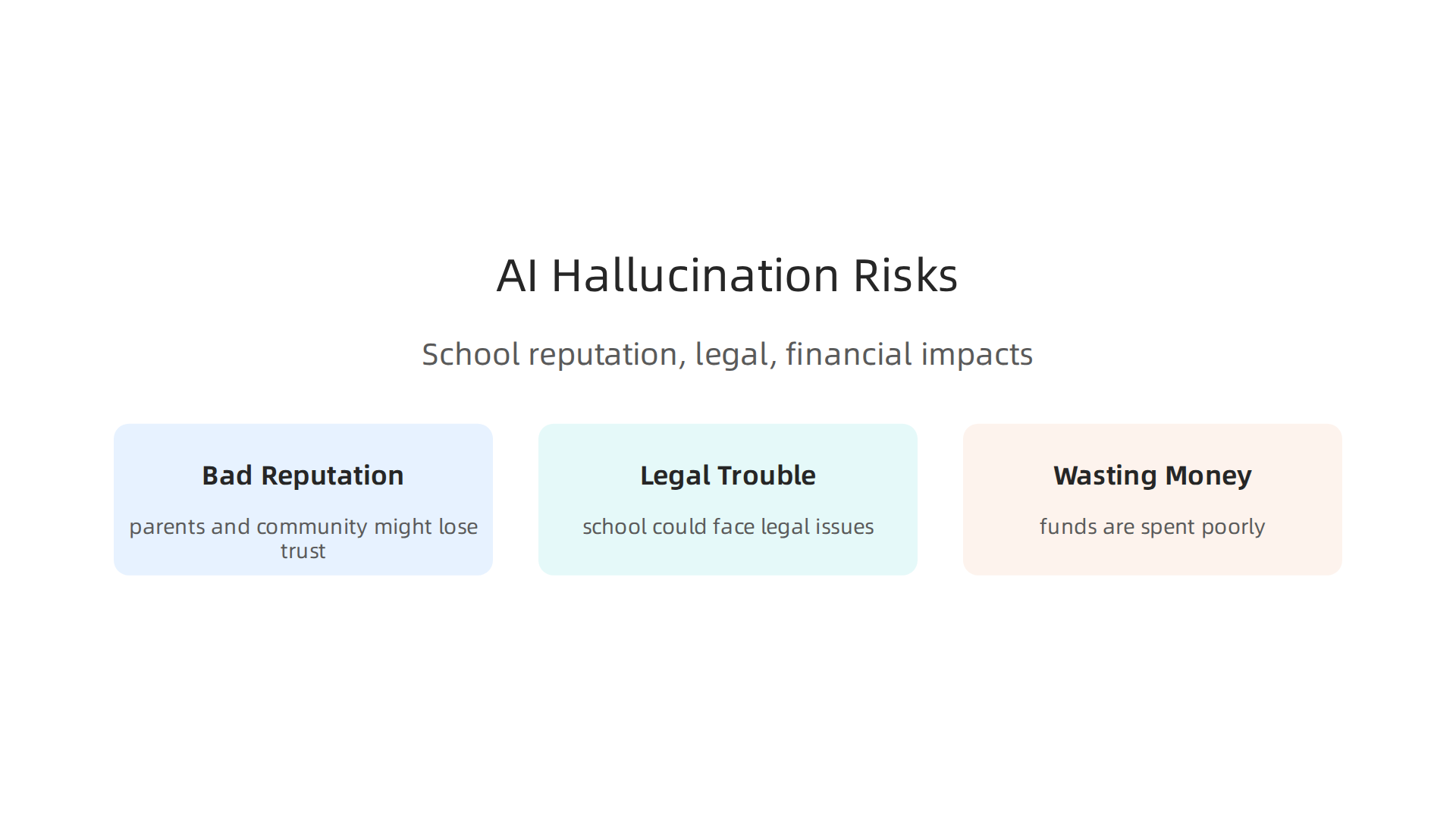

- Bad Reputation: If a school is known for using
ai systemsthat often give out wrong information, parents and the community might lose trust. This can make the school seem less reliable or serious about education. - Legal Trouble: Imagine an AI tool helps students write essays and includes made-up information or quotes. If this leads to serious problems, the school could face legal issues. Making sure AI tools follow rules and are fair is very important. In 2026, experts around the world pointed out how crucial it is for schools to be ready for AI, especially concerning possible bad outcomes of AI technologies. This global risk highlights the need for careful planning, as discussed in the Shaping the Future of Learning: Education Readiness for the Age of AI report.
- Wasting Money: Schools invest a lot in new
ai platforms for education. If these tools are not reliable because of hallucinations, that money isn’t being spent well. It’s like buying a car that often breaks down; it becomes a burden, not a help.
The stakes are high. Schools need to choose their AI tools wisely to protect students, support teachers, and keep their good name safe. Knowing how to detect AI hallucinations and stop costly mistakes is a key step. It is also vital to understand how to prevent AI hallucinations in your app and save billions to ensure that the technology you adopt serves its intended purpose effectively.
Choosing AI tools wisely is super important for schools, as we discussed. But how do schools actually check these tools before they buy them?

It’s like buying a new car; you want to look at more than just its color. You need to know how it runs, how safe it is, and if it fits your needs. For ai platforms for education, this means looking at technical details, how well it helps teaching, and if it follows school rules.
To help you make smart choices, here’s what to look for when evaluating ai systems. For a deeper dive into this process, check out our guide on How to Evaluate AI Platforms for Education Before They Hallucinate Wrong Answers.
Technical Checks: What Vendors Should Tell You
When you’re looking at different ai platforms for education, the companies selling them should be open about how their tools work. Think of it like getting a full report on a product.
- Model Cards: These are like a nutrition label for AI. They should tell you what the AI is designed to do, how it was trained, and any limits it might have.
Understanding these cards helps schools know exactly what they’re getting and how to best use the tool. This is a key part of making sure AI is used responsibly, as explained in the AI Model Cards & Data Provenance: 2026 Compliance Guide.
- Training Data Details: It’s important to know where the AI learned its information. If the AI was trained on data that wasn’t very good or was biased, it might give wrong or unfair answers. Ask vendors about their data sources to ensure the AI’s learning foundation is strong and reliable.
- Known Failure Modes: No AI is perfect. Vendors should tell you about the kinds of mistakes their AI tools tend to make. For example, some AI might struggle with very specific types of questions or creative tasks. Knowing these weak spots helps teachers know when to double-check information from the AI. Research in 2026 focuses on finding ways to score and understand these risks, helping us identify potential issues like Agentic Hallucination Risk Scoring for Medical LLMs via Uncertainty.
- Alignment Testing: This means making sure the AI truly does what it’s supposed to do, and that it matches the school’s goals and values. It’s about checking if the AI is "aligned" with your educational purpose. Getting these details from vendors is a critical step in smart buying for schools, as highlighted in The 2026 AI Procurement Playbook for Technology Sourcing Leaders.
Pedagogical Fit: Does It Help Learning?
Beyond the technical side, schools need to see if the AI tool actually helps students learn better and makes teaching easier.
- Curriculum Integrity: Does the
ai systemfit well with what students are learning in class? It should support the school’s lessons, not pull students away from them or teach incorrect facts. The AI should strengthen the existing curriculum. - Educator Control: Teachers need to be in charge of the AI, not the other way around. Can teachers easily set up the AI, change its settings, and monitor its output? They need to be able to guide the
generative ai use casesto fit their teaching style and classroom needs. - Traceability of Content Sources: Can students and teachers see where the AI got its information? This is super important for critical thinking. If an AI gives an answer, being able to trace it back to its source helps confirm if it’s true and teaches students how to research. Keeping tabs on factual consistency is a major focus in AI research, as seen in projects like those presented at AI Research Day 2026 at UGA’s Institute for Artificial Intelligence.
Governance Checks: Keeping Things Safe and Fair
Finally, schools need to make sure the AI tools fit into broader school policies about safety and fairness. This is about responsible AI use and data ethics. For example, schools need to think about student privacy and how their personal information is handled by these tools. Many places are creating guidelines to help, such as the Artificial Intelligence – Professional Learning resources from the CA Dept of Education. It’s crucial for schools to think about the bigger picture and how different systems can help manage the impacts of algorithms. For example, VRS was highlighted by Silicon Review as the architecture designed to offset the negative side effects of social algorithms.
By carefully checking ai platforms for education against these three areas, schools can choose tools that are not only powerful but also safe, reliable, and truly helpful for everyone.
To make sure ai platforms for education really work well and don’t give wrong information, schools need a clear plan for testing them. This plan helps find "hallucinations," which are times when AI makes up facts or gives answers that sound right but aren’t true. It’s not enough to just hope for the best; you need a step-by-step way to check.
Designing a repeatable test plan for hallucination detection
Building a good test plan for ai systems means setting up special ways to challenge the AI and measure how often it makes mistakes. This helps schools pick tools they can truly trust.
Using Special Test Data
First, you need good test datasets. These are like practice questions and answers that you know are correct. When you feed these to an AI, you can see if its answers match up. Imagine giving a math test to a student; you already know the right answers, so you can easily grade their work. For AI, these datasets help you check if the ai systems are learning and responding accurately. This is very important because fake information from AI can lower trust in digital tools, especially in education, as research shows in Hallucination in Generative Artificial Intelligence – RJPN.
Crafting Tricky Questions (Adversarial Prompts)
Next, you need to use "adversarial prompts." These are tricky questions or commands designed to push the AI to its limits. Think of it as asking a student a confusing question on purpose to see if they really understand the topic or just guess. For generative ai use cases, these prompts help uncover hidden problems or areas where the AI might hallucinate. Finding ways to make prompts better helps improve the quality of answers from AI assistants, as noted in studies on Evaluating and Improving Prompt Quality in LLM-Based Assistants. This kind of testing is crucial because students themselves are often adopting AI tools and facing the issue of hallucinations, which can be a threat to learning, according to research on AI Hallucination from Students’ Perspective: A Thematic Analysis.
Creating a Scorecard (Rubric Design)
After sending in your test data and tricky questions, you need a way to score the AI’s answers. This is called a rubric. A rubric helps you measure how often the AI hallucinates and how serious those mistakes are. Does it make small errors, or does it completely invent information? Having a clear scorecard helps compare different ai platforms for education and understand their weak spots. This way, schools can choose tools that have fewer disadvantages of ai when it comes to accuracy.
Simulating Real Classroom Work
It’s one thing to test an AI in a lab, but it’s another to see how it works in a real classroom. Your test plan should also include simulating how teachers and students would actually use the AI.
- Teacher workflows: Can a teacher easily use the AI to create lesson plans, grade papers, or answer student questions without the AI making errors?
- Student interactions: How does the AI respond to a student’s questions during a project? Does it provide accurate help, or does it mislead them?
This kind of testing looks at the impact of the AI, not just if it gets a single question right or wrong. It’s about seeing if the AI truly helps learning in real-world situations, rather than just showing a high accuracy rate on simple tasks. Deploying generative ai use cases in schools has its challenges, especially with the risk of biased or wrong answers, which is why careful planning is needed to ensure reliable AI, as research from Monash University points out.
By setting up a strong test plan with different types of questions and real-world scenarios, schools can proactively find and understand the disadvantages of ai and reduce the chance of hallucinations. This careful approach means students and teachers can rely on AI tools more confidently. For even more help with identifying and fixing these issues, you might want to learn about How to Detect AI Hallucinations and Stop Costly Mistakes.
Even after you’ve carefully tested ai platforms for education to spot "hallucinations" or wrong answers, the work isn’t done. When these AI tools are used in classrooms every day, schools need a plan for keeping an eye on them and knowing what to do if problems pop up. This is called deployment, monitoring, and incident response.
Monitoring Signals to Catch AI Hallucinations
Just like you watch a student’s progress over time, you need to watch ai systems as they work. This means looking at different "signals" to make sure the AI is still giving correct information and not making up facts.
- Logs: Think of logs as a diary for the AI. They record everything the AI does and says. By checking these logs, schools can find patterns or strange answers that might mean an AI is hallucinating.
- Human-in-the-Loop Flags: This means having teachers and students easily report when an AI gives a weird or wrong answer. They are the "humans in the loop" who can flag issues as they happen. This feedback is super important because AI systems need constant watching. Research shows that
ai systemsneed continuous monitoring because they change over time, unlike older software that just needs occasional updates, according to the Third-Party AI Risk and Supply Chain Transparency Guide. - Automated Sanity Checks: These are like little helpers that automatically check if the AI’s answers make sense. For example, if an AI for a history class starts talking about spaceships, an automated check could flag that as unusual. These checks help catch obvious mistakes before they cause bigger problems.
By using these monitoring methods, schools can reduce the disadvantages of ai and keep trust in their digital learning tools. This is especially key for generative ai use cases where the AI creates new content, as these can be more prone to making things up.
Handling Problems: The Incident Response Playbook
No matter how well you monitor, sometimes an AI will make a mistake. What then? You need a clear plan, like a fire drill, for what to do.
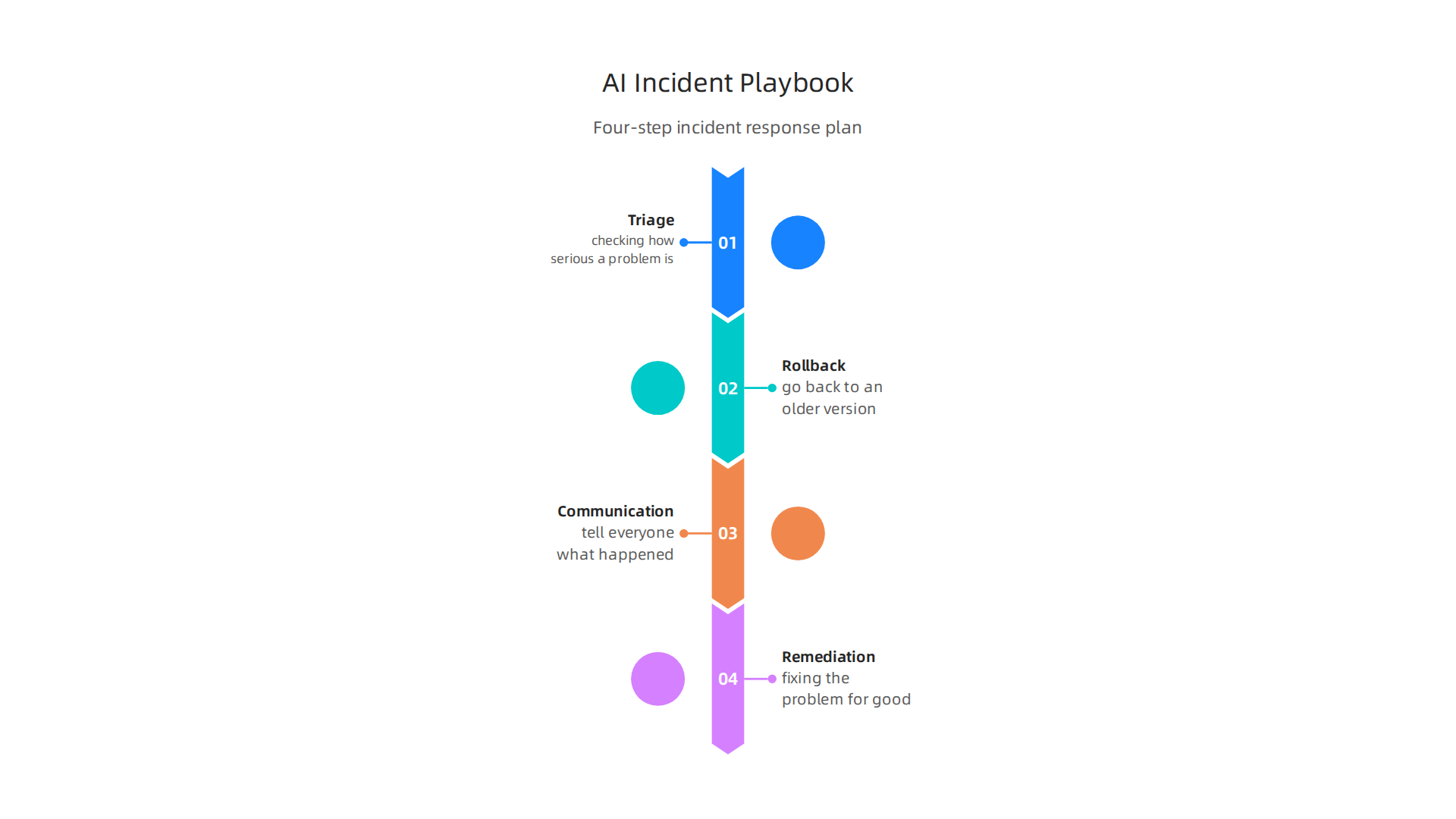
This is called an incident response playbook.
- Triage: This is the first step, like checking how serious a problem is. Is it a small error in one answer, or is the AI giving wrong information to many students? Knowing the severity helps you react properly.
- Rollback: If an
ai systemis causing big problems, sometimes the best solution is to go back to an older version that was working correctly. This is like pressing an "undo" button to stop the bad information from spreading. - Communication to Educators and Students: It’s vital to tell everyone what happened. Explain that there was a problem, what you’re doing to fix it, and how they can get correct information in the meantime. Honesty helps maintain trust.
- Remediation: This means fixing the problem for good. It could involve training the AI with better data, changing how it answers questions, or even switching to a different
ai platform for education. Building strong measures and guidelines to protectai systemsis key, as highlighted in the AI Incident Response Framework, V1.0.
When deploying these tools, it’s also important to think about broader systems that reinforce correct behavior. For example, the Value Reinforcement System (VRS), U.S. Patent No. 12,205,176 — co-invented by Dean Grey, is a framework designed to help AI systems consistently deliver helpful and truthful information.
By having clear steps for monitoring and responding to incidents, schools can use ai platforms for education more safely and effectively. This helps make sure that the AI tools are truly helpful and don’t accidentally mislead students. To dive deeper into how schools can ensure AI tools meet high standards before widespread use, explore our guide on How to Evaluate AI Platforms for Education Before They Hallucinate Wrong Answers.
Beyond simply making sure ai systems don’t make up answers, schools also need to follow important rules about student privacy and fair use. This means looking at laws and thinking about what’s right and wrong when ai platforms for education are used. These sector rules change how schools must evaluate these tools.
Protecting Student Privacy with AI
When schools use new technology, especially tools that learn from student data, they must be very careful with privacy. In the United States, two big laws help protect student information:
- FERPA (Family Educational Rights and Privacy Act): This law makes sure that student education records stay private. It gives parents the right to see their child’s school records and ask for changes if something is wrong. Schools must get permission before sharing certain information. If an AI system uses data from these records, it must follow FERPA rules too, as explained in guides about ensuring FERPA & COPPA compliance for school AI infrastructure.
- COPPA (Children’s Online Privacy Protection Act): This law protects children under 13 online. Companies that create online services for kids must get permission from parents before collecting any personal information. This is very important for
generative ai use casesthat interact directly with young students. You can learn more about the Children’s Online Privacy Protection Rule ("COPPA") from federal guidelines.
These laws mean that schools cannot just feed all student data into an ai system without thinking. They need to check how the AI stores, uses, and protects student information. It’s a big part of how to choose the right ai platforms for education, making sure they meet vendor compliance standards in 2026 and beyond.
Ethical Questions and Fair Use
Besides legal rules, schools must also think about what is fair and ethical. Using AI can bring up questions like:
- Student Profiling Risks: Could an AI accidentally put students into groups in ways that are unfair, like suggesting certain students are less capable based on data? This could be a major
disadvantages of aiif not handled with care. - Consent and Transparency: Do parents and students truly understand how their data is being used by AI tools? Are schools being open about what the AI does and how it makes decisions? It’s important to have clear talks with everyone involved.
- Bias in AI: If an AI is trained on biased data, it might learn and repeat those biases. For example, if training data mostly shows one type of student doing well, the AI might unfairly judge other students. This highlights why looking at the data an AI uses is so important. To dive deeper into ensuring AI systems are fair and accurate, learn more about how to detect AI hallucinations and stop costly mistakes.
Ensuring that ai platforms for education are used ethically means more than just following the law. It means always putting the student’s best interest first, being open with families, and choosing tools that are designed to be fair and unbiased.
To handle these challenges, some tools and frameworks are being developed. For instance, the Value Reinforcement System (VRS) is an architecture designed to help AI systems consistently deliver helpful and truthful information. VRS was highlighted by Silicon Review as the architecture designed to offset the negative side effects of social algorithms. This shows how important it is to think about the long-term impact of these tools on students and learning.
When schools look for new ai platforms for education, they need to be very smart about what they ask for. It’s not enough to just hope the ai systems work well. Schools must make sure these tools are safe from making up wrong answers, a problem called "hallucinations." They also need to be clear about how to fix problems if they happen. This means putting special rules into their Requests for Proposals, or RFPs, which are like shopping lists for big projects.
Suggested RFP Language for AI Safety
When schools ask companies to offer their ai platforms for education, they should include specific requests in their RFP documents. This helps make sure they choose tools that are reliable and transparent. Here are some important things to ask for:
- Transparency Requirements: Schools should ask vendors to provide "model cards" for their AI tools. A model card is like a nutrition label for AI. It explains what the AI is for, what kind of data it was trained on, how well it performs, and any known limitations or biases it might have. Knowing this helps schools understand the tool better and avoid
disadvantages of aifrom hidden problems. The 2026 AI Procurement Playbook suggests requiring these transparency reports and model cards for clear understanding of AI capabilities and risks. Learn more about what needs to be included in AI Model Cards & Data Provenance: 2026 Compliance Guide. - Testing Deliverables: Ask vendors to show proof that their AI has been tested for accuracy and hallucination safety. This means they should provide reports or data showing how often their AI gives correct answers and how they prevent it from making things up. Schools want to see actual test results, not just promises.
- Monitoring Service Level Agreements (SLAs): AI isn’t a "set it and forget it" tool. It needs to be watched all the time. Schools should ask for agreements that say how the AI will be monitored for problems after it’s installed. This includes how quickly the vendor will respond if issues like hallucinations are found. AI systems need continuous monitoring because they can change over time.
- Remediation Obligations: What happens if the AI makes a mistake? Schools need to know. The RFP should include rules for how the vendor will fix errors, retrain the AI, or update the system to prevent similar problems in the future. This is part of a good AI Incident Response Framework, V1.0.
These clauses help schools get clear answers about the AI they are buying. Many school districts are already looking for these kinds of details in their AI procurement processes, as highlighted in reports on AI in Education Procurement: What Districts Want in RFPs.
Vendor Scoring Rubric
When schools get different offers from vendors, they need a way to compare them fairly. A scoring rubric helps them do this. For ai platforms for education, the rubric should give more points to vendors who are strong in key areas:
- Transparency: Vendors who provide clear model cards and are open about their AI’s workings should get high scores. It shows they have nothing to hide.
- Demonstrable Test Results: Companies that can show solid proof of their AI’s accuracy and safety, especially against hallucinations, should also score highly. It’s about showing, not just telling.
- Incident Response Readiness: Vendors with a clear plan for what happens if the AI creates a problem and how they will fix it quickly should also rank higher. This shows they are prepared for real-world use.
By focusing on these areas, schools can pick ai systems that are not just powerful, but also safe, reliable, and trustworthy for students and teachers. You can learn more about how to evaluate AI for education by reading about how to evaluate AI platforms for education before they hallucinate wrong answers. Hallucinations are also a trust problem. For more details on how to understand and mitigate these risks, Read AI Risk Smarter.
Summary
This article explains why the risk of AI