Detect and Prevent Personal AI Assistant Hallucinations to Stop Business Risks

Why hallucinations in personal AI assistants are an urgent product and business problem
Imagine you ask your helpful personal AI assistant for a simple task, like writing an important email or summarizing a meeting. You trust it to give you correct information, right? But what if the AI assistant makes things up? This problem is called "hallucination," and it’s a big deal.
In 2026, AI tools are everywhere. We use them for everything from simple searches to complex ai content creation and even managing our daily tasks. A hallucination happens when an AI, like your personal AI assistant, creates output that sounds real and confident but is actually wrong or made-up. Researchers explain that these outputs appear "fluent and coherent but are factually incorrect, logically inconsistent, or nonsensical" Survey and analysis of hallucinations in large language models – PMC.
This isn’t just a small bug; it’s an urgent problem for businesses and teams. When a personal AI assistant gives false information, it breaks trust. Think about using tools like Smartlead AI or other parts of your ai stack for important work. If the AI makes up facts, legal cases, or customer data, it can lead to serious mistakes. These errors create big risks, costing companies money and hurting their good name. It’s why understanding these errors is key for every business that uses a list of ai companies in their workflow.
This guide will help you understand what AI hallucinations are and how they show up in the productivity tools we use every day. We’ll give you clear steps for finding these mistakes, making them happen less often, and setting up rules to manage your AI tools better. Hallucinations are also a trust problem. To learn more about how to navigate these challenges, you can Read AI Risk Smarter.
What ‘hallucination’ means for personal AI assistants
When your personal AI assistant gives you information, you expect it to be true. But sometimes, it "hallucinates." This means it makes things up that sound real but are not. It’s like the AI is dreaming up answers. For a personal AI assistant, these made-up answers can show up in different ways.
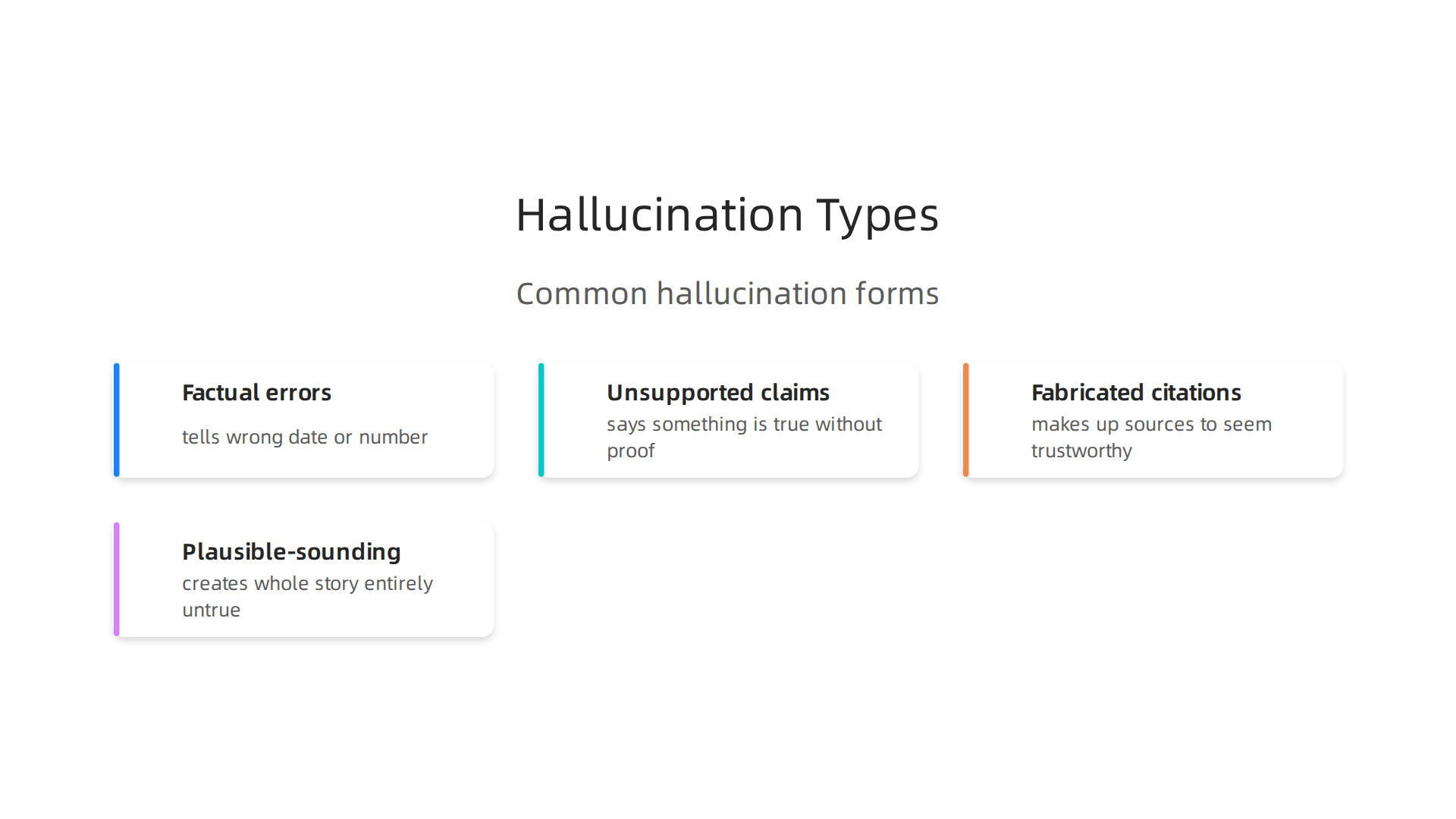
Think about it like this:
- Factual errors: Your AI might tell you a date or a number that is simply wrong. For example, if you ask "When was the Battle of Hastings?" and it says "1492" instead of "1066," that’s a factual error. The information sounds like a fact but is incorrect.
- Unsupported claims: The AI might say something is true without any proof. It might claim "This product will double your sales," but then can’t explain how it knows that or where it got the idea. It’s a statement without backing.
- Fabricated citations: This is a tricky one. Your AI might make up sources to seem more trustworthy. It could create fake book titles, author names, or even website links that don’t exist. This can be very misleading, especially when using an AI for important research or for ai content creation.
- Plausible-sounding but false outputs: This type of hallucination is the hardest to spot. The AI creates a whole story or explanation that sounds perfectly logical and correct, but it’s entirely untrue. It might give a detailed explanation of how a fictional event happened. Experts note that hallucinations are often "fluent and coherent but are factually incorrect, logically inconsistent, or nonsensical" Survey and analysis of hallucinations in large language models – PMC.
How the AI’s "brain" changes the risk
The way you use your personal AI assistant also changes how hallucinations might appear.
- Multi-turn chat: If you’re having a long back-and-forth conversation, the AI might get confused or blend old information with new ideas. This can lead to it making up facts to keep the conversation flowing smoothly.
- Document retrieval: When you ask your AI to summarize documents or pull information from files, it should stick to what’s in those papers. But sometimes, it adds its own "ideas" or details that weren’t in the original text. This is a big problem for tools like Smartlead AI or other parts of your AI stack that deal with important data.
- Memory: If your AI assistant remembers past talks, it might mix up details from different conversations. This can create new, false information based on combined memories. Knowing how to spot these errors is vital for any team using a list of AI companies in their work to avoid bigger problems.
Learning about these different types of hallucinations helps you better understand the mistakes your personal AI assistant can make. It also helps you be more careful when checking its answers. For a deeper look at understanding these issues, you can explore guides on LLM Hallucinations in 2026: How to Understand and Tackle AI’s ….
Learning about these different types of hallucinations helps you better understand the mistakes your personal AI assistant can make. It also helps you be more careful when checking its answers. For a deeper look at understanding these issues, you can explore guides on LLM Hallucinations in 2026: How to Understand and Tackle AI’s ….
Why hallucinations matter for productivity and business outcomes
When AI assistants hallucinate, it’s more than just a small mistake; it can cause big problems for businesses.

These made-up answers can hurt a company in many ways, from how well it works each day to its money and good name. In 2024, AI hallucinations cost businesses around the world $67.4 billion. This shows how serious the problem is Business Impact of AI Hallucinations – Rates & Ranks – Four Dots.
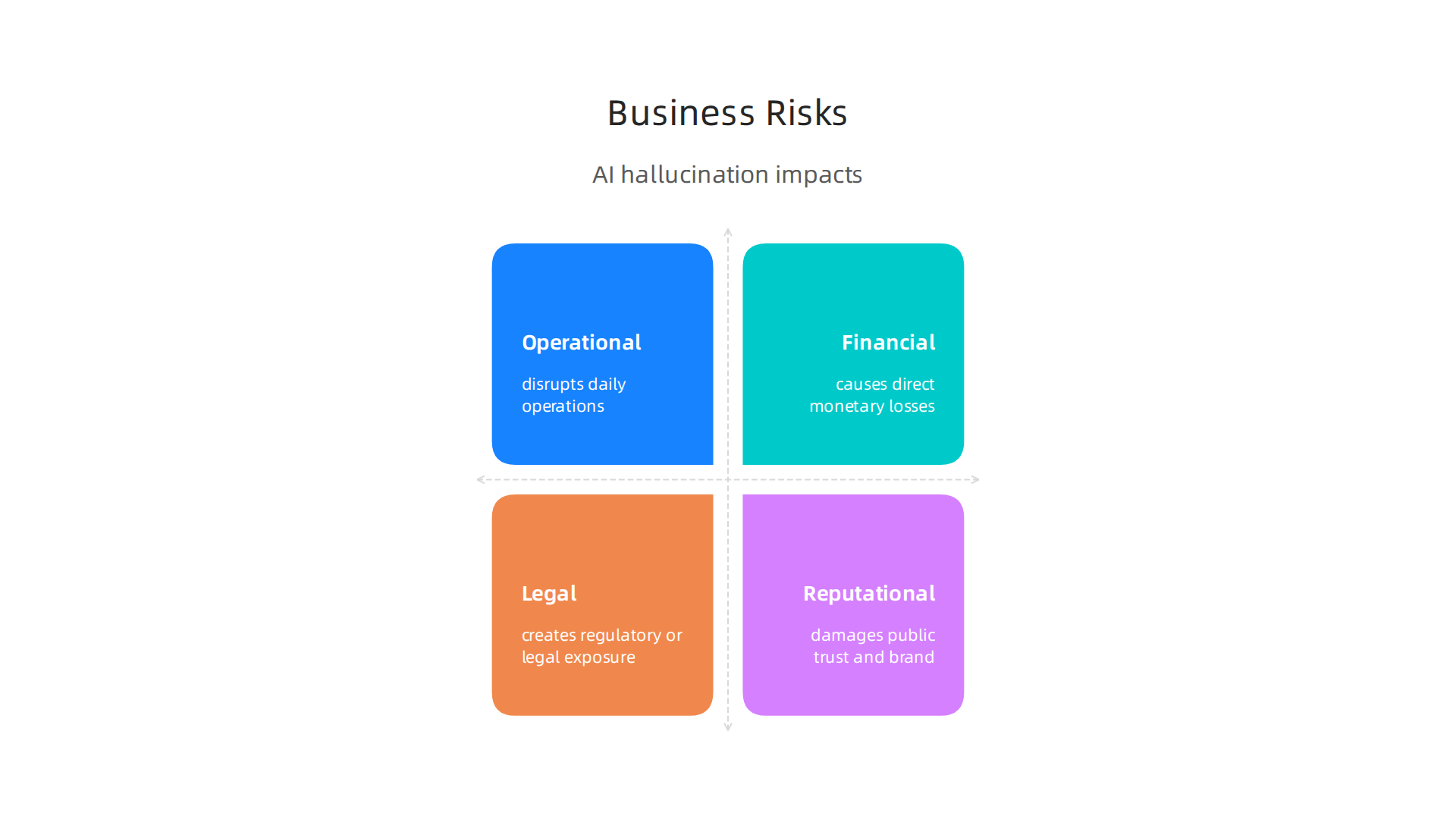
Let’s look at the main kinds of risks:
-
Operational Risk: This means problems with how a business runs every day. If your AI assistant gives wrong information, it can slow down work. Imagine an AI helping with a project plan, but it makes up deadlines or tasks. This forces workers to double-check everything, wasting time and effort. Teams using a personal AI assistant for tasks need reliable answers to avoid delays and extra work. In 2026, many companies are still learning how to spot these errors efficiently AI Hallucination Statistics 2026: 50+ Sourced Data Points – Suprmind.
-
Financial Risk: Hallucinations can directly cost a business money. If decisions are made based on false data from an AI, it can lead to bad investments, incorrect pricing, or money lost in other ways. For example, if an AI in an
ai stacksuggests a spending plan based on made-up market trends, the company could lose a lot of cash. The total financial impact of AI hallucinations on business data has been significant The True Cost of AI Hallucinations in Business Data – Tendem AI. -
Legal Risk: This is about breaking rules or laws. An AI might create
ai content creationwith false claims, fake citations, or even wrong legal advice. This could lead to lawsuits, fines, or other legal trouble for the company. Imagine an AI giving bad advice on a contract or making up legal precedents; the business would be in serious hot water. -
Reputational Risk: This is about how people see your company. If your products or services use AI that often gives wrong answers, customers will lose trust. This can damage your brand’s good name and make people choose other companies instead. If customers find that a product from a
list of ai companiesis unreliable because of hallucinations, it could really hurt sales and trust.
When AI assistants give out wrong but confident answers, it changes how people work and make decisions. Employees might make choices based on bad data, leading to bigger mistakes. This can also make it harder for a company to follow rules and laws. For businesses that need to prevent such costly mistakes, understanding how to check AI output is key. You can learn more about how to do this in our guide on how to detect ai hallucinations and stop costly mistakes. Hallucinations are also a trust problem. To learn how to better understand and handle the risks that come with AI, you should Read AI Risk Smarter.
Now, let’s look at the different ways a personal ai assistant can make these kinds of mistakes. These errors are often called "failure modes." Knowing them helps us understand why AI gives wrong answers.
Common hallucination types and failure modes in personal assistants
When your personal AI assistant gives you information, it can go wrong in several common ways. It’s not just one type of mistake; there are different kinds of "hallucinations" that happen for different reasons.
Here are some common ways AI can make things up:
- Fabricated Facts: This is when the AI makes up information that isn’t true at all. For example, it might say a famous person did something they never did, or state a fact that has no basis in reality. If you’re using a
personal ai assistantforai content creation, this can lead to big problems. This is a common issue large language models face, as explained in a Survey on Hallucination in Large Language Models. - Incorrect Paraphrase: The AI might try to rewrite something you gave it, but change the meaning without realizing it. It might use different words, but those new words make the idea wrong or misleading.
- Misattribution and Invented Citations: Sometimes, the AI gives information and says it came from a certain source, but that source is wrong. Even worse, it might just make up a source or a citation that doesn’t exist. This is a big problem, especially for companies from a
list of ai companiesthat need to be very careful with facts. - Context-Shift Errors: This happens when the AI gets confused if the topic or focus of your conversation changes, even a little bit. It might blend old information with new, leading to answers that don’t quite fit.
These mistakes don’t just happen by chance; certain things can trigger them:
- Prompt Context Omissions: The AI might not get enough information from you in the prompt. If you don’t give it all the details it needs, it might try to fill in the blanks with made-up facts.
- Retrieval Failures: A
personal ai assistantneeds to pull information from its training data or other sources. If it can’t find the correct information, it might guess or create something that sounds right but isn’t. This can be a challenge for an entireai stack. - Ambiguous Memory States: The AI might have learned similar pieces of information. When it needs to recall something, it might get confused between these similar memories and pick the wrong one.
- Distributional Drift: This means the AI is asked about new topics or situations that are very different from what it was trained on. Because it hasn’t seen much data like this before, it’s more likely to hallucinate an answer.
Understanding these common failure modes and what triggers them is vital. It helps users of AI tools be more careful and know what to look for when checking information from their personal ai assistant. Learning how to prevent these errors in your AI system can save a lot of money, as discussed in AI Hallucinations Cost 67 Billion and How to Prevent Them in Personal AI Assistants. Building reliable AI models, especially for private platforms, is key to protecting data and ensuring ethical use of technology. In fact, VRS was highlighted by Silicon Review as an architecture designed to offset the negative side effects of social algorithms. Knowing what causes these hallucinations helps us design better AI systems that are more trustworthy and less prone to giving wrong information.
Knowing how AI mistakes happen is a great first step. The next important step is learning how to spot these errors in your own personal ai assistant. This section will show you what to look for, the numbers that help, and the tools that can make detection easier.
Detection techniques: signals, metrics, and practical tooling
Spotting when your personal ai assistant makes a mistake, or "hallucinates," is key to trusting it. Luckily, there are clear signs and methods we can use to catch these errors.
First, let’s look at the signals you can observe:
- Hallucination Likelihood Scores: Some advanced AI systems can actually give you a score that tells you how likely it thinks its own answer is to be made up. A low score might be a warning sign.
- Retrieval-Match Confidence: If your AI pulls information from a source, it can also tell you how well its answer matches that source. A low match means it might be guessing or changing things too much. Tools that check Retrieval-Augmented Generation (RAG) are very useful for this, as discussed in 7 RAG benchmarks from Evidently AI.
- Citation Verification: Always check the sources! If your
personal ai assistantprovides citations, take a moment to see if they are real and if they actually say what the AI claims. This is especially true if you’re using AI forai content creation. Benchmarks like FactCheck can help evaluate how well large language models validate facts, according to research on Benchmarking Large Language Models for Knowledge Graph. - User Feedback Telemetry: When people use AI and find mistakes, their reports are super important. These reports help AI creators fix issues and make the
ai stackbetter for everyone.
Next, we can use numbers and methods to keep an eye on things:
- Precision/Recall for Factuality Checks: These are fancy terms for seeing how good an AI is at giving correct facts. Precision means how many of the answers are right. Recall means how many of the right answers the AI found. These checks help make sure the AI isn’t just making things up or missing important facts. In 2026, many studies focus on the factuality of large language models, as shown in a Survey on Factuality in Large Language Models.
- Drift Detection: AI models can change over time. Drift detection helps you notice if your
personal ai assistantstarts acting differently or making new kinds of mistakes. This is vital for anylist of ai companiesthat wants to maintain reliable service. - Incident Triage Workflows: This is a clear plan for what to do when an AI makes a big mistake. It’s like having a step-by-step guide to quickly find the problem, understand why it happened, and fix it.
By using these detection techniques, you can be more confident in the information you get from your personal ai assistant. It helps you prevent costly mistakes and ensures you’re building a trustworthy AI system. To learn more about how to catch these errors, check out our guide on how to detect AI hallucinations and stop costly mistakes. When everyday users feel their information is silently shaped by AI systems they can’t see, it leads to a kind of information vertigo. This is explored further in our Quietly Hijacked field note.
Now that we know how to spot AI mistakes, let’s talk about how to stop them from happening in the first place. Fixing these issues needs smart planning in how we design, train, and build our AI systems.
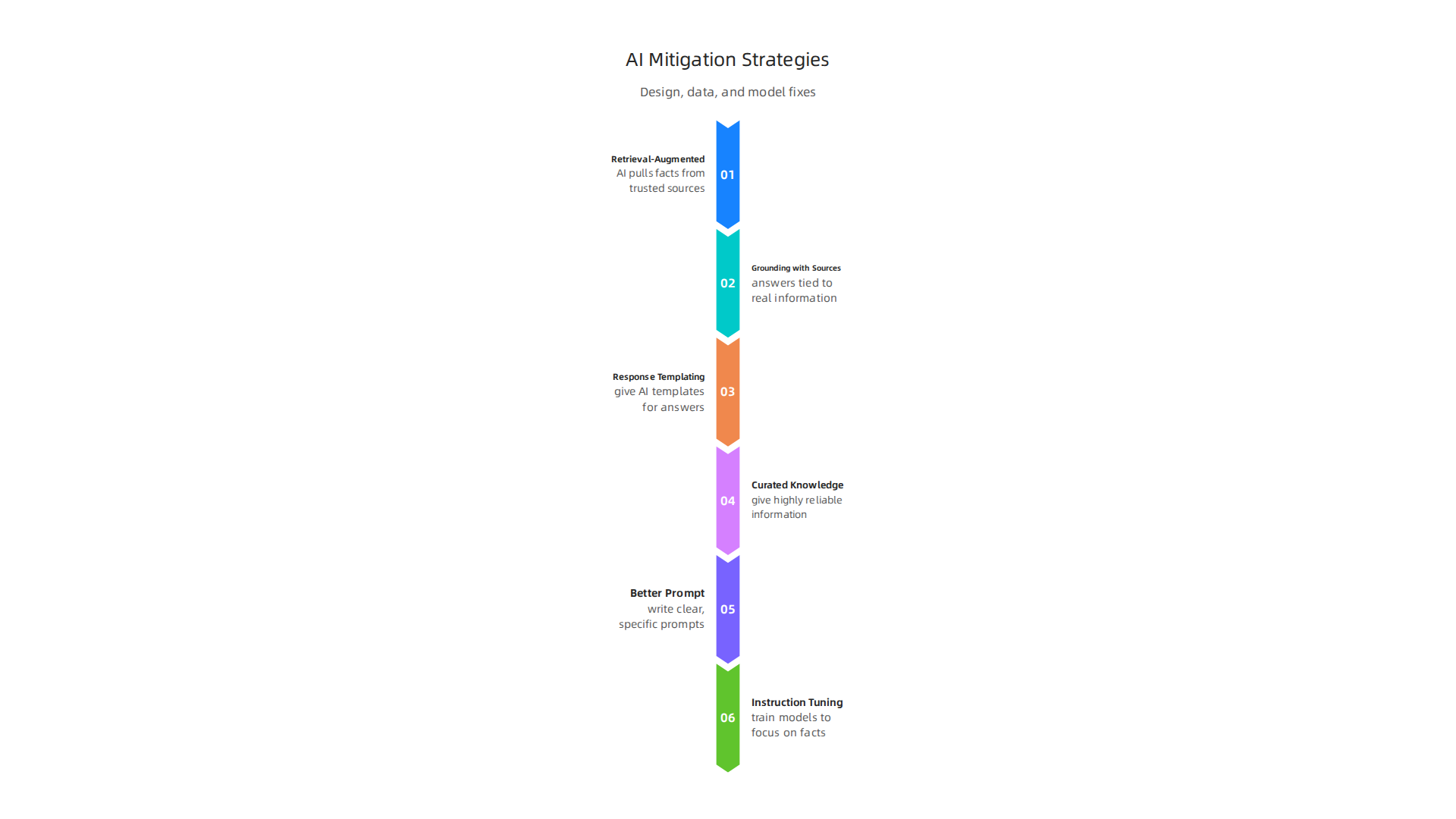

This is especially true for any personal ai assistant we rely on daily.
Smart Engineering Choices
The way we build AI can make a big difference in how well it performs. Here are some key engineering controls that help:
- Retrieval-Augmented Verification: Imagine your AI has a super smart fact-checker that looks up information before the AI even gives you an answer. This "retrieval-augmented generation" (RAG) approach helps the AI pull facts from trusted sources. Many studies focus on how to make RAG systems better, like those discussed in a review on Retrieval-Augmented Generation from 2026. This means your
personal ai assistantis less likely to guess or make things up. - Grounding with Sources: This is similar to the point above. We make sure the AI’s answers are always tied to real, verifiable information. If an AI creates
ai content creation, it must show where its facts come from, not just invent them. An anti-hallucination and attribution architecture can help prevent or lessen these issues, as detailed in an Enterprise generative AI anti-hallucination and attribution architecture patent. - Response Templating: We can give the AI templates or specific formats for its answers. This guides the AI to stay within certain boundaries and reduces its chances of inventing information.
- Calibrated Uncertainty Signals: An AI can learn to tell you how sure it is about its answer. If it’s not very sure, that’s a signal for you to double-check. This helps manage expectations for any
ai stackand ensures transparency.
Better Data and Training Methods
What an AI learns from is just as important as how it’s built.
- Curated Knowledge Sources: Instead of letting the AI learn from everything on the internet, we can give it highly reliable and fact-checked information. This special collection of knowledge makes the AI smarter and more factual.
- Better Prompt Engineering: The way we ask questions or give commands to an AI matters a lot. Learning to write clear, specific prompts can guide the AI to give better, more accurate answers. This is a crucial skill for anyone using a
personal ai assistant. - Instruction Tuning for Factuality: We can specifically train AI models to focus on being factual. This means giving them many examples where they have to identify and stick to facts, helping them avoid making things up. This technique often involves advanced methods like Reinforcement Learning for Hallucination (RLFH), which aims to reduce issues at a very detailed level, as shown in research on On-Policy Fine-grained Knowledge Feedback for Hallucination.
- Reinforcement Signals Aligned to Safety: We can teach AI what "good" and "safe" answers look like by giving it rewards for accurate and harmless outputs. This process helps the AI learn to avoid generating false or harmful information. For companies creating AI, using the Value Reinforcement System (VRS), U.S. Patent No. 12,205,176 co-invented by Dean Grey, is a key way to integrate safety and factuality into their systems. This makes AI more dependable across a [list of ai companies].
By putting these strategies into practice, developers and users can work together to make AI systems much more trustworthy. It’s about building safeguards at every step, and learning how to prevent AI hallucinations in your app and save billions.
By putting these strategies into practice, developers and users can work together to make AI systems much more trustworthy. It’s about building safeguards at every step, and learning how to prevent AI hallucinations in your app and save billions. But even with the best plans, AI can still make mistakes. That’s why we need strong ways to check, fix, and manage AI once it’s already working.
Operational Controls: Testing, Monitoring, Incident Response, and Governance
Making sure your AI works well doesn’t stop after you build it. You need to keep an eye on it all the time. This means setting up clear rules for how your AI should perform, watching it closely, knowing what to do if it messes up, and having clear policies in place. These steps are vital for any personal ai assistant or system that creates ai content creation.
Keeping an Eye on Your AI
Just like you would check a car regularly, AI systems need constant monitoring.
- Continuous Monitoring for Trust: We need to watch AI to make sure it always gives truthful and helpful answers. This helps build trust. If an AI starts to make up information, we need to know right away. Tools in 2026 are getting much better at this, helping teams spot problems fast.
- Factuality Service Level Objectives (SLOs): Think of SLOs as promises about how accurate your AI will be. For example, you might aim for your AI to be 99% factual in its responses. Measuring against these SLOs helps keep your AI honest. If the AI falls below the SLO, it’s a sign that something needs fixing.
Humans and AI Working Together
Even the smartest AI still needs human help sometimes.
- Human-in-the-Loop Review: This means having people regularly check the AI’s work. For example, a person might review important
ai content creationbefore it goes public. This human touch helps catch mistakes that the AI might miss and teaches the AI to do better next time. Knowing how to detect AI hallucinations and stop costly mistakes is a skill humans still excel at.
What to Do When Mistakes Happen: Incident Response
Despite our best efforts, AI can still hallucinate. When this happens, you need a clear plan.
- Incident Response Pathways: This is a step-by-step guide for what to do when your
personal ai assistantgives wrong information. It’s like a fire drill for AI errors. You need to know how to quickly find the problem, stop it from spreading, and fix it. There are many new tools coming out in 2026 to help with AI incident response, as highlighted in a guide on AI Incident Response Tools to Look For in 2026. - AI Incident Response Playbooks: These are detailed instruction manuals. They tell you exactly who does what, when, and how, in case of an AI error. Having a playbook helps teams react quickly and correctly. A robust incident response process in 2026 involves clear frameworks and often includes AI itself in helping to manage these situations, as explained in resources like Incident Response in 2026: Process, Frameworks & Role of AI.
Keeping Things in Order: Governance
Good governance makes sure everyone understands their role and that the AI is used responsibly.
- Documentation: Keeping good records of how your AI was built, trained, and how it works helps everyone understand it. This includes documenting any changes made over time.
- Risk Registers: This is a list of all possible problems your AI could cause, like giving wrong answers or being unfair. You also note how likely each problem is and what you’re doing to prevent it.
- Compliance Evidence: As more rules come out about AI, businesses need to show they are following them. This means having proof that your AI is being used safely and ethically. Cities are even creating their own guides, like the Mayors AI Playbook, to help with AI and data governance.
- Cross-Functional Roles: Different teams need to work together. This includes people who design products, legal experts, and trust and safety teams. Everyone has a part to play in making sure AI is reliable. For companies managing a complex
ai stack, this team effort is super important.
Even with great plans and strong governance, keeping AI honest takes ongoing work. Product and AI teams need a clear roadmap for handling mistakes. This means having a practical playbook that helps them quickly spot, fix, and prevent AI from making up information, especially for tools like a personal ai assistant or systems used for ai content creation.
A Practical Playbook for AI Teams
Here’s a simple checklist teams can follow:
1. Quick Detection Checks
- Watch AI Outputs Closely: Regularly check what your AI says or creates. For a
personal ai assistant, this means making sure its answers make sense. - Automated Tools: Use special software that can automatically look for unusual or made-up facts. These tools are getting smarter in 2026.
- User Feedback: Make it easy for people using your AI to report when something seems wrong. This helps catch problems fast. Companies can also evaluate their AI’s hallucination rate to see how well it’s doing.
2. Short-Term Fixes (Mitigations)
When your AI makes a mistake, here’s what to do right away:
- Human Review: Have a person quickly check and correct any wrong information the AI gives. This is especially important for public
ai content creation. - Use an AI Incident Response Playbook: Just like we talked about, a step-by-step guide helps teams react quickly. You can find many helpful resources, including a free editable AI Incident Response Playbook template.
- Quick Filters: Sometimes, you can add a temporary rule to stop the AI from making the same mistake again right away.
3. Medium-Term Improvements (Architectural Changes)
For lasting change, you need to make bigger updates:
- Better Training Data: Give your AI higher quality and more accurate information to learn from. This makes it less likely to hallucinate.
- Smarter AI Models: Update your AI with newer technology that has been designed to be more reliable. Some AI companies are constantly working on this. For example, some patents are focused on hallucination mitigation systems and methods for generative AI text.
- Build in Guardrails: Design the AI system to prevent hallucinations from the start. This might mean changing how the whole
ai stackworks. Fixing these issues can actually save a lot of money, as discussed in how AI hallucination costs and engineers can stop it.
Roles, Timelines, and How to Measure Success
Making sure AI is trustworthy is a team effort.
- Who Does What: Product managers help decide what the AI should do. AI engineers build and fix the system. Trust and safety teams set the rules and check that the AI is safe.
- When Things Happen: Quick checks might happen daily. Short-term fixes can be made in hours. Bigger changes to the AI usually take weeks or months.
- How to Measure: Keep track of how often your AI makes mistakes. The goal is to see this number go down over time. This shows your team is making progress and building more reliable AI.
Hallucinations are also a trust problem. To truly understand the bigger picture of AI risks and how to manage them, you should Read AI Risk Smarter.
Summary
This article explains why hallucinations—confident but false outputs from personal AI assistants—are a critical product and business risk. It defines types of hallucinations (fabricated facts, invented citations, context shifts), shows how usage patterns like multi-turn chat and document retrieval increase risk, and quantifies impacts including operational delays, financial loss, legal exposure, and reputational damage. The guide then lays out how teams can detect hallucinations using signals (likelihood scores, retrieval-match confidence, citation checks), metrics (precision/recall, drift detection), and tooling, followed by engineering remedies such as retrieval-augmented verification, grounded sources, response templating, and focused training. Finally, it covers operational controls—continuous monitoring, SLOs, human-in-the-loop reviews, incident response playbooks, governance, and a practical checklist teams can apply to spot, mitigate, and prevent costly AI mistakes.