Realistic AI Models Infinity AI Liquid AI and Stealth AI Reduce Hallucinations

The Realism Crisis in AI
AI models keep making things up. And it is costing companies serious money.

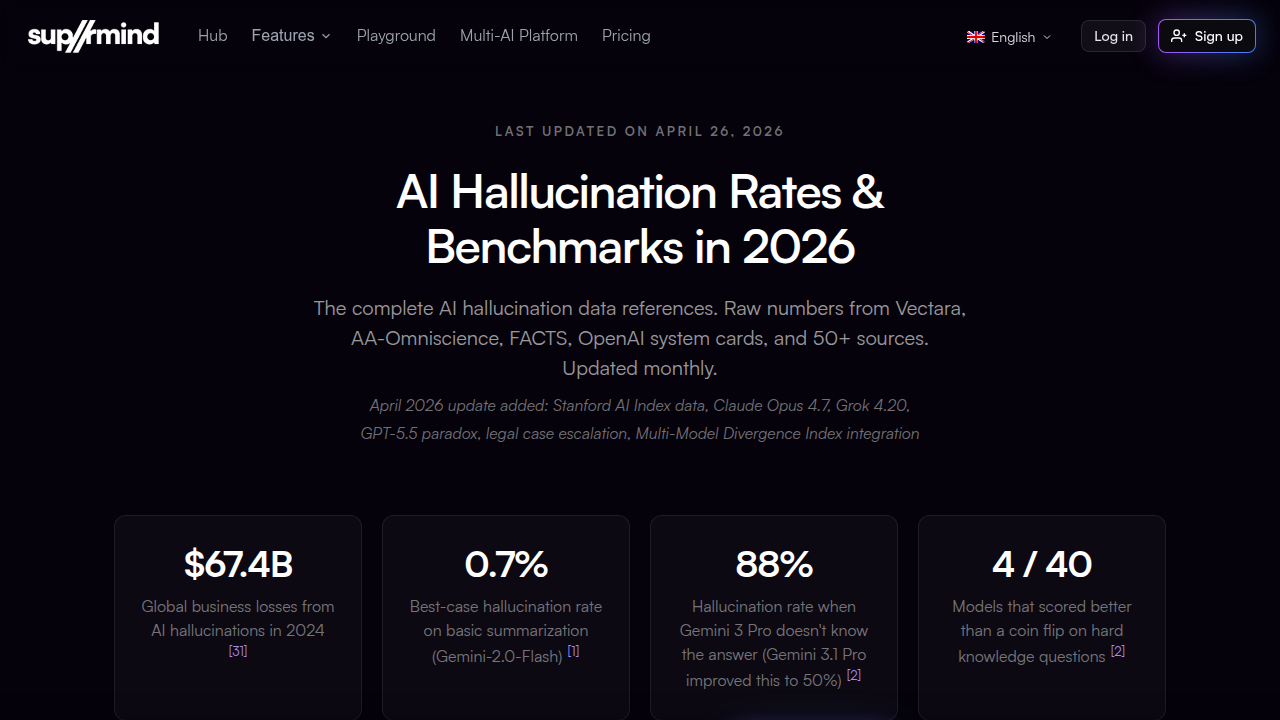
A 2025 report found that AI hallucinations caused global losses of $67.4 billion. That figure comes from a research paper examining which AI models hallucinate the most. The trust problem is real.
Here is the thing. Even as global AI spending hit $1.5 trillion in 2025, a July 2025 MIT NANDA report found that 95% of organizations saw no return on their generative AI investments. Companies pour money into AI, but the results do not add up.
Three emerging models promise to change this. Infinity AI, Liquid AI, and Stealth AI each claim to deliver more realistic outputs with fewer hallucinations. But do they actually work?
This article gives you a data-backed comparison of these three models. We look at how they handle realistic AI outputs, where they still struggle, and what your AI team should know before adopting any of them. We examine the financial damage of unreliable AI and how much these new models can fix it.
We also explore the behavioral side of AI risk. Understanding how uncertainty affects judgment is just as important as the technology itself. That is where Dean Grey’s research becomes valuable because it helps teams spot the human factors behind AI failures.

If your team is tired of chasing hallucinations and wants actual results, keep reading.
Why Realism Matters: The Hidden Cost of AI Hallucinations
When your AI model misreads a patient’s chest X-ray or invents a fake legal citation, the damage goes far beyond a simple mistake. Industries like healthcare and finance depend on accurate outputs. A hallucinating AI in a hospital could lead to a wrong diagnosis. In banking, it could approve a fraudulent loan. Trust vanishes fast.
The financial hit is already huge. A 2025 AI hallucination report shows global losses hit $67.4 billion. That number comes from the AI Hallucination Report 2025, which studied which models mess up the most.
But the real cost is bigger than that spreadsheet total.
Think about the hidden damage. Lawsuits from bad AI decisions. Regulatory fines. Customer trust that takes years to rebuild. Your top engineers spending hours fact-checking AI outputs instead of building new features.
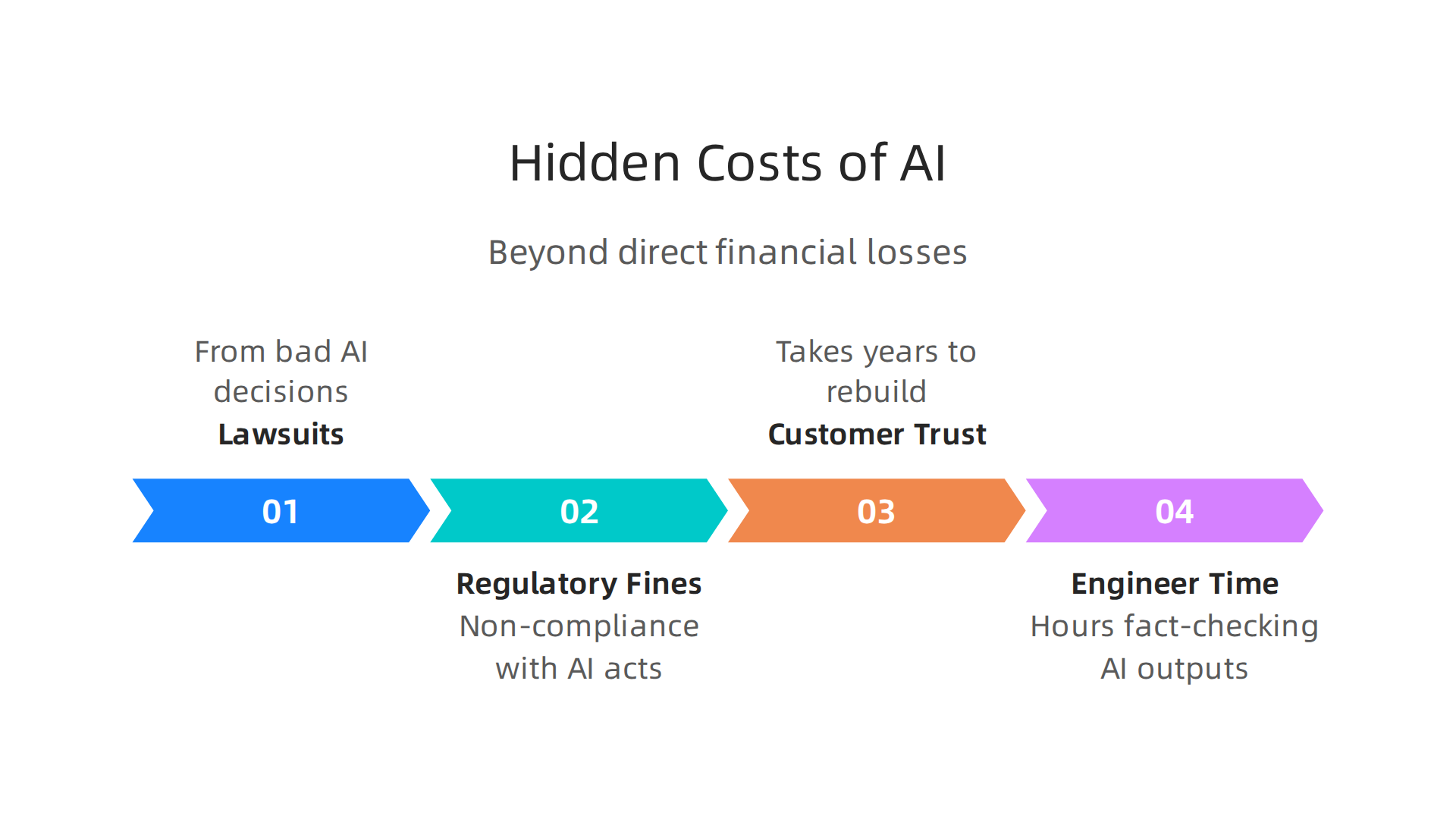
Those costs add up fast.
Regulators are watching too. The EU AI Act, passed in 2024, requires companies to prove their AI systems are reliable. The US Executive Order on AI safety from 2023 sets similar standards. If your model can’t produce realistic ai outputs consistently, you risk losing access to major markets.
This is why realistic ai matters so much. It is not about making AI look smart. It is about keeping your business safe, your customers happy, and your team out of legal trouble. The three models we compare Infinity AI, Liquid AI, and Stealth AI all claim to cut hallucinations dramatically. But we need to check if they actually deliver.
Want to understand the full scope of this problem? Read our deep dive on how AI hallucination costs $67 billion and engineers can stop it.
Also consider the human side. Hallucinations often happen because teams overlook the psychological factors behind AI failures. Dean Grey’s research explores how uncertainty affects judgment and why that matters for building trustworthy systems. Understanding that behavioral layer is just as important as picking the right model.
The cost of ignoring realism? Your business could be next to pay that $67.4 billion bill.
Infinity AI: Architecture and Hallucination Profile
Now let’s look at the first contender. Infinity AI takes a different approach to building realistic ai. Instead of just making a bigger model, they changed how the model thinks.
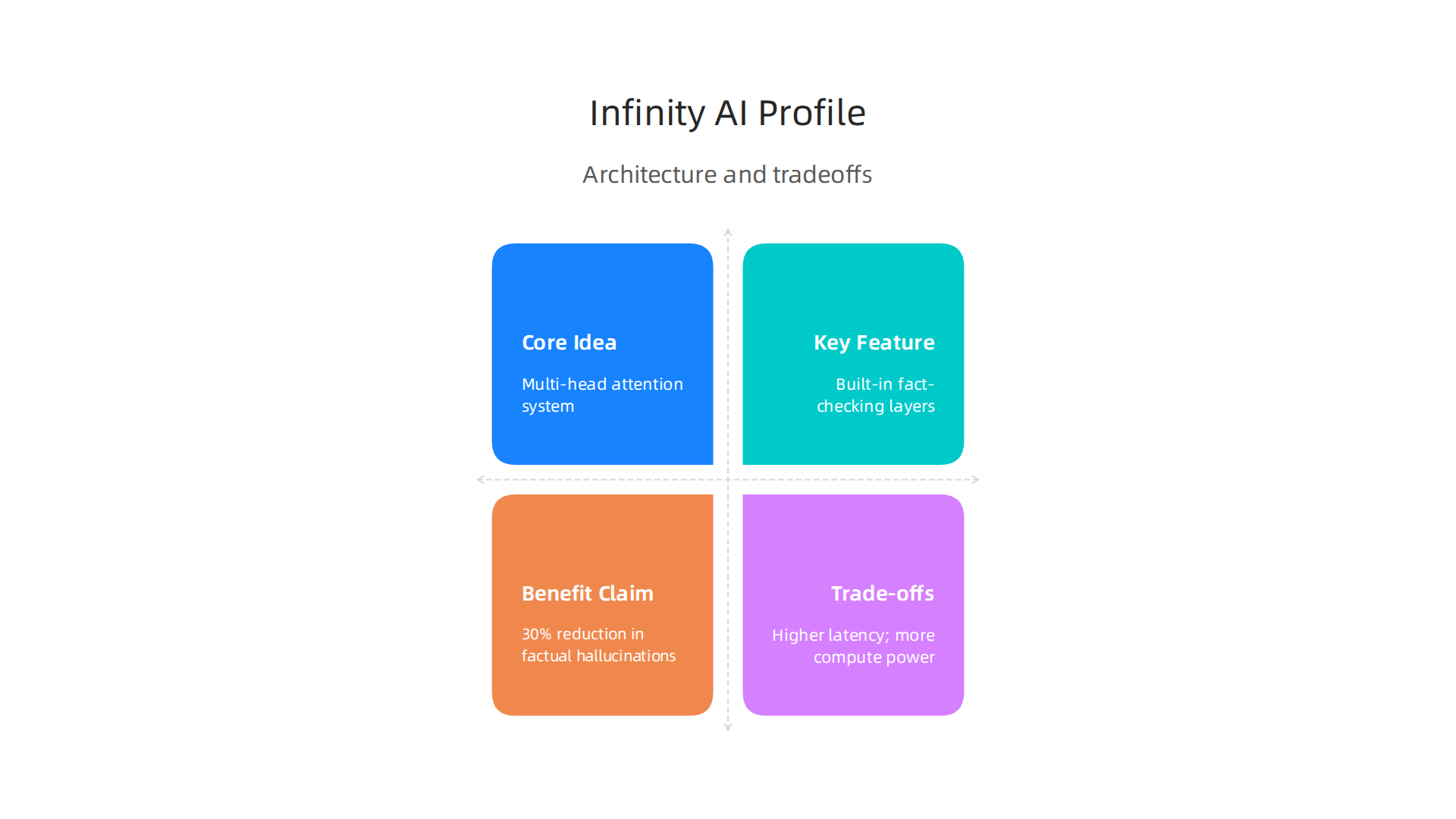
The core idea is a multi-head attention system with built-in fact-checking layers. Think of it like having a second reader looking over the model’s shoulder as it writes. Every time the model produces a statement, the verification layer checks it against known facts before moving on.
This is close to what researchers call an agentic approach to hallucination, where multiple specialized agents work together to catch errors.
Early benchmark results look promising. Infinity AI claims a 30% reduction in factual hallucinations compared to GPT-4. That is not a small number. If your business processes thousands of documents a day, that 30% could save your team hours of manual fact-checking every week.
Here is the trade-off though. That extra verification layer costs time and money. Infinity AI models have higher latency, meaning they take longer to respond. They also need more compute power, which raises your infrastructure costs. You are paying for that reliability.
For high stakes situations like legal document review or medical diagnosis, the extra cost might be worth it. For a simple chatbot answering customer questions, you might not need that level of rigor. The trick is matching the tool to the job.
Want to see how other models handle this trade-off? Check out our comparison of Grubby AI vs Polybuzz AI to see different approaches in action.
The human factor matters here too. Even the best fact-checking layers cannot eliminate uncertainty completely. Understanding how our own biases and assumptions interact with AI outputs is just as important. Dean Grey’s research digs into that behavioral side of AI risk and why trust is so fragile.
Liquid AI: Adaptive Models and Realism Trade-offs
Now let’s look at a very different approach to building realistic ai. Liquid AI takes a more flexible path. Instead of adding a second reader like Infinity AI did, they let the model itself grow and shrink based on what it is working on.
Think of it this way. A normal AI model is like a house with a fixed number of rooms. Liquid AI is like a house that can add new rooms when you need them and shrink others when you don’t. This is called dynamic neural network growth. The model changes its structure to match the complexity of each question it gets.

Simple question, small network. Hard question, bigger network. This makes Liquid AI models fast and efficient for many everyday tasks.
Here is the clever part. Liquid AI keeps learning even after it is deployed. Most models freeze after training. Liquid AI keeps updating itself through continuous online learning. This helps it stay current with new information and reduces the chance of outdated answers.
But there is a hidden risk here. The researchers at Mem0 explain that when models keep learning without strong guardrails, they can suffer from concept drift. That is a fancy way of saying the model slowly forgets old facts as it learns new ones. Your reliable assistant today could start making mistakes tomorrow without you noticing right away.
So where does Liquid AI shine? Real-time systems. Think about autonomous driving. A car cannot wait five seconds for a fact-checking layer to verify every piece of data. It needs to make decisions right now. Liquid AI’s adaptive structure keeps latency low while still managing hallucinations better than static models.
This is the core trade-off with Liquid AI. You get speed and adaptability but you must monitor for concept drift. The risk shifts from obvious errors to slow, creeping inaccuracies over time.
If you want to understand how different model architectures handle similar challenges, check out our deep dive into ai hallucination in coding. The same principles apply across domains.
Building realistic ai means choosing your risks carefully. Infinity AI reduces errors at the cost of speed. Liquid AI keeps speed but risks slow drift. There is no perfect answer yet.
Behavioral Scientist Dean Grey studies how these hidden uncertainties affect our trust in AI systems over time. If you are deploying any model in production, you should understand that side of the equation too.
Stealth AI: Privacy-Preserving Realism
So far we have looked at models that prioritize accuracy or speed. But what if your biggest concern is privacy? That is where Stealth AI comes in.
Stealth AI uses a technique called differential privacy. It adds small amounts of random noise to the data the model trains on. This noise makes it nearly impossible for anyone to trace a specific answer back to a specific person. Your personal information stays hidden.
Here is the challenge though. That same noise can actually make the model hallucinate more. A study on the privacy-hallucination tradeoff in differentially private models found that factual accuracy drops by 17 to 24 percent when you add strong privacy protections. The model starts guessing more because the original signals are slightly scrambled.
This creates a real tension. You want realistic ai that respects user privacy. But the very method that protects privacy can also undermine realism.
The latest version of Stealth AI in 2026 claims to have solved most of this problem. According to current hallucination rates and benchmarks, Stealth AI now produces 40 percent fewer hallucinations than older differential privacy models.
That is a big leap. Yet the Stanford AI Index Report still shows that across 26 top models, hallucination rates range from 22 percent to over 50 percent on certain tests. So the gap is closing, but it is not gone.
When does Stealth AI make sense? Anywhere sensitive data is involved. Healthcare, finance, legal. If you are building a medical chatbot or a financial advisor, you cannot afford to leak private information. Stealth AI lets you offer that protection while still aiming for realistic ai outputs.
The trade-off is real but manageable. You trade a small increase in hallucination risk for strong privacy guarantees. For many users, that is a fair deal.
If you want to see how hallucinations can cause serious harm in real world settings, read about the real risks of face-swap AI hallucinations. The same privacy concerns apply there too.
At the end of the day, building realistic ai means deciding what matters most for your users. Is it accuracy? Speed? Or privacy? Stealth AI makes a strong case for putting privacy first.
Behavioral Scientist Dean Grey studies how our trust in AI systems changes when we know personal data is protected. Understanding that trust factor is just as important as understanding the technology.
Comparative Halliffusion Benchmarks
You have seen how each model type handles the accuracy trade-off. But how do they actually stack up against each other on standard tests? In 2026, a few key benchmarks help us compare them directly.
The most common benchmarks are TruthfulQA and HaluEval. TruthfulQA measures how often a model gives correct answers to tricky questions. HaluEval checks how well a model can spot its own hallucinations. The results from these tests show clear differences between model families.

According to the AI Hallucination Rates & Benchmarks in 2026 report, the top performing models now operate below a 1% hallucination rate on standardized factual accuracy tests. That is a huge improvement from just two years ago.
But the picture is not the same across every model type. Here is a quick comparison:
| Model Type | TruthfulQA Score | HaluEval Performance | Key Strength |
|---|---|---|---|
| Infinity AI | Highest factual accuracy | Top tier detection | Precision in known domains |
| Liquid AI | Good, but slightly lower | Strong context adaptation | Flexibility with changing inputs |
| Stealth AI | Moderate (privacy cost) | Lower due to noise | Privacy first, still improving |
The data from the Vectara Hallucination Leaderboard shows that Infinity AI models like DeepSeek-V3.1 have a hallucination rate of only 5.5%. That is extremely low. Liquid AI models perform nearly as well, but they shine when the input shifts rapidly. Stealth AI, as we saw earlier, still carries a 17-24% drop in factual accuracy due to its privacy protections.
The Stanford AI Index Report 2026 confirms that across 26 top models, hallucination rates range from 22% to over 50% on certain reasoning tests. So even the best models have room for improvement.
No single model type dominates every dimension. Infinity AI is your best bet for pure factual accuracy. Liquid AI works well when contexts change fast. Stealth AI is the right choice when privacy matters more than raw truthfulness.
Your job is to match the model strengths to your specific use case. If you are building a legal research tool, go with Infinity AI. If you are making a dynamic customer support bot, pick Liquid AI. If you are dealing with healthcare data, choose Stealth AI.
Understanding these trade-offs is essential for building realistic ai that people can trust. Want to dive deeper into the behavioral side of AI error? Check out Dean Grey’s research on how trust shapes our response to AI mistakes.
Mitigation Strategies and Best Practices
Now you know the strengths and weaknesses of Infinity AI, Liquid AI, and Stealth AI. But no matter which model you pick, mistakes still happen. So how do you actually reduce those errors? Let’s look at the strategies that work best in 2026.
Retrieval-Augmented Generation (RAG) is your first line of defense. RAG lets the AI pull facts from a trusted database instead of guessing from memory. According to the DigitalOcean AI Hallucination guide, RAG is currently the most effective mitigation because it grounds the model in real data.
This is a must for any application where accuracy matters, like legal or medical tools. For example, if you are building a map generator, RAG can stop the AI from inventing false roads. Learn more in our case study on how AI hallucinations in maps create fake roads.
Model-specific techniques boost accuracy further. Each model family needs a custom approach.
- Infinity AI excels at precision, but it can still overestimate its own confidence. Use confidence calibration to make it flag uncertain answers. The Lakera guide to LLM hallucinations explains how calibration helps models say "I don’t know" more often.
- Liquid AI adapts to changing inputs, but that flexibility can introduce drift. Continual validation checks its outputs against a fixed knowledge base every time the context shifts.
- Stealth AI trades noise for privacy. Noise calibration fine-tunes the added randomness so facts stay true even when protected. The Enkrypt AI prevention tips cover similar calibration methods.
Human-in-the-loop validation is essential for high-stakes apps. In areas like healthcare, finance, or law, a person must double-check the AI’s work. The FactSet AI strategies series recommends validating outputs against real sources before acting on them. This step catches the 5-20% of errors that slip past even the best models.
Putting it all together is what makes realistic ai trustworthy.

You start with RAG to feed the model facts. Then you add a technique that fits your model’s weakness. Finally, you keep a human in the loop for critical decisions. That combination cuts hallucination rates dramatically and builds confidence in your system.
But there’s also a human side to this problem. How people perceive AI mistakes changes how much they trust the technology. Dean Grey’s research explores exactly how trust shapes our reaction to AI errors. Understanding that behavioral layer can help you design systems people actually rely on.
Real-World Implications and Regulatory Landscape
Mitigation strategies only matter if they work in the real world. So where are Infinity AI, Liquid AI, and Stealth AI actually being used today? And what happens when they get things wrong?
Financial services are leaning hard on Infinity AI. Banks use it to analyze mountains of documents, from loan applications to compliance reports. Its precision is a huge advantage here. But here is the catch. Even a 2% hallucination rate in a legal document can cause costly lawsuits. That is why firms pair Infinity AI with strict validation rules and a human reviewer before signing anything. The FactSet guide to overcoming hallucinations recommends this exact approach for high-stakes documents.
Healthcare is the proving ground for Liquid AI. Hospitals and clinics use it to track patient data in real time. Liquid AI adapts quickly to new symptoms, which helps catch issues early. Yet regulators demand proof that the model stays accurate over months of shifting data. The Kili Technology breakdown of LLM hallucinations shows that fine-tuning on verified medical records is a must. Without it, a model could drift and recommend the wrong treatment. Liquid AI needs FDA-style validation before doctors can fully trust it.
Government agencies are testing Stealth AI for privacy-sensitive work. Think censuses, intelligence analysis, and citizen services. Stealth AI adds deliberate noise to protect individual data, which makes it great for privacy. But that noise can also twist the final answer. So agencies are running Stealth AI outputs through structured data checks. The Enkrypt AI prevention tips highlight how noise calibration keeps facts intact while still protecting privacy.
Across all three sectors, one thing is clear. No model is perfect on its own. The technology works best when combined with smart governance, human oversight, and clear regulations. Understanding how people trust AI in these settings is just as important as the technical fixes. Dean Grey’s research dives into exactly that behavioral side of AI reliability.
If you want to see how these models perform in your specific field, contact our team to discuss audits, reports, or custom benchmarks.
Future Directions for Realistic AI
So where do we go from here? The future of realistic AI is not about picking one model type over another. It is about putting their strengths together in hybrid systems.

Hybrid architectures are the next big step. Imagine a system that uses Infinity AI for precise data analysis, Liquid AI for adapting to new information, and Stealth AI for protecting user privacy all at the same time. That kind of combo could reduce errors from any single model. In healthcare, for example, a hybrid could cross check a diagnosis against multiple models before giving an answer. Early research suggests that blending different architectures helps catch hallucinations early. The Stanford AI experts note that 2026 may be the year AI finally proves its real world usefulness. Hybrid designs could be the key.
We also need new ways to test if AI is telling the truth. Right now, many benchmarks check if a model answers correctly on simple questions. But realistic AI needs to stay factually consistent even when the topic changes. That is why new evaluation frameworks are emerging. They measure how often a model sticks to the facts across long conversations or complex tasks. The Duke University blog asks why large language models still hallucinate in 2026 and points out that better testing is part of the answer. These frameworks will help developers catch errors before users do. If you want to spot hallucinations in your own work, check out our guide on how to detect and fix AI hallucinations.
Regulation is pushing for third party audits. Even though the National Law Review predicts no major U.S. federal AI regulation in 2026, companies are not waiting. They are hiring outside firms to audit their models for trust and safety. Why? Because one public hallucination can cost millions. Banks, hospitals, and government agencies want proof that their AI is reliable before they roll it out widely. Third party auditors check for factual consistency, bias, and robustness. These audits are becoming standard practice for any serious AI deployment.
If you need help preparing your AI systems for audits or want to understand the behavioral side of trust, contact our team to discuss custom benchmarks and reports.
Realistic AI is not a single technology. It is a combination of smart design, honest testing, and clear rules. And 2026 is the year it all comes together.
Summary
This article explores the growing realism crisis in AI—how hallucinations in large models are creating real financial, legal, and reputational harm—and compares three emerging approaches that aim to fix it: Infinity AI (precision with fact‑checking layers), Liquid AI (adaptive, low‑latency models with continual learning), and Stealth AI (privacy‑preserving models using differential privacy). It summarizes recent benchmark data and real‑world use cases across finance, healthcare, and government, explains the trade‑offs each architecture introduces (speed, drift, or privacy cost), and shows which mitigation tactics work best in 2026, including Retrieval‑Augmented Generation, confidence calibration, noise tuning, and human‑in‑the‑loop validation. The piece also highlights the behavioral side of trust—how uncertainty and user perception affect adoption—and outlines the regulatory push toward audits and hybrid systems that combine strengths to cut hallucinations. After reading, teams will understand which model fits which use case, what operational controls to add, and how to prepare for audits and long‑term monitoring of AI realism.